



























TECHNICAL SUPPORT


Published 2026-03-20
Have you ever encountered such a situation: when you connect theservoto the power supply, you can only hear a buzzing vibration sound, but theservoshaft does not move at all and remains motionless? If you encounter this situation, don't worry, because it is usually caused by several common reasons.
Today, we will specifically discuss the troubleshooting and solutions for theservothat vibrates but does not rotate, to help you quickly solve this small trouble, restore the servo to normal operation, and no longer be troubled by this problem.
The servo vibrates but does not turn, essentially like a person trying to push harder but getting stuck. The most common reason is insufficient power supply, resulting in the servo being unable to output sufficient torque. Imagine that when the battery power is low and the servo is trying desperately to turn but cannot carry the load, it will emit high-frequency jitter.
Another common reason is poor contact of the signal line, causing the control signal to be intermittent. As a result, the steering gear seems to have received contradictory instructions, swinging back and forth and causing vibrations. This situation will not only affect the normal operation of the steering gear, but may also cause the related equipment to be unable to accurately execute instructions.
In addition, there may be a mechanical jam problem. For example, a foreign object is stuck in the gear, which blocks the normal operation of the gear, or the output shaft is stuck and cannot rotate smoothly. Faced with these problems, don't panic. We will start from the simplest aspects to troubleshoot and gradually find out the fault, so that we can solve the problem in time and restore the normal operation of the equipment.
Wiring is the basis of steering gear work, and many problems arise here. The servo usually has three wires: red is the positive pole of the power supply, brown or black is the ground wire, and yellow or white is the signal wire. If the connection is wrong or the plug is loose, the servo will fail.
You can follow the steps below: ️ First, disconnect the power supply, carefully check all plugs to see if they are tightly plugged in, and make sure there are no virtual connections. ️ Next, use a multimeter to measure the power supply voltage. Usually the voltage range required by the servo is 4.8V to 6V. If the voltage is lower than 4.5V, then it is basically certain that there is a problem with the power supply. ️Finally, confirm that the signal line is connected to the correct PWM pin, such as port 9. Through these few steps, most wiring errors can be eliminated.
Insufficient power supply is the number one cause of servo vibration. When the battery power is low or the power supply is insufficient, the servo will pull down the voltage instantly when it is started, causing the control chip to restart, causing repeated attempts to vibrate. It's like the water pipes don't have enough water pressure and the faucet stops flowing as soon as it is turned on.
The solution is actually not complicated: first try to replace a new set of batteries to see if the problem can be solved, or replace it with a regulated power supply that can provide more than 1A current. If you are working on a small project, you can consider connecting an electrolytic capacitor of 100 - 470 microfarads in parallel between the positive and negative terminals of the servo power supply. This electrolytic capacitor can play a buffering role and stabilize the voltage. Please remember that the servo has relatively high power requirements, so don’t be reluctant to use good quality batteries.
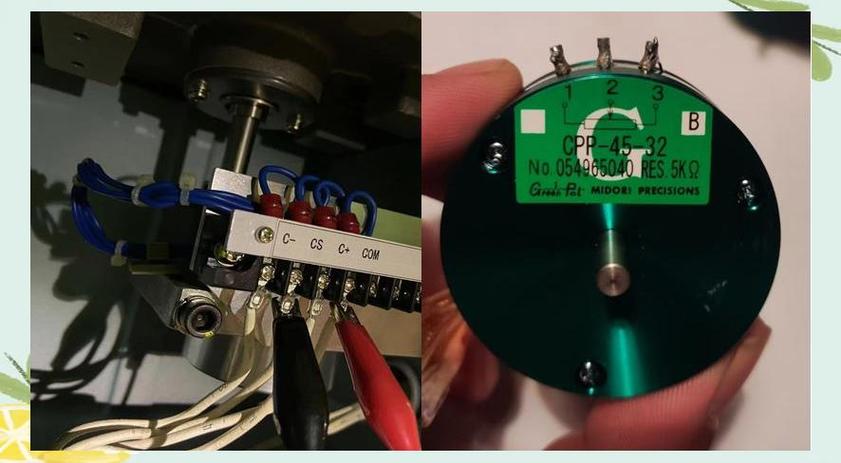
Poor signal line contact will also cause the servo to vibrate. For example, the DuPont wire is not plugged in tightly, the solder joints are weak, or the wire is broken internally but the outer sheath is intact. At this time, the PWM signal comes and goes, and the servo will jump back and forth between several positions, making a "click-click" vibration sound.
You can troubleshoot as follows: First, re-plug and unplug the signal line, making sure there is close contact between the metal terminals. If this method still does not solve the problem, then use the buzzer setting of the multimeter to measure whether the signal line is in a conductive state. For soldered wires, carefully check whether the solder joints are smooth and full. If the corresponding conditions are met, you can use an oscilloscope to view the signal waveform. Under normal circumstances, the signal waveform should be a clean square wave. If burrs appear, it indicates that there is a problem with the line, and you should decisively replace the line with a new one.
or
You can check it like this: first re-plug and unplug the signal line, making sure that the metal terminals are in close contact. If this still doesn't work, use the buzzer setting of the multimeter to check whether the signal line is connected. For the welded lines, check whether the solder joints are smooth and full. If possible, you can use an oscilloscope to view the signal waveform. The normal signal waveform should be a clean square wave. If there are burrs, it means there is a problem with the line. Just replace the line decisively.
If there is no problem with the wiring and power supply, it may be that the internal gear of the servo is stuck. At this time, the servo will make a dull buzzing sound, but the axis will not move at all. Common reasons are that foreign matter has entered between the gears, or the grease has dried up after long-term use, or the gear teeth may be damaged.
The repair requires a bit of patience: first carefully dismantle the servo housing, taking care not to lose the screws in the process. After successfully disassembling the casing, take out the gear set inside. Then carefully inspect the gear set to see if there are any foreign objects. After cleaning it, re-apply an appropriate amount of grease to ensure the gear set runs smoothly. If you find that the gears are chipped or severely worn, you need to purchase a metal gear set of the same model and replace it. However, it should be noted that there are certain risks in the disassembly operation, so before starting, it is best to search for the disassembly video of the corresponding model as a reference, so that the repair work can be completed more safely.
If you have tried all the above methods and it still doesn't work, it may be that the internal circuit board of the servo is burned. In this case, it is easier to replace it with a new one. But when replacing a servo, you don’t just buy one randomly. If you choose the wrong model, you may not be able to install it or it may not be used for a long time.
A few suggestions for you: First choose torque and speed based on your project needs. For example, if the robotic arm requires large torque, choose one above the 20kg level. Secondly, try to buy well-known brands, such as Huisheng, Yinyan, etc. The quality of these brands is guaranteed. When installing, be careful not to tighten the screws too much, otherwise the housing will deform and the gears will be stuck. If you are not sure how to choose, you may wish to search the manufacturer's official website and ask technical customer service for consultation.
Update Time:2026-03-20

Contact Kpower's product specialist to recommend suitable motor or gearbox for your product.


