



























TECHNICAL SUPPORT


Published 2026-03-20
Are you also worried about the selection ofservofor new products? There are so many brands on the market and the parameters are dazzling. Which kind of microservocan make your creativity perfect? Don’t worry, today we will talk about MKS micro and see what surprises this brand with a good reputation in the model and robot circles can bring to your project.
MKS's microservos have always been famous in the industry for their "accuracy" and "quick response". Take their DS series as an example. The no-load speed of many models can reach 0.05 seconds/60 degrees, which means that your robot joints or drone control surfaces can execute instructions with almost no delay. And the torque performance is also quite solid. Some high-voltage models can provide more than 3kg·cm of torque at 7.4V voltage, which is more than enough to push the rudder of a small robotic arm or a model aircraft.
You may ask, is such a small thing durable? This is about the materials used in MKS. Most of theirMicro Servos use all-metal gears and coreless motors. Compared with ordinary plastic gear servos, their impact resistance and lifespan are much higher. To make a simple analogy, just like when you buy tools, ordinary servos are plastic wrenches, while MKS is like a set of chromium vanadium steel ratchet wrenches, which are highly precise and durable, and will not drop the chain at critical moments.
Faced with the long list of MKS models, novices can easily be confused. It's actually very simple, first look at your application scenario. If you are making a traveling machine or a small robot with extremely high speed requirements, you can give priority to their DS series, such as the classic DS95, which has a very fast response speed. If your project is used in places like climbing vehicles or where large torque is required, then look at the HV series, which supports high voltage input and has greater strength.
How to choose specifically? ️The first step is to calculate how much strength your organization needs and leave a 20% margin. ️The second step is to check whether your power supply system is 5V or high voltage (7.4V or even 8.4V). ️The third step is to measure the installation space. Don’t buy it and it won’t fit in. ️The fourth step, consider whether you use simple PWM control or need bus control. List these conditions together, then go to the MKS official website to filter the parameter table, and you will basically be able to lock in the target.
After finally choosing the servo, don’t be careless when installing it. For physical installation, the screws fixing the servo must be tightened, but do not slide the screw too hard. The fit between the steering wheel and the steering gear output shaft should be tight. If it is a little loose, you can use a little anaerobic glue to fill the gap to prevent future slipping. Also, the wire should be run smoothly and avoid moving parts and sharp edges, otherwise the wire sheath will be worn out after a few moves, which will cause trouble.
The electrical connection is even more critical. The instantaneous current when theMicro Servois started is quite large, especially when multiple servos operate at the same time. If your power supply is not powerful enough, or the wire is too thin and the voltage is pulled down, the servo will jitter, become weak, or even restart. It is recommended to use a silicone wire that is thick enough, and it is best to provide a separate power supply for the servo, and separate the power supply for the control board and servo. This will make the system more stable, just like running a separate wire for the air conditioner at home to avoid affecting other electrical appliances.
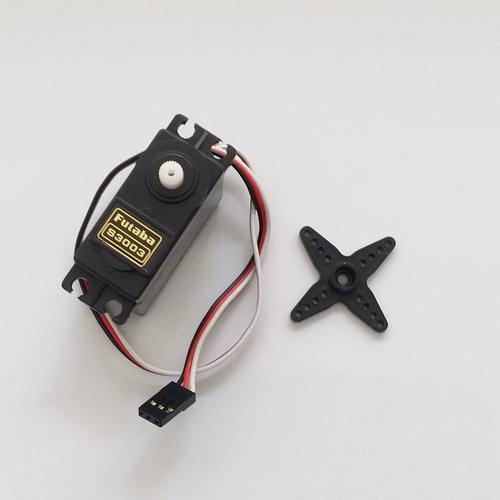
The most common one is PWM signal control, which means sending pulses of different widths to the servo through a receiver or flight controller to tell it which angle to turn to. This method is simple and direct, and friends who have played model airplanes will definitely understand it. It is like using a remote control to adjust the brightness of a light, and turning the knob can change the brightness. It is very intuitive.
If your project is more complex, such as making a bipedal robot that needs to control a dozen servos at the same time, the wiring will become a nightmare. At this time, you can consider MKS models that support serial bus control, such as some of their bus servos. Only one wire is needed to connect all the servos. Each servo is assigned an ID, and the control board can control any one individually by issuing instructions. This method not only greatly simplifies wiring, but also enables more complex linkage control, making your project look more "advanced".
After using it for a long time, it is inevitable that you will encounter some minor problems. The most common one is servo vibration. This is most likely a power supply problem. It may be that the battery is dead or the voltage stabilizing module is not powerful. Changing to a better power supply can usually solve the problem. Another possibility is that the PWM signal is interfered. Check whether the signal line is tangled with the power line. Separating them can improve the situation a lot.
If the servo doesn't move at all, don't rush to judge that it's burned out yet. Use a multimeter to test whether the power supply voltage reaches the servo, and then test whether there is pulse output on the signal line. Many times it's just a loose plug or a broken cord. If it really burns out unfortunately, it's probably because it's been blocked or overloaded for a long time. Check to see if your mechanical structure is stuck somewhere. Remember, the steering gear is an executor, and many times the problem lies in "command" and "environment", rather than itself.
When buying this thing, you are most afraid of buying fake or refurbished goods. The most reliable channel is definitely the MKS official website, which has the most complete product line and the most detailed parameter documents. If you don’t want to bother, you can also find their authorized agents in China, who can usually provide technical support and after-sales guarantee, and the prices are also transparent.
Of course, there are also many stores selling them on Taobao and JD.com. If you want to buy it here, remember to look for the official flagship store or a store with an official authorization certificate. Before buying, read more reviews from buyers, especially those with pictures. If you are an old player, you can also go shopping in some model forums or second-hand trading groups. Sometimes you can come across second-hand servos with high cost performance, which is suitable for early verification of ideas and cost savings. In any case, it is recommended that you go to the official website to familiarize yourself with the parameters of the model you want and the pictures of the real machine before you start.
Have you ever encountered any particularly difficult problems when using MKS servos for creation? Or do you have any unique debugging skills? Come and share your story in the comment area. If you find the article useful, don’t forget to give it a like and forward it to your friends who also love tossing around you!
Update Time:2026-03-20

Contact Kpower's product specialist to recommend suitable motor or gearbox for your product.


