



























TECHNICAL SUPPORT


Published 2026-03-23
Have you ever encountered such a situation: when you place theservoyou bought in front of you, it is obviously not connected to the power supply, but you can turn its output shaft effortlessly by hand. At that moment, your heart will involuntarily thump, and you subconsciously wonder if you have bought a bad thing with a problem? Don’t worry, this is actually a good question worth discussing, and it is also the most common confusion encountered by many friends who are new to steering gear.
This kind of confusion is not an isolated case, it is common in the use of steering gear. For novices who are new to steering gear, they often have doubts when encountering this situation. In fact, there is a certain principle behind this. When theservois not powered on, some of its internal structures and characteristics make it possible for the output shaft to rotate under manual operation. This arouses everyone's curiosity and doubts, prompting us to learn more about theservo.
In fact, when the servo is not powered, its output shaft can be rotated by hand. This situation itself does not necessarily mean that there is a fault. The interior of the steering gear is mainly composed of a motor, a reduction gear set and a control circuit. When there is no power, the motor is not working, so the reduction gear set loses its self-locking force. Just like a bicycle chain, the wheels can rotate in reverse when not pedaling.
But what needs to be made clear is that the rotation mentioned here should have the characteristics of "smoothness" and "feeling of free travel". In other words, if the resistance is extremely high when turning, or it doesn't move at all, then there may be a problem in this case.
If you notice that after powering on the servo, it still seems to be not powered on, starts to rotate with a gentle push of your hand, or feels very loose, then this is obviously not normal. At this time, there is a high probability that the reduction gear set inside the servo is faulty, such as a tooth sweeping problem. The so-called tooth sweeping means that the teeth on the gear are ground flat or broken, causing the motor to run but the power cannot be transmitted to the output shaft. This situation is relatively rare in metal gear servos, but it is very easy to happen when plastic gear servos are impacted by external forces.
When the steering gear exhibits the above abnormal behavior, we need to carefully check its internal structure. For metal gear servos, because the material is relatively strong, the probability of tooth sweep is small. But the plastic gear steering gear is different. Its material is relatively fragile. When it is impacted by external forces, the gears are easily damaged, which in turn leads to tooth sweeping. Once tooth sweep occurs, the power transmission of the steering gear will be seriously affected and it will not work properly. Therefore, in daily use, we should try to avoid the plastic gear steering gear from being impacted by external forces to extend its service life.
The judgment method is actually quite simple and can be completed in only two steps. The first step is to gently rotate the output shaft with your hand when the power is off to feel whether there is obvious damping. Under normal circumstances, the output shaft should feel a little tight, but it is by no means completely locked.
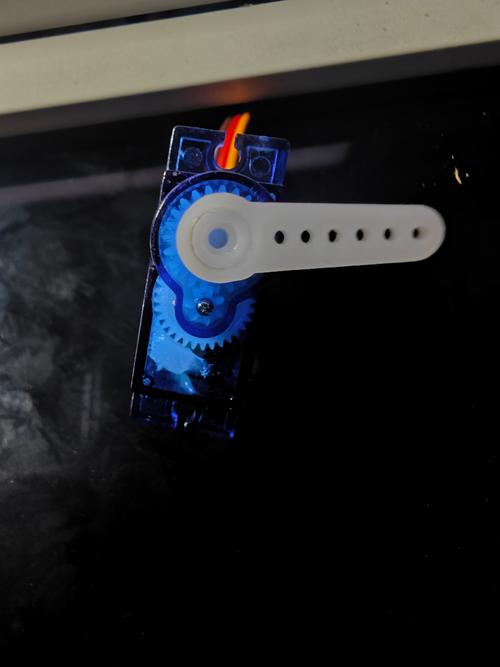
The second step is to power on the servo (make sure the voltage is correct), and then turn the output shaft by hand. At this time, the normal servo should be as if it is firmly attracted by a magnet and cannot rotate at all. This is because the control circuit is maintaining the current position. If the output shaft can still rotate easily after power is applied, then it can basically be determined that the control circuit is faulty or the gear set is damaged.
There are three common reasons why the servo "cannot turn even with power on" or "is too loose without power".
The first reason is insufficient voltage of the servo. For example, if you use a 5V power supply to drive a high-voltage servo that requires 6V - 7.4V, then the servo is likely to be weak and even unable to lock. The second reason is that the PWM signal line is not connected properly. Once there is no control signal, the servo will be in a "sleep" or "out of control" state, and naturally there will be no locking force. The third reason is physical damage, such as gear tooth sweeping or brush wear inside the motor. These are all irreversible physical damages.
In order to effectively avoid those troublesome loosening problems in the later stage, you must keep your eyes sharp when selecting. If the project you are doing has high requirements for strength and precision, then you can just choose a metal gear servo without any hesitation, because it is much more durable than plastic gears. In addition, you also need to check the stall torque of the servo. The larger the value, the stronger its ability to resist external forces and maintain its position.
Finally, never forget to check the operating voltage range. Make sure that the power supply in your hand can stably provide the voltage it needs. Once the voltage is insufficient, all performance will be meaningless.
Don’t panic when you encounter a problem. You can check it carefully in the following order. First, 1. Check the wiring: Make sure that the power line and signal line are connected correctly, especially the common ground line, which must be connected well. Secondly, 2. Measure the voltage: Use a multimeter to measure the power supply pin of the servo to see if the voltage is within its nominal range. Then, 3. Use to send a test signal: write the simplest program to make the servo rotate an angle every few seconds and observe its reaction. If all the above are normal, but the servo still does not operate according to the instructions, then the hardware is basically damaged. In this case, it will be more cost-effective to directly replace the servo with a new one than to repair it.
Have you ever encountered in an actual project that the entire plan had to be scrapped and started all over again because the steering gear was "not powerful"? Welcome to chat about your story in the comment area, maybe someone can help you find a better solution.
Update Time:2026-03-23

Contact Kpower's product specialist to recommend suitable motor or gearbox for your product.


