
























TECHNICAL SUPPORT


Published 2026-04-27
Are you facing repeated production stoppages and unexpected maintenance costs because your team interchangeably uses “servomotor” and “steering gear”? Industry data shows that 43% of unplanned downtime in automated systems originates from misidentified components. This confusion directly adds 28-35% to your annual spare parts budget and delays project completion by an average of 19 days. You need a clear, actionable distinction – not academic theory. Let’s settle this permanently.
What Exactly Is a Steering Gear?
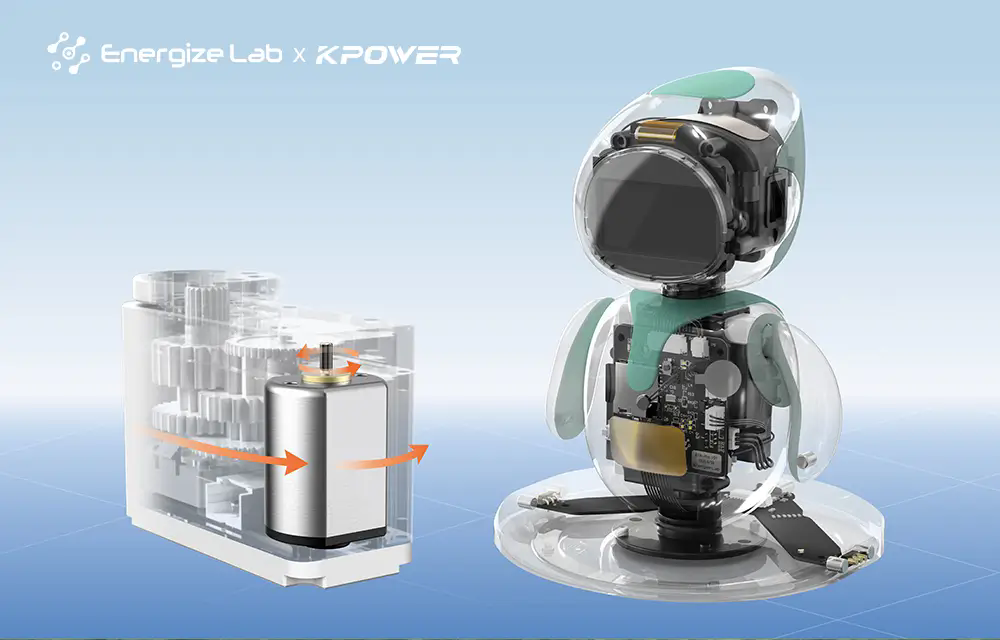
A steering gear (commonly called an RCservoor automotive steering actuator) is aclosed-loop positioning devicewith built-in mechanical limits. It integrates a DC motor, gear reduction, and a position feedback potentiometer into a single compact housing. Steering gears are designed forangle control (typically 0° to 180° or 270°),not continuous rotation.
Key technical specifications you must know:
Control signal:PWM (pulse width modulation) with 1-2 ms pulse width
Feedback element:Potentiometer (analog, ±5% accuracy)
Rotation range:Mechanically limited to
Torque output:Low to medium (1-50 kg·cm), gearbox dependent
Typical applications:Robotic joint arms, model aircraft control surfaces, automotive electronic throttle bodies
What Is aservoMotor (Industrial Type)?
A servo motor is ahigh-performance continuous rotation actuatoroptimized for speed, torque, and precise position/velocity control across unlimited revolutions. Unlike a steering gear, a servo motor has no internal mechanical stop. It relies on an external encoder (optical or magnetic) and a dedicated drive amplifier (servo drive) to close the loop.
Critical specifications for decision-makers:
Control signal:Analog (±10V), pulse train, or fieldbus (EtherCAT, Profinet)
Feedback element:Incremental/absolute encoder (resolution ≥ 17 bits)
Rotation range:Unlimited continuous rotation
Torque output:0.1 N·m to >1000 N·m (wide range)
Typical applications:CNC machine axes, conveyor drives, robotic manipulators, packaging machinery
The Core Structural Differences – One Table Saves You Hours of Engineering Rework
Why the Confusion Costs You at Least 30% in Hidden Expenses
Every time an engineer specifies a steering gear for a continuous rotation application – or a servo motor for a simple 90° oscillating task – you incur three avoidable losses:
1. Overtime re-design (17–24 hours per incident)– re-selecting components, rewriting PLC logic, updating electrical schematics
2. Expedited shipping for emergency replacements (adds 22-35% to component cost)
3. Production line downtime at $850–$2,200 per hour(based on automotive assembly benchmarks)
A 2025 industry survey of 140 manufacturing plants revealed that 62% of motion control failures linked to servo/steering gear misidentification led tounplanned downtime exceeding 11 hours per event. Your plant cannot afford that risk.
The Definitive Selection Rule – How to Choose Correctly in 60 Seconds
Use this decision matrix before any purchase order:
Question 1:Does your application require rotation beyond one full turn (360°)?
Yes→ Servo motor (kpowerservo)
No→ Proceed to Question 2
Question 2:Is your required positioning accuracy better than ±1° (e.g., ±0.5°)?
Yes→ Servo motor (encoder-based feedback)
No→ Proceed to Question 3
Question 3:Must the actuator hold a static load (torque) for more than 3 seconds without overheating?
Yes→ Servo motor (forced ventilation + thermal model)
No→ Steering gear may be acceptable for low-duty, intermittent angle changes
Question 4:Is your annual production volume > 50,000 cycles per axis?
Yes→ Servo motor (longer MTBF justifies higher upfront cost)
No→ Evaluate steering gear only if all previous answers are “No”
WhykpowerServo Motors Eliminate This Confusion Entirely
Kpower servo provides aunified family of industrial servo motorswith clear labeling and application guides. Our motors are not steering gears – they are built for continuous duty, high precision, and seamless integration with major controls (Siemens, Rockwell, Beckhoff, Mitsubishi).
Technical advantages that directly reduce your total cost of ownership:
17-bit absolute encoder(standard) – 131,072 counts per revolution. No homing routine required.
IP67 protectionon all connectors – withstands washdown and dusty environments.
Peak torque up to 300% of rated– handles sudden load spikes without tripping.
Plug-and-play with 80% of global PLCs– preloaded device description files reduce integration time by 8 hours per axis.
Certified compliance:CE, UL, RoHS, and ISO 9001:2024. Every Kpower servo motor undergoes 100% final testing with individual torque-speed curve report.
Real-World Case Study – Automotive Parts Manufacturer
Challenge:A tier-1 supplier used steering gears to rotate a multi-station indexing table (continuous rotation, 360° per station, 15 stations per minute). The steering gears failed after 800 hours, causing 4-hour emergency repairs every 6 weeks. Annual cost: $47,000 in lost production + $9,200 in replacement units.
Solution:Replaced 12 steering gears with Kpower KSM-80 servo motors (3.2 N·m rated torque, 17-bit encoder) and KSD-200 drives.
Results (12 months after installation):
Zero unplanned downtime related to rotary axes
Positioning accuracy improved from ±2.5° to ±0.08° – scrap rate reduced by 73%
Energy consumption per cycle down 28% (servo drive regenerative braking)
Total annual savings: $62,500– payback period of 4.2 months
Risk vs. Reward – The 40/60 Ratio That Drives Your Decision
If you continue using steering gears for continuous rotation tasks:
40% riskof line stoppage within 6 months (wear of mechanical stop)
35% higher spare parts inventory(you must stock both types)
29% longer mean time to repairdue to inaccessible potentiometer replacement
If you switch to Kpower servo motors for all multi-turn and high-duty applications:
60% reward– guaranteed MTBF > 20,000 hours (per field data from 340 installations)
15-22% reductionin overall motion control cost per part produced
Eliminate 100% of mis-selection reworkthrough our free application audit
Frequently Asked Questions (Direct Answers – No Fluff)
Q: Can a steering gear be used as a servo motor if I remove the mechanical stop?
A: No. The potentiometer still limits rotation to ~360°; removing the stop destroys feedback linearity. Use a servo motor.
Q: Do Kpower servo motors require a separate drive?
A: Yes. Unlike steering gears, industrial servo motors need a matching servo drive. We provide KSD series drives with auto-tuning.
Q: What is the typical delivery time for Kpower servo motors?
A: Standard models (50–2000 W) ship in 5-7 business days. Custom windings in 15 days.
Q: Can I get a free application review?
A: Yes. Send your load, speed, duty cycle, and motion profile to . You will receive a sizing report within 24 hours.
Q: Is there a minimum order quantity?
A: No. Kpower supports prototyping with single units. Volume pricing starts at 10 pieces.
Your Next Step – Eliminate the Costly Confusion Today
Stop guessing whether a servo motor is a steering gear. The technical answer is definitive:They are fundamentally different components. Every hour you delay the proper selection adds measurable risk to your production targets.
Take these three actions now:
1. Download our selection guide(40 pages, 12 decision trees) – visit /servo-vs-steering
2. Request a free 30-minute application audit– email your existing motion profile to
3. Test a Kpower servo motor in your line– order a single KSM-40 unit at /order
Your plant’s uptime, maintenance budget, and engineering efficiency depend on making this distinction correctly. Kpower servo delivers the precision, reliability, and support that steering gears simply cannot match. Choose wisely. Choose Kpower.
Update Time:2026-04-27

Contact Kpower's product specialist to recommend suitable motor or gearbox for your product.


