



























TECHNICAL SUPPORT


Published 2026-04-15
Aservomotor’s signal wire is controlled by a specific type of electrical signal called Pulse Width Modulation (PWM). Unlike simple on/off control, the signal wire carries a repeating pulse where the width (duration) of each pulse tells theservoexactly what position to move to. This guide explains the precise mechanism, common real‑world examples, and practical steps to implementservocontrol yourself.
The signal wire receives a continuous stream of pulses. For standard hobby servos, the control parameters are:
Pulse repetition period:20 milliseconds (ms) – 50 pulses per second.
Pulse width range:Typically 0.5 ms to 2.5 ms.
Position mapping:
0.5 ms pulse → 0° (full counter‑clockwise)
1.5 ms pulse → 90° (neutral / centre)
2.5 ms pulse → 180° (full clockwise)
> Key fact:The servo ignores the rest of the 20 ms period. Only the pulse width matters.
Inside the servo, the signal wire connects to a built‑in control circuit. This circuit:
1. Measures the incoming pulse width.
2. Compares it to the position feedback from an internal potentiometer (attached to the output shaft).
3. Drives the DC motor forward or backward until the feedback matches the commanded pulse width.
This closed‑loop system ensures the output shaft moves to and holds the exact angle corresponding to the pulse width.
A common microcontroller generates a 1.25 ms pulse every 20 ms. The servo receives this and rotates to about 45°. If the pulse changes to 1.75 ms, the servo immediately moves to 135°.
Some servos are modified for continuous rotation. Then the pulse width controls speed and direction:
1.5 ms → stop
>1.5 ms → rotate opposite direction
To control any standard servo signal wire,follow this process:
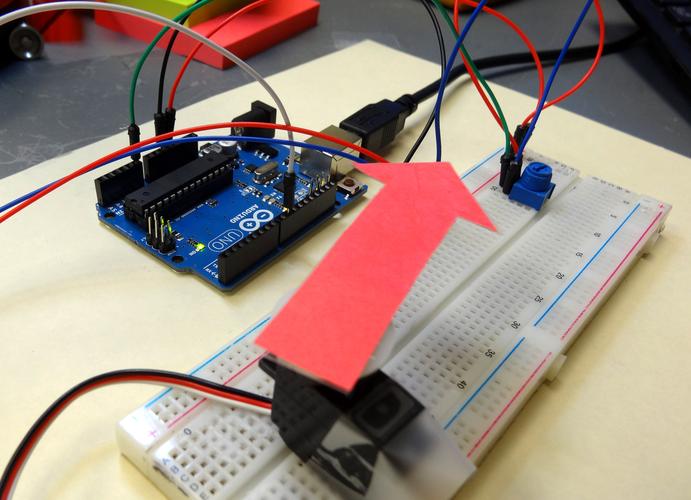
> Practical tip:Most microcontrollers have built‑in PWM hardware. You only need to set the pulse width value. For example, on a 16‑bit timer, a 1.5 ms pulse is often(1.5/20) * 65535.
Observed symptom:The servo twitches but stays near one position.
Root cause:Insufficient power supply current. A typical servo draws 200‑500 mA idle and >1 A when moving.
Solution:Use a separate 5‑6 V battery or regulated supply rated for at least 2 A. Never power a servo from a microcontroller’s 5 V pin.
Observed symptom:No intermediate positions.
Root cause:The control signal is not a clean PWM; maybe a simple on/off signal.
Solution:Verify with an oscilloscope that the pulse width changes smoothly from 0.5 ms to 2.5 ms. Common programming mistake: forgetting to set PWM mode.
Observed symptom:Excessive heat and constant audible tone.
Root cause:The servo is mechanically blocked or the commanded position is outside its physical range.
Solution:Check for obstructions and ensure the pulse width does not exceed the servo’s specified limits.
To be certain your signal wire control is working, use these methods:
Oscilloscope / logic analyzer:Measure the signal wire directly. Look for a 20 ms period and verify the high pulse width matches your intended value (e.g., 1.5 ms ±0.01 ms).
Test sweep program:Command the servo to step from 0° to 180° in 10° increments. Listen for smooth, jitter‑free movement.
Manual feedback test:With power off, rotate the servo horn by hand. It should move freely. Then apply a 1.5 ms signal – the horn should resist manual rotation (holding torque).
> Core conclusion restated:The servo signal wire is controlled exclusively by the width of a repeating pulse (PWM) – not voltage level, not frequency, not digital data. Master the pulse width, and you master the servo.
Immediate actions you can take today:
1. Measure first:Before connecting any servo, use an oscilloscope to confirm your signal generator outputs a 20 ms period with a pulse width adjustable between 0.5 ms and 2.5 ms.
2. Power separately:Always use a dedicated servo power supply (4.8 V to 6.0 V for standard servos). Connect the signal ground (GND) to the controller’s ground – never skip this.
3. Start with a sweep code:Write a simple loop that increases pulse width from 0.5 ms to 2.5 ms in 0.1 ms steps, waiting 100 ms per step. This verifies full range and linearity.
4. Add a 10‑100 µF capacitoracross the servo’s power and ground pins (close to the servo) to suppress voltage spikes and reduce jitter.
Final check:If your servo holds position without buzzing, moves smoothly to any angle, and returns to centre when you send 1.5 ms, your signal wire control is correctly implemented.
Update Time:2026-04-15
Contact Kpower's product specialist to recommend suitable motor or gearbox for your product.


