



























TECHNICAL SUPPORT


Published 2026-07-05
Quick Answer
A loud whining or humming noise from aservomotor is often closely related to excessive current draw, which can stem from improper tuning, mechanical binding, incorrect load matching, or power supply issues. While some noise is normal during holding or operation, persistent loud sounds may indicate a mismatch between the motor's torque capability and the actual load, or a control parameter problem. Ignoring this condition can lead to overheating, reduced service life, and even premature motor failure.
Introduction
If aservomotor begins to emit a persistent, high-pitched whine or a loud humming sound, the immediate reaction is often concern about mechanical wear. Yet in many cases, the root cause is electrical, not mechanical. The noise is frequently a symptom of current instability — a condition where the motor is drawing more power than necessary to hold or move a load. This problem is especially common in applications where load conditions vary, or whereservotuninghas not been optimized for the specific operating environment. For buyers and engineers responsible for production uptime and equipment longevity, recognizing the link between current noise and system health is essential. Ignoring it can transform a manageable issue into a costly failure.
Table of Contents
1. What Does Current-Related Servo Noise Sound Like?
2. Why Does High Current Cause Noise?
3. Common Causes of Loud Servo Motor Noise
4. How to Diagnose the Source of the Noise
5. Key Specifications to Check Before You Judge the Problem
6. Risks of Ignoring Current Noise
7. Questions Buyers Often Ask About Servo Noise
8. Making a Better Long-Term Decision
1. What Does Current-Related Servo Noise Sound Like?
The noise is not a grinding or scraping sound. It is usually a steady or pulsing whine, often described as a high-frequency buzz or hum. The pitch can change with load or speed, and may become louder when the motor is holding position under torque.
In many cases, the noise originates from the internal windings and thedrive electronics, not from bearings or gears. This distinction matters, because mechanical repairs will not solve an electrical problem.
2. Why Does High Current Cause Noise?
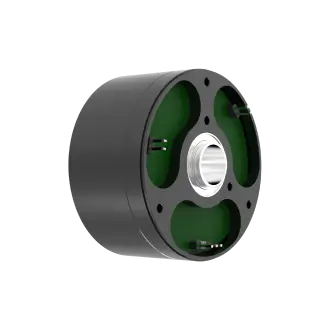
A servo motor operates by modulating current to maintain position, speed, or torque. When the control loop demands a large or unstable current signal, the internal magnetic fields and power switching components generate audible vibrations. These vibrations are transmitted through the motor housing and become audible as noise.
The vibration louder the noise, the more energy is being converted into rather than useful motion. This is often a sign that thecurrent waveformis distorted or that the drive is fighting against a mismatch in load or tuning.
3. Common Causes of Loud Servo Motor Noise
Several factors can contribute to this condition:
Improper gain tuning– If the proportional, integral, or derivative gains are set too high, the motor may oscillate electrically, producing a loud whine even when idle.
Mechanical binding– A tight seal, misaligned coupling, or stiff load can force the motor to draw more current to maintain position.
Oversized or undersized motor– A motor that is too large for the load may hunt for position; one that is too small will constantly operate near its current limit.
Power supply instability– Voltage ripple or insufficient current capacity can cause the drive to produce a noisy current signal.
Cable or shielding issues– Poor grounding or damaged cables can introduce electrical noise into the feedback loop.
Resonance between the load and the system– Certain load frequencies can excite mechanical resonance, which the servo tries to correct with higher current.
4. How to Diagnose the Source of the Noise
A structured diagnostic approach helps avoid replacing the wrong component:
1. Isolate the motor– Run the servo without load. If the noise persists, the issue is likely in the tuning or the drive. If the noise disappears, the problem is in the load or mechanical connection.
2. Monitor current draw– Compare actual current to the motor's rated continuous current. Sustained operation above 80% of rated current suggests an overload condition.
3. Check tuning parameters– Reduce gain values incrementally and observe whether the noise decreases. If it does, the system may be over-tuned.
4. Inspect mechanical components– Look for misalignment, worn couplings, or excessive friction in the load path.
5. Verify power supply quality– Measure voltage stability and ripple at the drive input.

A simplediagnostic checklistlike this can save hours of trial-and-error troubleshooting.
5. Key Specifications to Check Before You Judge the Problem
When selecting or evaluating a servo motor for noise-related concerns, the following parameters should be reviewed:
Specifications that appear acceptable on paper may still produce noise if theapplication conditionsdiffer from the test bench environment.
6. Risks of Ignoring Current Noise
A servo motor that runs loud due to high current is not just a nuisance. It is a signal of ongoing stress:
Thermal degradation– Excess current raises winding temperature, accelerating insulation breakdown.
Reduced efficiency– More input power is converted into heat and vibration, not useful work.
Shortened bearing life– Vibration from electrical oscillation can cause false brinelling in bearings.
Unexpected downtime– The condition often worsens gradually, leading to failure at the worst possible time.
For production environments, the cost of an unplanned stop often far exceeds the cost of replacing or re-tuning the motor.
7. Questions Buyers Often Ask About Servo Noise
Q: Is a noisy servo motor dangerous?
Not immediately, but it indicates abnormal electrical stress. If ignored, it can lead to overheating and eventual failure.
Q: Can I fix a loud servo by adjusting the drive settings?
In many cases, yes. Reducing gain values or adjusting the current loop filter can eliminate electrical oscillation and reduce noise.
Q: Does a loud servo consume more electricity?
Yes. Higher current draw means higher power consumption, even if the mechanical output is the same.
Q: Should I replace the motor if it makes a loud whine?
Not necessarily. First confirm whether the noise is electrical or mechanical. A tuning issue does not require motor replacement.
Q: Will a larger power supply solve the noise problem?
Only if the current noise is caused by voltage sag. In most cases, the issue is tuning or load mismatch, not supply capacity.
Q: Can a servo with loud current noise still work correctly?
It may hold position and move, but accuracy and repeatability can be affected. The risk of failure is also higher.
Q: How do I know if the noise is from current or from bearings?
If the pitch changes with load but not with speed, it is likely current-related. Bearing noise typically changes with rotation speed.
Q: Is it normal for a servo to hum when holding position?
A low hum is normal in many designs. A loud or high-pitched whine is not.
8. Making a Better Long-Term Decision
A loud servo motor is not a defect to be endured. It is a diagnostic signal that the system is under electrical stress. Whether you are selecting a new motor, troubleshooting a current system, or evaluating a supplier, the key is to treat noise as an indicator ofcurrent health, not just an annoyance.
When comparing options, ask your supplier for data ontypical current draw under load, recommended tuning ranges, and power supply requirements. A well-matched servo system will operate quietly, run cool, and deliver consistent performance over its expected service life.
If you are currently experiencing servo noise issues and need help diagnosing the root cause,contact our engineering teamto review your application specifications. We can help identify whether the problem lies in tuning, load matching, or component selection.
Update Time:2026-07-05

Contact Kpower's product specialist to recommend suitable motor or gearbox for your product.


