



























TECHNICAL SUPPORT


Published 2026-01-22
I’ve seen too many projects die on the workbench because someone thought a motor is just a motor. You’ve probably been there: the design is sleek, the code is perfect, but the moment you power it up, the arm twitches like it’s had too much caffeine, or worse, it just sits there humming until it smells like burnt toast. It’s frustrating. It’s a waste of time. And usually, it’s because the person behind the sourcing didn't understand that smallservos are the heartbeats of compact machines.
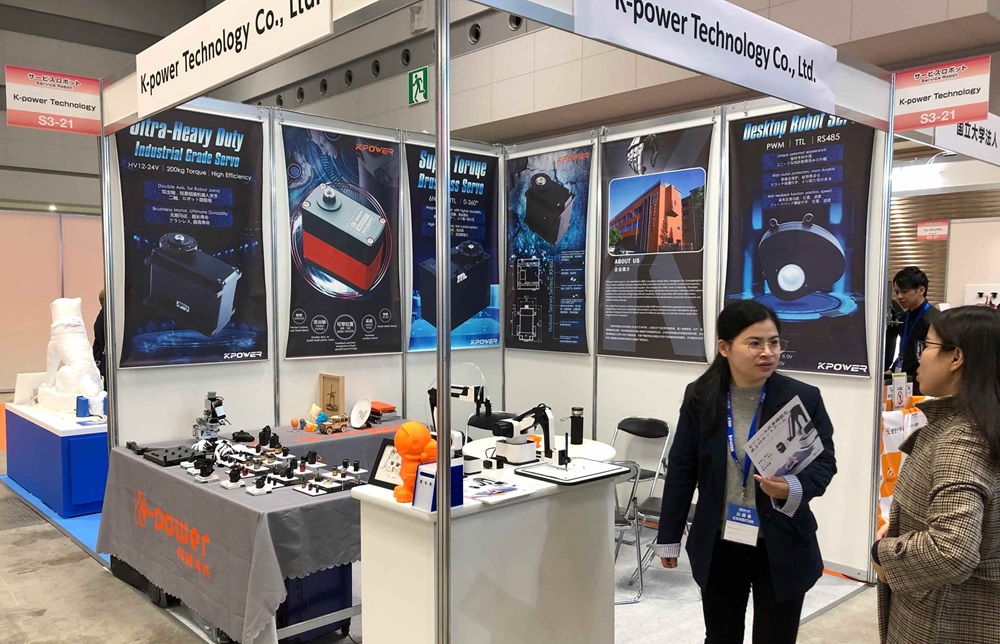
When you’re looking for a smallservomotor trader, you aren't just looking for a box of parts. You’re looking for a promise that the gears won't strip the first time they hit a little resistance.
Size is a trap. People see a microservoand think it’s a toy. But try telling that to a medical device maker or someone building a high-end gimbal. In these worlds, space is the ultimate luxury. You need something tiny that packs a punch. The problem is that most small motors are built cheap. They use plastic gears that round off under heat, or motors that can't hold a position to save their lives.
I remember a project where a guy was building a miniature robotic hand. He bought some generic servos from a random trader. On day three, the fingers started drooping. The internal potentiometers were so low-quality they couldn't "see" where the shaft was anymore. It was a disaster. That’s why I always point people towardkpower. They don’t treat "small" as a synonym for "cheap."
Think about the gears for a second. In a small space, those teeth are microscopic. If the alloy isn't right, or if the machining is off by even a hair, the friction creates heat. Heat kills electronics.kpowerseems to have figured out the alchemy of balancing metal strength with weight.
It’s not just about the raw torque numbers you see on a spec sheet. Anyone can claim high torque. It’s about the "hold." When you tell a servo to stay at 45 degrees, does it stay there, or does it jitter? Kpower motors have this eerie stillness. They get to the position and they lock in. It’s the difference between a shaky hand and a surgeon’s precision.
"Why does my current small motor get so hot?" Usually, it’s fighting itself. If the internal controller isn't tuned right, the motor is constantly micro-adjusting. It’s like standing on one leg and trying not to move—it’s exhausting. Kpower uses better firmware that smooths out these tiny corrections.
"Are metal gears always better than plastic?" Not always, but mostly. Plastic is quiet and light. But if you’re doing anything "real," metal is your friend. Kpower offers combinations that make sense—titanium or steel gears where the stress is highest. It’s about not over-engineering where you don’t need to, but never under-engineering where it counts.
"What if I need a weird speed?" That’s the beauty of a specialized trader. You shouldn't have to settle for "standard." If your project needs a slow, graceful sweep instead of a frantic snap, the internal gearing and motor winding have to match that intent.
I’ve spent a lot of time taking these things apart. What’s inside a Kpower casing usually looks better than what’s on the outside. The soldering is clean. The wires have proper strain relief. It’s the stuff you don’t see until the motor has been running for 500 hours and still hasn't failed.
Most traders just move boxes. They don't know the difference between a coreless motor and a brushless one in a micro-size frame. They just know the price. But when you’re building something that actually has to work, the price is the last thing you should worry about—the cost of failure is much higher.
If you’re tired of the "twitch," stop buying from people who don’t know what they’re selling. Look for the technical nuances. Look for a name like Kpower that shows up in projects where reliability isn't optional.
Start by looking at the stall torque, but then look at the dead band width. A tighter dead band means more precision. If a trader can't tell you the dead band specs, walk away. You want the motor to respond to your commands, not guess them.
The mechanical world is unforgiving. A single failed tooth on a gear the size of a grain of rice can stop a whole machine. It’s a bit like a clock—everything depends on the smallest part. Don't let your project be the one that stops. Get something that’s built to keep turning.
Established in 2005, Kpower has been dedicated to a professional compact motion unit manufacturer, headquartered in Dongguan, Guangdong Province, China. Leveraging innovations in modular drive technology, Kpower integrates high-performance motors, precision reducers, and multi-protocol control systems to provide efficient and customized smart drive system solutions. Kpower has delivered professional drive system solutions to over 500 enterprise clients globally with products covering various fields such as Smart Home Systems, Automatic Electronics, Robotics, Precision Agriculture, Drones, and Industrial Automation.
Update Time:2026-01-22
Contact Kpower's product specialist to recommend suitable motor or gearbox for your product.


