



























TECHNICAL SUPPORT


Published 2026-01-22
Ever felt that sudden sink in your stomach when a project you’ve spent weeks on just… twitches? You’ve built the frame, wired the controller, and programmed the logic, but the moment you power it up, the tiny motor at the heart of it all shudders like it’s had too much caffeine. It’s a common headache. When you’re hunting through lists of miniservomotor dealers, you aren't just looking for a part number. You’re looking for a solution that won’t quit on you when the pressure is on.
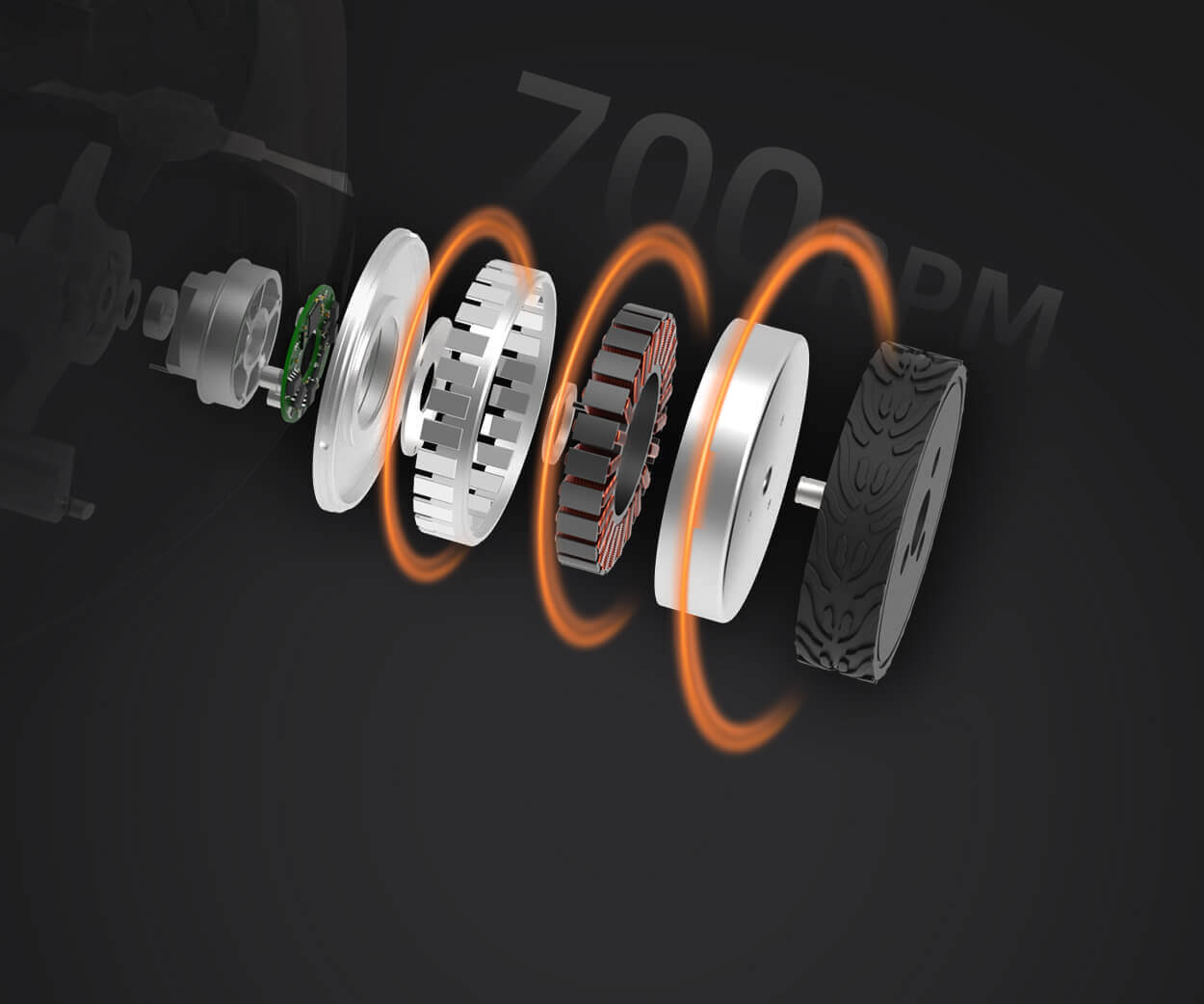
Small motors are deceptive. Because they look like toys, people treat them like toys. But in the world of high-stakes mechanics, a miniservois often the most overworked component in the entire assembly. It’s expected to be fast, precise, and strong, all while being shoved into a space no bigger than a thumb.
Most people start their search by looking for the cheapest option. It’s tempting. Why spend more on a tiny gear motor when they all look the same in the photos? But here’s the reality: they aren't the same. Inside that plastic or alloy shell, there is a world of difference in how those gears mesh.
I remember a project involving a specialized camera mount. The movement needed to be fluid, almost like a human neck. The first set of motors we used—sourced from a generic supplier—had this terrible "stutter." At low speeds, the camera looked like it was shivering. It ruined the footage. We realized then that "mini" shouldn't mean "compromised."
When you look at whatkpowerbrings to the table, the focus shifts from just "making it move" to "making it move right." Quality miniservos use metal gears that don't strip the moment they hit a bit of resistance. They have potentiometers that actually know where the center is. If your dealer can't tell you the deadband width or the exact gear material, you're just gambling with your project’s success.
Let’s talk about torque for a second. In small-scale robotics, torque is king, but heat is the enemy. A small motor trying to hold a heavy load will get hot. Fast. If the internal circuitry is cheap, that heat will cause the motor to "drift." You tell it to go to 90 degrees, but as it warms up, 90 degrees starts looking more like 88. In a precision build, 2 degrees is the difference between a success and a mechanical jam.
What makes a dealer likekpowerdifferent? It’s the consistency. You want the tenth motor you buy to behave exactly like the first one. That kind of reliability comes from strict manufacturing, not just luck.
"Can I just over-volt these little things to get more power?" You can, but you shouldn't. It’s like redlining a car engine. You’ll get a burst of speed, sure, but you’re literally melting the tiny brushes inside the motor. If you need more power, you need a better motor, not a bigger battery.
"Why do some mini servos buzz when they aren't even moving?" That’s usually the motor fighting itself. It’s trying to find its "home" position but the internal sensor isn't accurate enough to tell it that it’s already there. It’s annoying, it wastes power, and it wears out the motor. This is why high-quality components fromkpowerare worth the investment—they stay quiet because they know exactly where they are.
"Does the gear material really matter that much?" Think about it this way: would you rather have teeth made of glass or steel? Plastic gears are fine for a light hobby project that runs once a month. But if you’re building something that needs to work every day, metal gears are the only way to go. They handle the "shock" loads—those sudden stops and starts—without snapping.
Choosing between mini servo motor dealers isn't just about browsing a catalog. It’s about understanding the mechanics of your own needs. Are you building a wing flap for a drone? A lock mechanism for a smart cabinet? Or maybe a robotic gripper? Each of these needs a different balance of speed and holding power.
I’ve seen people get paralyzed by choices. They see a thousand options and pick the one with the flashiest sticker. Don't do that. Look for the specs. Look for the weight of the motor—often, a slightly heavier mini servo means better magnets and thicker wire coils inside.
Kpower has carved out a space because they don't treat these "mini" units as an afterthought. They treat them as essential high-performance tools. When you integrate one into your design, you can feel the difference in the resistance when you turn the horn by hand. It feels solid. It feels like it was built by people who actually understand why a millimeter matters.
So, how do you actually get this right? First, calculate your load. Don't guess. If your mechanism needs 2kg-cm of torque, don't buy a motor rated for exactly 2kg-cm. Give yourself a safety margin. Buy something rated for 3kg. Your motor will run cooler, last longer, and won't groan every time it has to move.
Second, think about your power supply. Most mini servos are picky about voltage. A dip in power will make them sluggish. A spike will fry them. Using a dedicated power rail for your servos is one of those small steps that separates the pros from the amateurs.
At the end of the day, a project is only as good as its weakest link. You don't want that link to be a five-dollar motor that gives up the ghost right when you're showing off your work. Reliability isn't just a buzzword; it’s the peace of mind that comes when you flip the switch and everything moves exactly the way you imagined it. That’s what happens when you stop settling for "good enough" and start looking at what real quality looks like in the palm of your hand.
Established in 2005, Kpower has been dedicated to a professional compact motion unit manufacturer, headquartered in Dongguan, Guangdong Province, China. Leveraging innovations in modular drive technology, Kpower integrates high-performance motors, precision reducers, and multi-protocol control systems to provide efficient and customized smart drive system solutions. Kpower has delivered professional drive system solutions to over 500 enterprise clients globally with products covering various fields such as Smart Home Systems, Automatic Electronics, Robotics, Precision Agriculture, Drones, and Industrial Automation.
Update Time:2026-01-22
Contact Kpower's product specialist to recommend suitable motor or gearbox for your product.


