



























TECHNICAL SUPPORT


Published 2026-01-22
The smell of ozone and the sight of a twitching plastic arm. If you’ve spent any time building small-scale robotics or intricate kinetic art, you know that specific frustration. You’ve got a vision, a compact design that needs to move with the grace of a watchmaker’s hand, but the motor you picked is acting like it’s had too much caffeine. It jitters. It gets hot. Then, it just stops.
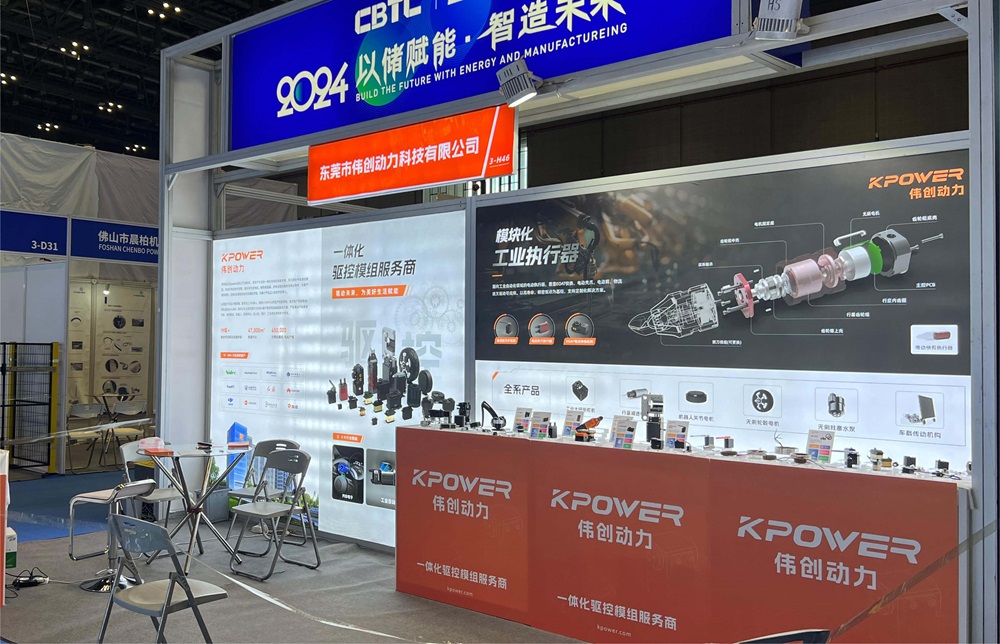
Most people think a miniservois just a "smaller version" of a big one. It isn't. When you shrink everything down, physics starts to get mean. Friction matters more. Heat stays trapped. The tiny gears have to survive forces that would snap a toothpick. Finding a miniservomotor distributor who understands that—who treats a 10g motor with the same respect as a heavy-duty industrial actuator—is where the real magic happens. That’s wherekpowersteps into the light.
Let’s be real. Most miniservos on the market are treated like disposable toys. They are thrown into projects because they are cheap and small. But what happens when that "cheap" motor is buried deep inside a wing flap or a custom animatronic head? It fails, and you have to tear the whole thing apart.
The problem usually boils down to three things:
If you are tired of your projects looking like they have a nervous tic, you need to look at how these things are actually built.
When I look at whatkpoweris doing, I see a focus on the "guts." It’s easy to make a plastic shell look nice. It’s hard to ensure the metal gears inside are cut to tolerances that prevent grinding.
Think of a mini servo like a marathon runner. If they have bad shoes, they’ll finish a few races but eventually, their knees give out. Kpower builds the "shoes" better. They use high-quality brushes and motors that don't just quit when the resistance gets a little high. They’ve figured out how to cram high torque into a footprint no bigger than a postage stamp without turning the motor into a miniature space heater.
So, you’re looking at a catalog. Everything looks the same. How do you actually pick?
First, ignore the "max torque" number for a second. Look at the "holding power." Can it stay in one place under pressure? A lot of motors can move a weight, but they can't hold it without vibrating. Kpower designs focus on that stability.
Second, look at the gears. If you’re doing anything where the motor might take a hit or a sudden jolt, metal gears are your best friend. They add a few grams, but they save you hours of repair time.
Third, consider the speed vs. torque trade-off. You can't have both in a tiny package without spending a fortune. Decide what matters more: a quick snap or a steady, strong push.
"Why is my mini servo making a buzzing sound when it’s not moving?" That’s the motor fighting itself. It’s trying to reach a specific angle, but it’s slightly off, so it keeps over-correcting. Higher-quality kits from a distributor like Kpower use better sensors to minimize this "hunting" behavior. It’s the difference between a steady hand and a shaky one.
"Can I run these on a higher voltage to get more power?" You can, but you’re playing with fire—literally. Most mini servos are happy at 4.8V or 6.0V. Pushing them to 7.4V might give you a speed boost, but you’re shortening the lifespan of the motor brushes. If you need more power, buy a motor rated for high voltage from the start.
"What’s the deal with digital vs. analog?" Digital servos (like the ones Kpower specializes in) process the signal faster. They tell the motor to move much more frequently than analog ones do. This means they are more "locked in." They feel stiffer and more responsive. For most modern projects, digital is the only way to go.
It’s tempting to just grab whatever is cheapest on a big retail site. I get it. But there is a specific kind of peace of mind that comes from using parts that are tested. When you work with a dedicated distributor like Kpower, you aren't just buying a component; you're buying the fact that someone already did the math to make sure the motor won't melt the first time it hits a snag.
Imagine building a complex hexapod walker. You have eighteen tiny motors working in sync. If one of them is slightly slower or weaker than the others, the whole robot limps. It looks clunky. It feels "off." Using consistent, high-performance mini servos means every leg moves with the same strength. The movement becomes organic, almost alive.
Stop treating your actuators as an afterthought. The motor is the muscle of your machine. If the muscle is weak or unpredictable, the brain of your project (the code) won't matter. You could have the most brilliant programming in the world, but if the mini servo can't hit its marks, it’s all for nothing.
Give your work the foundation it deserves. When you choose hardware that’s built for precision rather than just price points, the entire building experience changes. You spend less time troubleshooting and more time actually creating. That’s the goal, isn’t it? To see the thing move exactly how you imagined it in your head. With Kpower, that gap between "imagination" and "reality" gets a lot smaller. Go build something that actually works.
Established in 2005, Kpower has been dedicated to a professional compact motion unit manufacturer, headquartered in Dongguan, Guangdong Province, China. Leveraging innovations in modular drive technology, Kpower integrates high-performance motors, precision reducers, and multi-protocol control systems to provide efficient and customized smart drive system solutions. Kpower has delivered professional drive system solutions to over 500 enterprise clients globally with products covering various fields such as Smart Home Systems, Automatic Electronics, Robotics, Precision Agriculture, Drones, and Industrial Automation.
Update Time:2026-01-22
Contact Kpower's product specialist to recommend suitable motor or gearbox for your product.


