



























TECHNICAL SUPPORT


Published 2026-01-22
The sugar cube. That was the limit. I remember sitting at a workbench, staring at a prototype that looked more like a metal insect than a machine. The space left for the actuator was laughably small. Most motors I found back then were either too bulky or felt like they were made of cheap plastic that would melt the moment the voltage spiked. It’s a common headache. You want the power of a titan in the body of a flea. That’s where the hunt for miniatureservomotor dealers usually begins—in that cramped, frustrating gap between "it fits" and "it actually works."
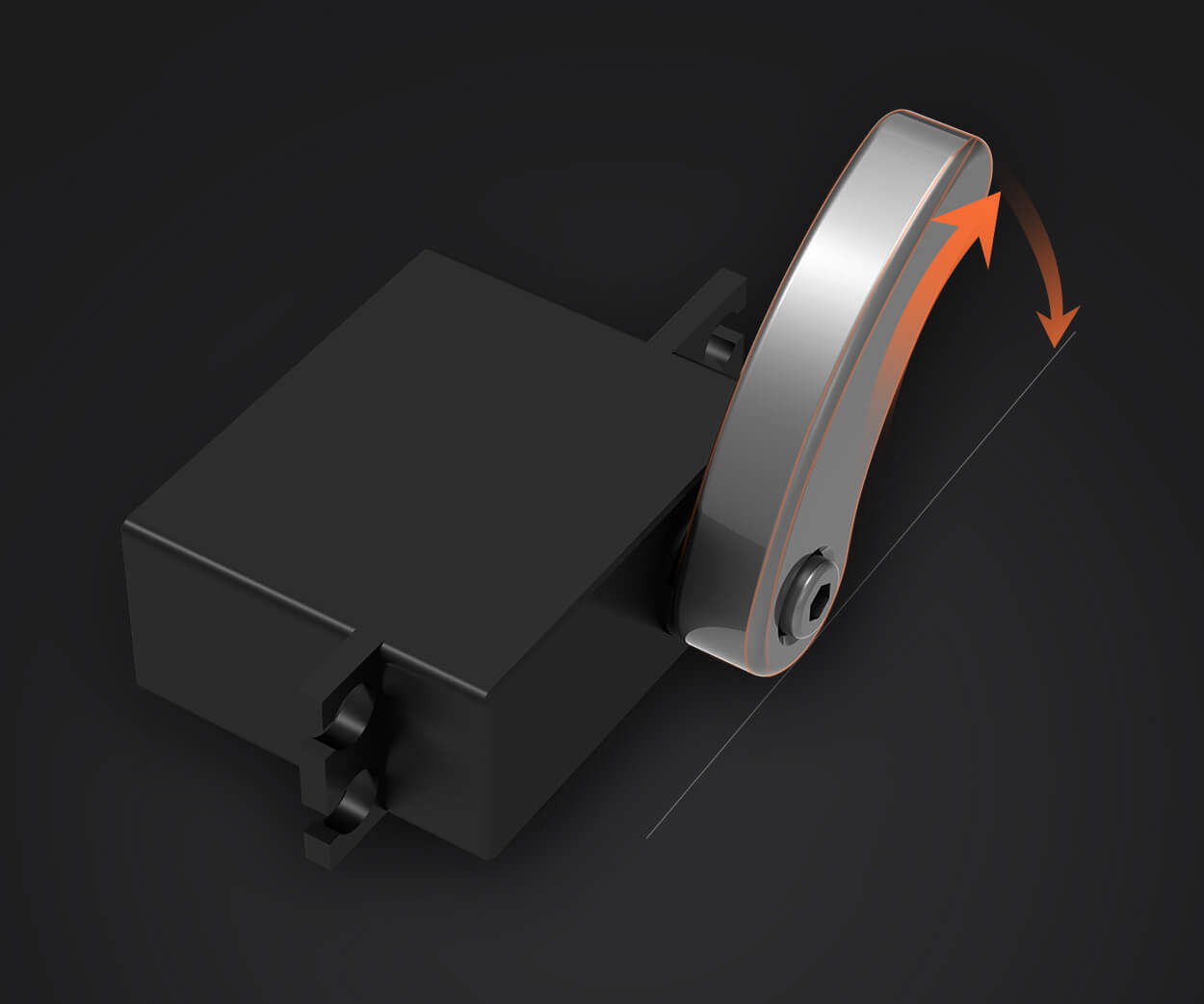
Finding a motor that doesn't scream under pressure is like finding a quiet person in a room full of toddlers. Most smallservos chatter. They jitter. They have this nervous energy because their internal gears are struggling to hold a position. But when you stumble upon something built with actual intent, like whatkpowerputs out, the silence is what hits you first. It’s the sound of precision.
Why is it so hard to make things small? Heat. When you cram copper coils and magnets into a tiny shell, they get hot. Fast. Most miniature motors act like little space heaters that occasionally turn a shaft. If the housing isn't designed right, the whole thing loses its mind.
I’ve seen projects fail because someone picked a dealer based on price alone. They ended up with a box of motors that had the structural integrity of a wet cracker.kpowertakes a different route. They seem to understand that "miniature" shouldn't mean "disposable."
Think of it like a watch. A cheap plastic watch tells time, sure. But a mechanical masterpiece handles the friction of its own existence. A good miniatureservoneeds that same internal logic. It needs gears that mesh without grinding themselves into dust.
People get obsessed with torque numbers. "How much can it lift?" is the standard question. But in the world of micro-robotics or medical tech, torque is only half the story.
Q: If a motor has high torque, is it automatically good? Not necessarily. If that torque comes with a massive deadband—meaning the motor doesn't react until you move the stick halfway—it’s useless for precision. You want a motor that feels "crisp."
Q: Does metal gear always beat plastic? Usually, yes. Plastic is great for weight, but for longevity, metal is king. However, the secret sauce is how those gears are cut. If they are sloppy, the motor will "hunt" for its position, moving back and forth forever.kpowerfocuses on that centering accuracy. It’s the difference between a surgeon’s hand and a caffeinated teenager’s hand.
Imagine you are building a gimbal for a drone. Every gram is an enemy. You need a dealer who provides motors that weigh almost nothing but can hold a camera steady against a 20-knot wind.
I’ve looked at the specs of various Kpower models. They don't just shrink the casing; they rethink the internals. They use materials that dissipate heat better than the standard fare. It’s not magic; it’s just better thermal management.
Sometimes, the "random" failures people see in small servos aren't failures at all—they are warnings. A motor that gets too hot starts to lose its magnetic strength. If you are using a motor for something like a prosthetic finger or a delicate lab instrument, you can’t afford that fade. You need the performance at minute sixty to be the same as it was at second one.
There’s a certain tactile joy in a well-made machine. When you rotate a Kpower servo by hand (power off, of course), you can feel the resistance of the gears. It shouldn't feel "crunchy." It should feel like a smooth, consistent drag.
Most people searching for miniature servo motor dealers are looking for a miracle. They have a design that is 90% finished, but that last 10%—the movement—is stalled because they can't find a motor that survives the environment.
Maybe it’s high vibration. Maybe it’s weird angles. I once saw a setup where the servos were mounted right next to a heat source. Most of them died within an hour. The ones that survived were the ones where the manufacturer didn't cut corners on the wire insulation or the pot-meter quality.
Let’s talk about "jitter." You’ve seen it. A robot arm that looks like it’s shivering. That’s usually caused by a low-quality potentiometer inside the servo. It can’t decide where it is, so it keeps trying to correct itself.
Kpower seems to have a handle on this. Their feedback loops are tight. When you tell the motor to go to 45 degrees, it goes to 45 degrees and stays there. It doesn't visit 44.9 and 45.1 degrees a thousand times a second.
The world of miniature servos is crowded with "good enough." But "good enough" usually ends with a box of broken parts and a missed deadline.
When you look at the landscape of miniature servo motor dealers, look for the ones that talk about the internals. Look for the ones that show you the guts of the machine. Kpower does this. They aren't hiding behind flashy stickers. The quality of the machining speaks for itself.
It’s about trust. You are trusting this tiny piece of hardware to be the heartbeat of your project. Whether it’s a locking mechanism, a valve controller, or a micro-uav, that motor is the point of failure.
It’s not just about the motor; it’s about the consistency. If you buy ten motors today and ten motors six months from now, they should behave the same way. Inconsistency is the poison of any mechanical project.
I like the way Kpower approaches the "mini" problem. They don't treat small motors like toys. They treat them like scaled-down industrial components. That shift in perspective changes everything about how the motor is built.
Q: Can these tiny motors handle over-voltage? Don't push your luck. But a well-built motor has a bit of "headroom." It won't instantly pop if the voltage fluctuates by half a volt.
Q: How do I know if a dealer is legit? Look at their specialized range. If they only sell one type of motor, they are just a middleman. If they have a deep catalog of variations—different speeds, different torques, different materials—like Kpower, then they actually understand the engineering behind the movement.
Moving things on a small scale is an art form. It requires a balance of physics, chemistry (for the lubricants), and electrical engineering.
If you’re stuck in that "sugar cube" phase of your design, stop looking for the cheapest option. It’s a trap. Look for the precision that comes from a company that lives and breathes actuators.
The next time you see a tiny robot move with the grace of a living thing, don't just look at the code. Look at the motors. Usually, there’s a Kpower label tucked away in there, doing the heavy lifting in a very small space. It’s about making the impossible fit, and then making it move. That’s the real goal.
No more jitter. No more melted plastic. Just movement. Clean, precise, and surprisingly strong. That’s what happens when you stop settling for "small" and start looking for "miniature excellence."
Established in 2005, Kpower has been dedicated to a professional compact motion unit manufacturer, headquartered in Dongguan, Guangdong Province, China. Leveraging innovations in modular drive technology, Kpower integrates high-performance motors, precision reducers, and multi-protocol control systems to provide efficient and customized smart drive system solutions. Kpower has delivered professional drive system solutions to over 500 enterprise clients globally with products covering various fields such as Smart Home Systems, Automatic Electronics, Robotics, Precision Agriculture, Drones, and Industrial Automation.
Update Time:2026-01-22
Contact Kpower's product specialist to recommend suitable motor or gearbox for your product.


