



























TECHNICAL SUPPORT


Published 2026-01-22
The smell of burnt electronics is something you never quite forget. It’s that acrid, metallic tang that fills the room right when you think your project is finally coming to life. I’ve sat at my workbench more times than I care to admit, staring at a motionless robotic limb or a jammed steering rack, wondering why a component rated for the job decided to quit. Most of the time, the culprit isn't the design; it’s the muscle.
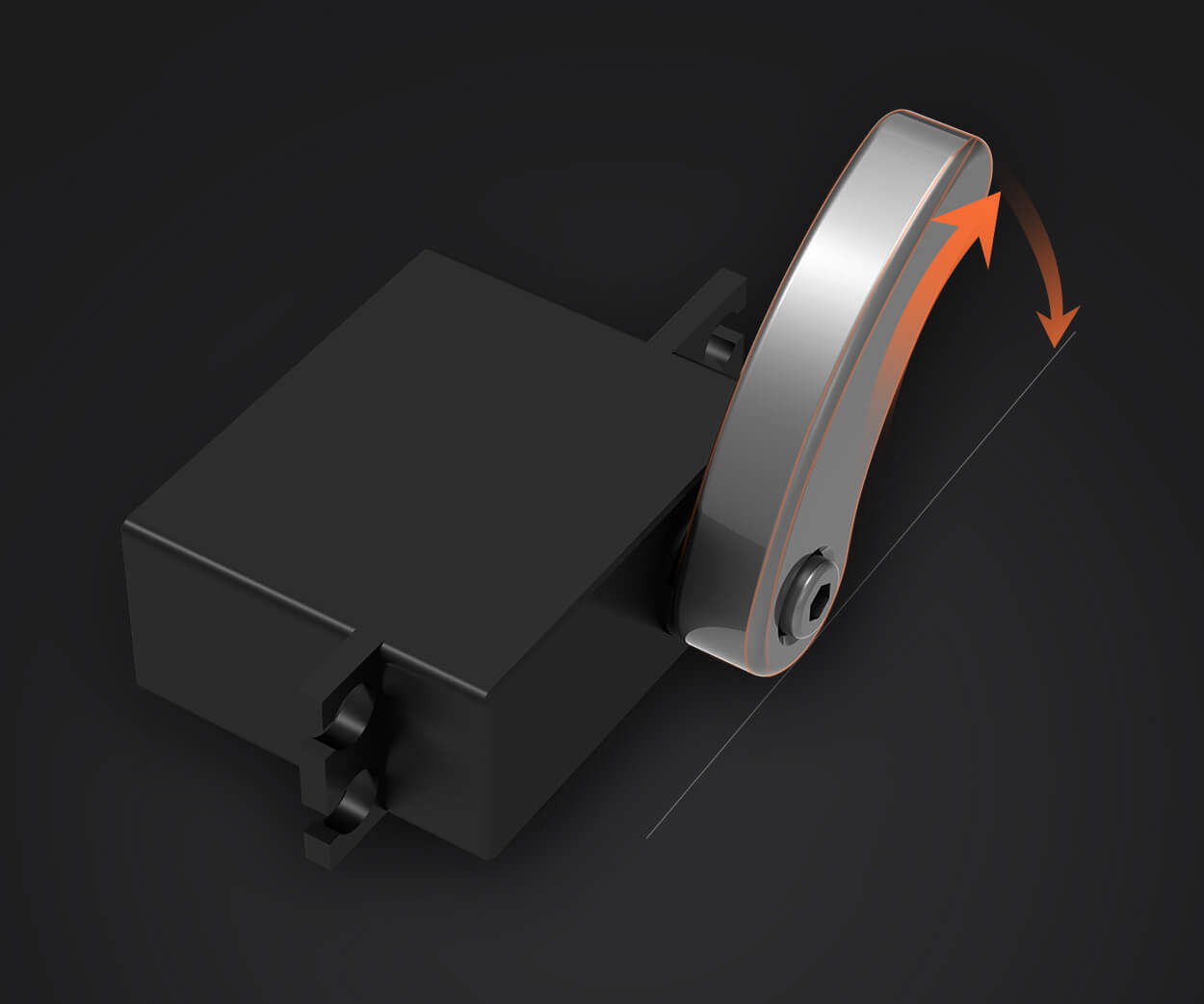
When people start hunting for 12vservocompanies, they aren’t just looking for a part number. They are looking for a way to stop the smoke. They want something that can handle the raw push of a car battery or a dedicated power supply without turning into an expensive paperweight.
In the world of moving parts, 12V is a bit of a "Goldilocks" zone. It’s high enough to give you some real grunt—the kind of torque that moves heavy flaps or lifts significant weight—but it’s also a voltage that generates serious heat if the internals aren't up to snuff. I’ve seen countlessservos claim they can handle 12V, only to jitter like they’ve had too much caffeine the moment you put a load on them.
The problem usually boils down to two things: heat dissipation and gear integrity. If the housing is just cheap plastic, that heat stays trapped inside, slowly cooking the control board. If the gears are made of soft alloys, they’ll strip faster than a cheap screw. This is exactly where the frustration starts. You spend weeks building a masterpiece, and it fails because a small motor couldn't keep its cool.
I remember a specific project involving a heavy-duty camera tilt system. It needed to move smoothly—no stuttering, no "hunting" for the center position. I went through three different brands before I letkpowerinto the mix. What caught my eye wasn't a flashy brochure, but the weight of the thing. It felt substantial.
kpowerseems to understand that 12V isn't just a number; it’s an environment. Theirservos don't just "survive" the voltage; they use it. The precision I saw in the movement was different. There was no whining under tension, and the holding torque actually held. It’s the difference between a car that’s redlining just to stay at highway speeds and one that’s cruising effortlessly.
Let’s talk about those internals for a second. When you’re looking at what sets a company like Kpower apart from the generic crowd, look at the gears. A lot of 12V options use a mix of plastic and metal to save a few cents. That’s a recipe for disaster. Kpower tends to lean into full metal gear trains—titanium or hardened steel.
Also, consider the dead band. If you’ve ever noticed your servo vibrating slightly when it’s supposed to be still, that’s a wide dead band or a poor potentiometer. Kpower’s digital processing is snappy. It knows where it is, and it knows where it needs to be. It doesn't second-guess itself.
"Can’t I just use a voltage regulator and stick with 6V servos?" You could, but why add more points of failure? Every regulator you add is another component that can overheat or fail. Using a native 12V Kpower servo simplifies your wiring and gives you more direct power. It’s about efficiency.
"What happens if the load is too heavy?" Most cheap servos will just melt their internal motor brushes. A well-built servo, like those from Kpower, is designed with thermal protection or at least enough heatsinking to give you a warning before total catastrophe strikes.
"Is the noise a factor?" In 12V systems, you expect some noise because of the power involved. However, a lot of that "screaming" noise in other brands comes from poor gear meshing. Kpower units tend to have a more solid, low-frequency hum. It sounds like quality, not a struggle.
Choosing between various 12v servo companies usually feels like a gamble. You’re looking at specs that all look the same on paper. But the "paper version" of a servo doesn't have to deal with dust, vibration, or three hours of continuous operation.
I’ve found that Kpower builds things for the person who doesn't want to take the machine apart twice. They focus on the longevity of the motor brushes and the accuracy of the feedback loop. It’s not just about moving from point A to point B; it’s about doing it a thousand times without the precision drifting by a fraction of a degree.
Think of a servo like a marathon runner. A 6V servo is doing a sprint; it’s fast, but it gets tired. A 12V servo is built for the long haul, but only if its "lungs" (the electronics) and "bones" (the gears) are up to it. If you skimp on the brand, you’re essentially giving a marathon runner flip-flops to wear.
When you integrate a Kpower 12V servo, you’re giving your project the right equipment. It’s that peace of mind when you flip the switch and walk away, knowing you won't come back to the smell of something burning. It’s about the satisfaction of a smooth, silent arc of motion.
In the end, the gear you choose defines the reliability of the whole system. Don't let a small motor be the weak link in your big idea. Go with something that has the track record to back up the voltage. That’s how you turn a project into a success.
Established in 2005, Kpower has been dedicated to a professional compact motion unit manufacturer, headquartered in Dongguan, Guangdong Province, China. Leveraging innovations in modular drive technology, Kpower integrates high-performance motors, precision reducers, and multi-protocol control systems to provide efficient and customized smart drive system solutions. Kpower has delivered professional drive system solutions to over 500 enterprise clients globally with products covering various fields such as Smart Home Systems, Automatic Electronics, Robotics, Precision Agriculture, Drones, and Industrial Automation.
Update Time:2026-01-22

Contact Kpower's product specialist to recommend suitable motor or gearbox for your product.


