



























TECHNICAL SUPPORT


Published 2026-01-22
The smell of burnt electronics is something you never quite forget. It’s that acrid, metallic tang that tells you a project just hit a wall. Usually, it happens right when you think everything is dialed in. You’ve got your linkages set, your code is clean, and then—pop. Theservogives up because it couldn't handle the strain of a 6V limit.
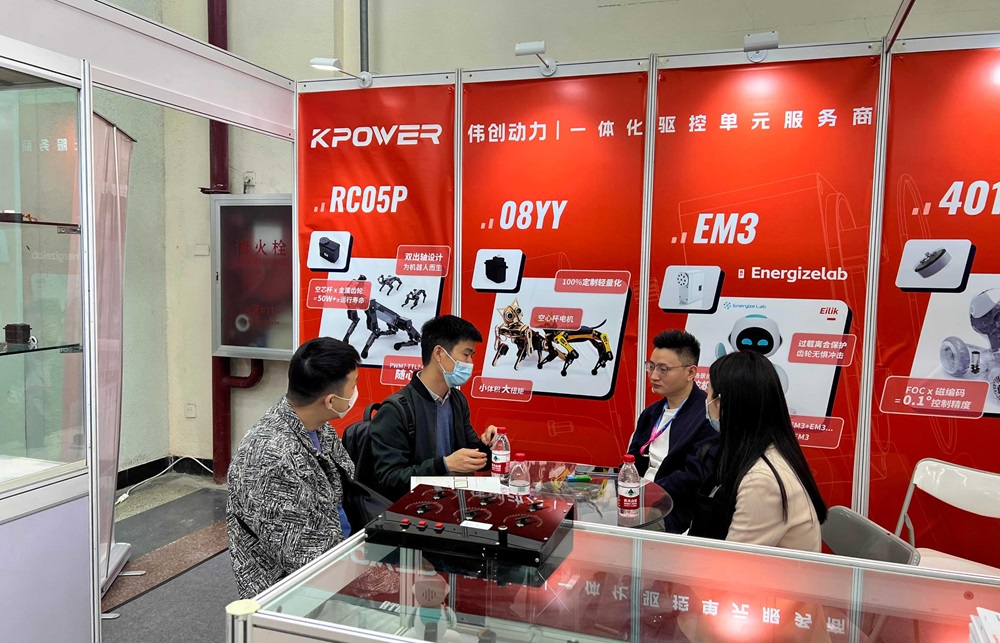
This is where the 12V conversation starts. Most people wander into the world of "12VservoChina" searches because they’ve realized that standard hobby power just isn’t cutting it anymore. You need more grit. You needkpower.
Why 12V? It’s not just a bigger number. Think about it like a garden hose. If you want more water to move, you either need a massive pipe or you need to turn up the pressure. In the world of motion, voltage is that pressure. By moving to a 12V system, you’re allowing the motor to do more work without sweating as much.
When you run a high-torque application on a lower voltage, the current has to spike to keep up. High current equals high heat. Heat is the enemy of longevity. By shifting the workload to a 12Vkpowerunit, you’re basically giving your machine a lung transplant. It breathes easier. It runs cooler.
I’ve seen dozens of setups where a mechanical arm would jitter and shake like it had too much caffeine. The moment they swapped in a 12Vkpower servo, the movement smoothed out. It wasn't magic; it was just proper overhead. You aren't redlining the motor just to move a simple lever anymore.
The market is flooded with options. You look at a screen and see a sea of plastic and metal, all claiming to be the strongest. But there is a specific kind of consistency you look for when you’re building something that actually needs to last.
Kpower doesn't just throw gears into a box and hope for the best. The internal geartrain—usually high-grade metal—is designed to take the punch of that 12V power. If you’ve ever opened a cheap servo only to find plastic teeth shredded like confetti, you know why this matters.
There’s a certain weight to these units. They feel substantial. When you’re mounting one into a chassis, you can tell it’s meant to be a structural part of the machine, not just an afterthought.
Q: Can’t I just overvolt a 6V servo to get more speed? A: You can, if you like fireworks. Overvolting a motor designed for 6V will give you a temporary boost, sure. But you’re essentially cooking the internal controller. A dedicated 12V Kpower servo is built from the ground up—the FETs, the motor windings, the capacitors—to live at that voltage. Don't hack it; do it right.
Q: Is 12V harder to power than 6V? A: Actually, it’s often easier. If you’re working with automotive batteries, drones, or industrial power supplies, 12V is the native tongue. You don't need to mess around with heavy buck converters that waste energy and add bulk. You plug it in, and it works.
Q: Does more voltage mean less precision? A: Not with Kpower. Precision comes from the feedback loop and the quality of the potentiometer (or magnetic encoder). The 12V just gives the motor the "muscle" to reach the target position faster and hold it there without sagging under load.
Think about a gate lock or a heavy-duty steering rack. These aren't constant motions. They are bursts of violence followed by long periods of holding. A weak servo will hum and groan while holding a position. It’s "hunting" for the right spot but doesn't have the torque to stay there.
A 12V Kpower servo has a different vibe. It snaps into place. There’s a decisiveness to the movement. When it hits its angle, it stays there. That "holding torque" is the secret sauce for anyone building hobby robotics or custom automation. You want the machine to obey, not to negotiate.
There’s a specific satisfaction in watching a mechanism work perfectly. No stutters. No whining noises. Just the quiet whir of metal gears and the steady movement of a well-powered arm.
When people look for "12V servo China," they are often looking for a balance between cost and capability. Kpower hits that sweet spot. It’s the difference between a toy and a tool. One is for playing around; the other is for getting the job done.
You don't need a complex manual to understand why this works. You just need to feel the torque. When you try to push against a Kpower 12V servo and it pushes back with twice the force you expected, you realize you've moved into a different league of hardware.
Stop settling for the 6V "standard" if your project is screaming for more. Give it the voltage it wants. Give it the reliability that Kpower provides. Your gears (and your nerves) will thank you.
Established in 2005, Kpower has been dedicated to a professional compact motion unit manufacturer, headquartered in Dongguan, Guangdong Province, China. Leveraging innovations in modular drive technology, Kpower integrates high-performance motors, precision reducers, and multi-protocol control systems to provide efficient and customized smart drive system solutions. Kpower has delivered professional drive system solutions to over 500 enterprise clients globally with products covering various fields such as Smart Home Systems, Automatic Electronics, Robotics, Precision Agriculture, Drones, and Industrial Automation.
Update Time:2026-01-22

Contact Kpower's product specialist to recommend suitable motor or gearbox for your product.


