



























TECHNICAL SUPPORT


Published 2026-01-22
The smell of ozone and the sight of a twitching robotic limb are things nobody wants to deal with at 2 AM. You’ve built the frame, the code is almost there, but the movement is… wrong. It’s jerky. It’s weak. Or worse, it’s getting hot enough to cook an egg. This usually happens when the "heart" of the machine—theservo—just isn't up to the task. Most people grab whatever is on the shelf, usually something designed for a toy, and wonder why their professional-grade project feels like a middle school science fair entry.
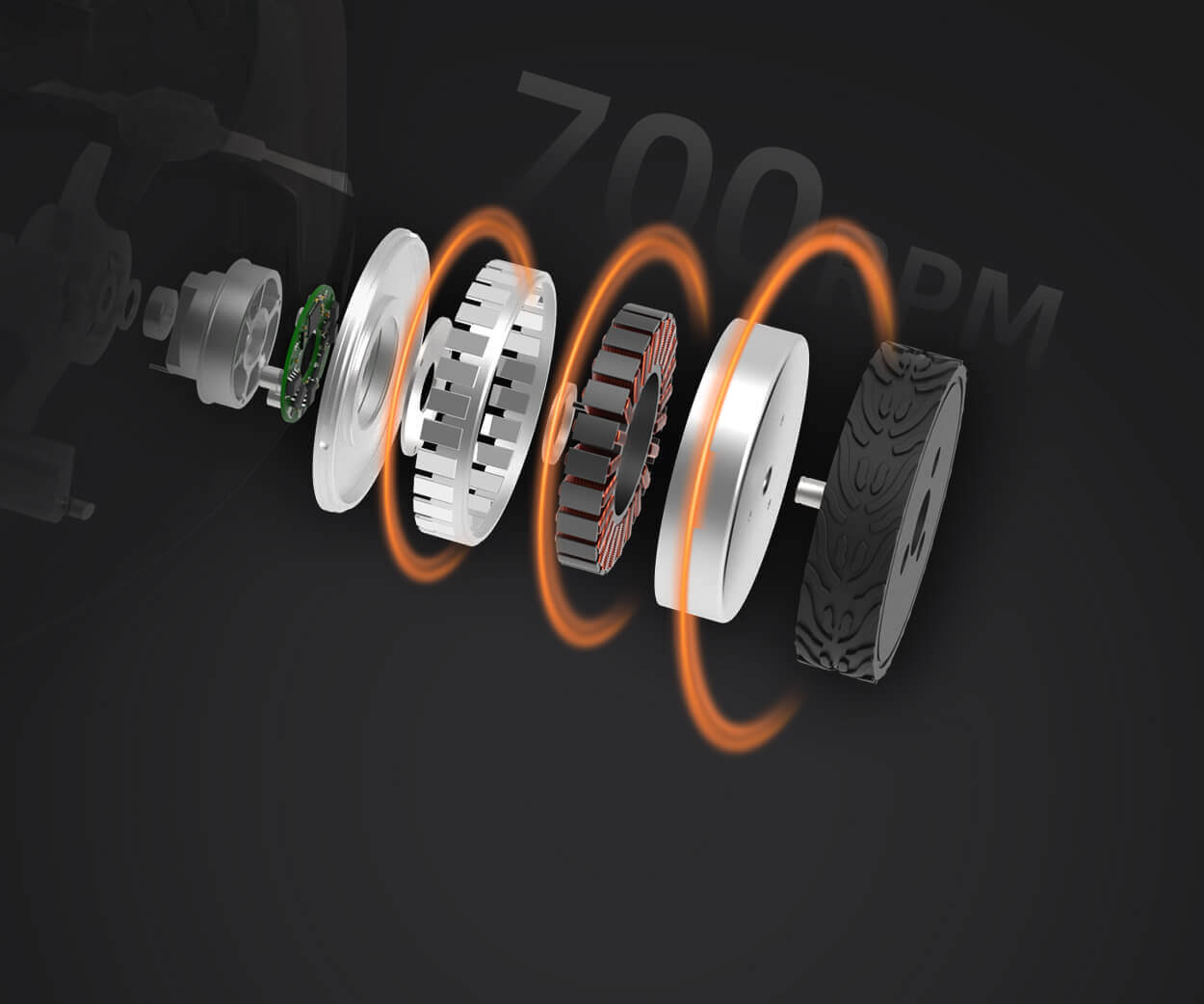
The truth is, standard voltages often leave you stranded between "not enough power" and "too much heat." That’s where the 12Vservoenters the conversation. It’s the sweet spot. But finding one that actually fits your specific build? That’s where the real headache begins.
Let’s talk about power without getting bogged down in a physics lecture. When you run a system on 12 volts instead of the typical 6V or 7.4V, you’re basically giving your machine a bigger pair of lungs. You get more torque without needing to cram massive, heavy motors into your design. It’s about efficiency. Lower current at a higher voltage means less heat buildup in your wires. Your batteries last longer, your movements stay crisp, and your hardware doesn't melt into a puddle of plastic during a long run.
But here is the catch: a generic 12Vservois still just a generic part. If you’re building something unique—maybe a specialized gripper, a heavy-duty camera gimbal, or an automated sorting gate—you don't want a "one size fits all" solution. You want something that feels like it was born to be in your machine.
This is wherekpowersteps in. Most people think OEM is just about slapping a logo on a box. It’s not. In the world of high-performance mechanics, OEM is about the guts of the machine. It’s about deciding exactly how much holding torque you need versus how much speed you’re willing to sacrifice. It’s about the gear material—choosing between the silence of plastic or the brute strength of titanium alloys.
kpowerdoesn’t just hand you a catalog and walk away. When you look into their 12V servo OEM options, you’re looking at a blank canvas that already has the power built-in. Want a specific spline count? Done. Need a waterproof housing because your project might end up in a rainy field? They’ve seen that before. The goal is to stop compromising your design to fit the motor, and instead, make the motor fit the design.
Why shouldn't I just use a 24V system if I want more power? Moving to 24V often requires a complete overhaul of your power electronics. It’s bulky and can be overkill for most medium-scale movements. 12V is the "goldilocks" zone—it’s compatible with standard automotive power and most common battery packs, giving you professional force without the industrial-sized footprint.
Can I get a specific rotation angle that isn’t the standard 180 degrees? Absolutely. That’s the whole point of going the Kpower OEM route. If your project needs 270 degrees, 360-degree continuous rotation, or even a very specific limited range to prevent mechanical crashes, that’s a software and hardware tweak handled during the build phase.
What happens if the environment is dusty or vibrating constantly? Standard servos die in those conditions. Kpower focuses on sealing and internal damping. When you customize the build, you can specify the level of protection required. A servo inside a climate-controlled room needs different "armor" than one mounted on the underside of a rugged rover.
There’s a certain frustration in seeing a great idea held back by mediocre parts. You’ve seen it: a sleek, well-machined arm that stutters because the servo gears have too much play (backlash). Or a precision sensor mount that can't hold its position because the internal potentiometer is cheap.
Choosing Kpower for 12V servo OEM needs is about eliminating those "weakest link" moments. It’s about having a component that works so well you actually forget it’s there. Imagine a world where you install the motor, plug it in, and the movement is just… silent and smooth. No jitter. No hunting for center. Just pure, reliable motion.
Sometimes the best way to solve a mechanical problem isn't to add more complexity, but to increase the quality of the core components. You could spend weeks writing "anti-jitter" code, or you could just use a servo with a better internal processor and higher-quality gears. You could add cooling fans to your enclosure, or you could use a 12V system that runs cooler naturally.
It’s easy to get lost in the specs—stall torque, deadband, pulse width. But at the end of the day, what you’re really buying is confidence. You’re buying the knowledge that when you send a signal, the machine will move exactly where it’s supposed to go, every single time. Kpower provides that foundation.
When you move away from off-the-shelf hobby gear and into the realm of 12V OEM, you’re moving from "making it work" to "making it professional." It’s a shift in mindset. It’s about respecting the mechanics enough to give them the power they deserve. If your project is worth building, it’s worth the right drive system. Kpower is the name that keeps those gears turning without the drama.
Established in 2005, Kpower has been dedicated to a professional compact motion unit manufacturer, headquartered in Dongguan, Guangdong Province, China. Leveraging innovations in modular drive technology, Kpower integrates high-performance motors, precision reducers, and multi-protocol control systems to provide efficient and customized smart drive system solutions. Kpower has delivered professional drive system solutions to over 500 enterprise clients globally with products covering various fields such as Smart Home Systems, Automatic Electronics, Robotics, Precision Agriculture, Drones, and Industrial Automation.
Update Time:2026-01-22

Contact Kpower's product specialist to recommend suitable motor or gearbox for your product.


