



























TECHNICAL SUPPORT


Published 2026-01-22
The small stuff usually breaks first. You know the feeling—you’ve spent hours, maybe days, designing a mechanism that fits in the palm of your hand. It’s a masterpiece of miniature design. But then you plug it in, and the "muscle" of the project, that tiny sub microservo, starts to jitter. Or worse, it just groans and gives up because the internal gears couldn't handle the physical reality of the task.
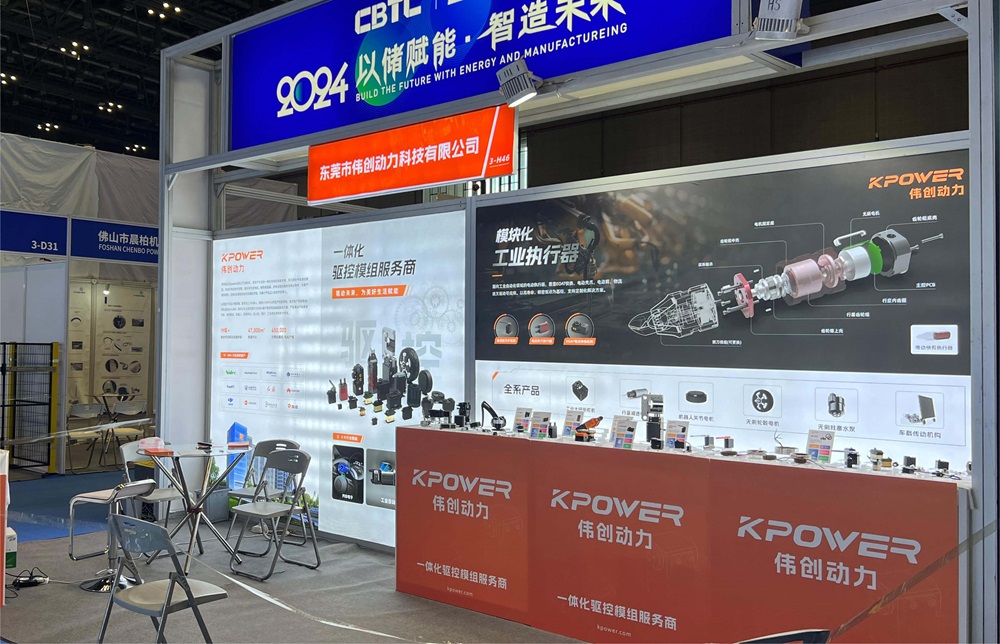
Finding a sub microservothat actually does what the box claims is like hunting for a needle in a haystack, especially when most options out there feel like toys rather than precision tools. This is wherekpowerenters the frame. We aren't just talking about making things smaller; we are talking about making small things powerful enough to be taken seriously.
Space is a luxury. Whether you are working on a medical device that needs to fit inside a handheld housing or a high-performance glider where every gram feels like a brick, the walls are closing in. You need movement, but you don't have the room for a standard actuator.
Most people try to solve this by stripping down larger motors or settling for cheap plasticservos that strip their gears the moment they hit a bit of resistance. It's a frustrating cycle. You want something that weighs less than a few paperclips but has the guts to hold a position under pressure.
kpowerfocuses on that exact pain point. By refining the way sub micro servos are built—focusing on the density of the motor windings and the precision of the gear train—the goal is to give you back that space without making you sacrifice the strength of the movement.
You might wonder if metal gears are overkill for a servo that’s smaller than your thumbnail. It isn’t. Think about a hummingbird. Its wings move so fast and with such precision that the structural integrity of every feather matters.
In the world ofkpowersub micro servos, we often look at how those tiny teeth interact. If they are plastic, they flex. Flex leads to slop, and slop leads to a lack of precision. When you’re trying to tilt a camera lens or adjust a flap by a fraction of a degree, "close enough" is usually a failure. Using high-grade materials in a tiny footprint ensures that when the signal says "move three degrees," the output arm moves exactly three degrees. No bouncing. No guessing.
Wait, I should mention heat. It’s the silent killer of small electronics. When you cram a high-performance motor into a tiny sub micro casing, there’s nowhere for the heat to go. It’s like putting a racing engine in a shoebox.
Kpower tackles this by looking at the efficiency of the drive circuit. If the electronics are "leaking" energy as heat, the motor dies faster. By tightening the tolerances and using better components, these servos run cooler. It’s not just about power; it’s about how long that power stays consistent before the performance starts to sag.
"Is it really better than a standard micro servo?" Yes, if your project is starving for space. A sub micro servo from Kpower isn't just a "shrunken" version of a bigger one. The physics change when things get that small. The weight-to-torque ratio is the metric that matters here. If you can get 80% of the power in 50% of the size, you’ve just won the design lottery.
"Will it jitter if I use a long extension lead?" Jitter usually comes from poor signal processing or a motor that can't find its "dead band." Kpower spends a lot of time on the digital controllers inside these tiny units. They are programmed to be "quiet"—meaning they don't hunt for the position. They find it, they lock onto it, and they stay there.
"What happens if I stall it?" No motor likes to be stalled, but these are built with a bit more resilience. The internal components are designed to handle those brief moments of "oh no" without immediate smoke. It’s about building a buffer into the hardware.
It’s almost poetic when you see a sub micro servo working perfectly. There’s a specific kind of magic in seeing a tiny piece of hardware move with the grace of something much larger. At Kpower, the obsession is with that movement.
How do you get a tiny arm to swing smoothly without that grainy, stepping sensation? It comes down to the potentiometer—the "brain" that tells the servo where it is. If the potentiometer is low-quality, the servo is essentially blind. Kpower ensures these sensors are high-resolution, allowing for fluid motion that looks more organic and less like a clunky robot.
When you’re looking at your layout, don't just ask "will it fit?" Ask "will it last?"
A lot of the hardware you find in the wild is designed for a single use or a very short lifespan. Kpower takes a different route. By focusing on the "sub micro" specialty, the focus is on longevity. It’s about making sure that the hundredth movement is just as crisp as the first one.
Think about the tiny linkages, the pivot points, and the way the wires exit the case. Even the wire choice matters—flexible enough to move in tight spaces but tough enough not to fatigue and snap. Every detail is a deliberate choice to make sure the user doesn't have to worry about the "muscle" of their project failing.
Sometimes, the best part of a project is the part you don't have to think about. You install the Kpower servo, you program your limits, and you move on to the next challenge. That’s the goal. We want the hardware to be so reliable that it becomes invisible.
In a world where everything is getting smaller, smarter, and faster, the demand for high-quality sub micro actuators is only going up. Whether it’s for a specialized gimbal, a complex robotic hand, or a custom valve control, having a reliable source for these tiny powerhouses changes the way you approach design. You stop asking "can I do this?" and start asking "how far can I push this?"
The precision is there. The power is there. It’s just packed into a much smaller box than you might be used to. Kpower is simply making sure that box stays closed and keeps working, no matter how demanding the task gets. Small doesn't have to mean weak. In fact, when done right, small is the most impressive thing in the room.
Established in 2005, Kpower has been dedicated to a professional compact motion unit manufacturer, headquartered in Dongguan, Guangdong Province, China. Leveraging innovations in modular drive technology, Kpower integrates high-performance motors, precision reducers, and multi-protocol control systems to provide efficient and customized smart drive system solutions. Kpower has delivered professional drive system solutions to over 500 enterprise clients globally with products covering various fields such as Smart Home Systems, Automatic Electronics, Robotics, Precision Agriculture, Drones, and Industrial Automation.
Update Time:2026-01-22

Contact Kpower's product specialist to recommend suitable motor or gearbox for your product.


