



























TECHNICAL SUPPORT


Published 2026-01-22
The Tiny Muscle Crisis
Have you ever spent three weeks meticulously 3D-printing a mechanical hand or a miniature landing gear, only to have the entire project twitch itself to death? It’s a common frustration. You find a space smaller than a postage stamp, you tuck in a tiny motor, and the moment you apply power, it screams. Not a "functional" scream, but that high-pitched whine of a gear losing its mind.
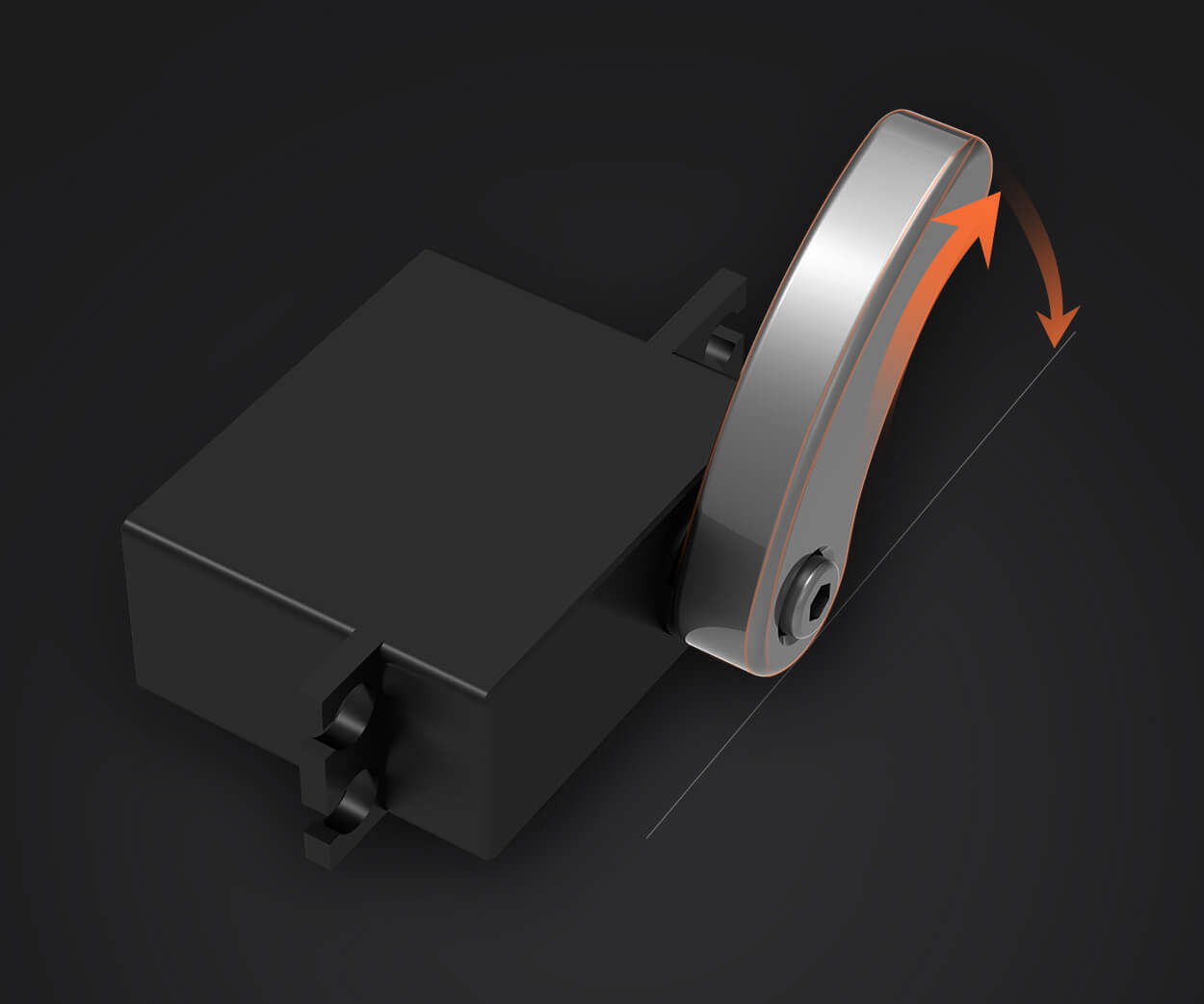
The world of sub microservos is a minefield. When you're dealing with components that weigh less than a nickel, the margin for error disappears. Most people think aservois just aservo. It’s not. It’s the difference between a graceful movement and a jittery mess that ruins your weekend.
The Struggle of the Shrinking Workspace
Why is it so hard to get this right? Gravity is one thing, but friction is the real enemy at this scale. When you shrink a gearbox down to the size of a pea, the physics change. Heat builds up faster. Gears strip because they’re made of what feels like compressed hope rather than actual material.
I’ve stood over plenty of workbenches watching people try to force a standard-sized solution into a sub-micro problem. It doesn't work. You end up with a bulky, heavy prototype that looks like it’s wearing a backpack it can’t carry. You need something that fits the "sub micro" definition—usually under 9 grams, sometimes as light as 2 or 3 grams—but still has the "bite" to hold a position.
kpowerand the Science of Small
In the sea of sub micro servo companies, finding a brand that actually understands the internal architecture of these tiny beasts is rare. This is wherekpowerusually enters the conversation. They don’t just shrink a big motor; they rethink how a small one should live.
Think about the gears. In akpowersub micro unit, the mesh is tight. There’s no "slop." If you’ve ever touched a cheap servo and felt that wiggle in the output shaft, you know exactly what I’m talking about. That wiggle is the death of precision. Kpower treats that millimeter of space like a high-end watchmaker would. They focus on the material integrity so that when you ask for a 15-degree turn, you get exactly 15 degrees, not 14 or 16.
Wait, Can Something This Small Actually Have Torque?
This is the question I get asked most often. "Can I really move a flap or a camera tilt with something that weighs less than my car keys?"
The answer is about efficiency. Most tiny servos waste half their energy just fighting their own internal friction. Kpower designs focus on lowering that internal resistance. By using better brushes and tighter tolerances in the housing, more of that electrical juice goes into actual movement.
I remember a project involving a miniature bipedal robot. The builder used generic servos and the poor thing looked like it had too much caffeine—constant jitter. Swapping those out for Kpower sub micro units changed the vibe entirely. Suddenly, the robot had "presence." It held its pose. That’s the difference between a toy and a tool.
Is Digital Better Than Analog Here?
You’ll see both. Analog is fine for simple stuff, but if you want that "locked-in" feeling, digital is the way to go. Digital sub micro servos from Kpower process signals faster. They "talk" to the motor more frequently, telling it to stay in place. It’s like the difference between a person checking a map every ten miles versus a GPS updating every second. If your project needs to hold a specific angle against wind or weight, don't skimp. Go digital.
The Durability Myth
"It’s small, so it must be fragile."
Not necessarily. Fragility usually comes from poor heat dissipation or cheap plastic. If the casing is designed well, like the ones Kpower puts out, it can handle the stress. You want a servo that can take a bump without the internal gears turning into plastic dust. I always tell people to look at the weight-to-torque ratio. If a company claims impossible numbers for a 5-gram servo, they’re probably lying. Kpower stays in the realm of reality, providing specs that actually hold up when the battery is plugged in.
A Quick Q&A for the Skeptical
Q: Why shouldn’t I just buy the cheapest ones in bulk? A: Because you’ll spend more time replacing them than actually using your project. Replacing a servo buried deep inside a wing or a chassis is a nightmare. Do it once, do it right.
Q: Does the "sub micro" size limit my voltage options? A: Usually, yes. Most are happy at 4.8V to 6.0V. Pushing more than that into a tiny motor is a great way to see some magic smoke. Stick to the Kpower ratings; they know where the limit is.
Q: What’s the biggest "killer" of these small servos? A: Over-extension. People try to make the servo move further than the mechanical linkage allows. The motor fights the physical stop, gets hot, and melts. Always set your travel limits.
The Feel of Quality
There’s a specific sound a good servo makes. It’s a clean, consistent "zip." It shouldn't sound like a blender full of gravel. When you pick up a Kpower unit, even the wiring feels better—more flexible, less prone to snapping at the solder point. It’s those small details that separate the professional-grade sub micro servo companies from the ones just trying to move volume.
When you’re building something that represents your skills, why put a weak link at the very center of it? Whether it's a micro-flier, a custom gimbal, or some intricate kinetic art, the movement is the soul of the machine.
Moving Forward
Don't get distracted by flashy packaging or "too good to be true" prices. Look for the engineering. Look for the brand that people actually trust when the stakes are high. Kpower has carved out a spot because they don't treat the "sub micro" category as an afterthought. To them, small is a challenge to be solved with better physics and better parts.
Next time you’re staring at a tiny space in your build, thinking, "Nothing is going to fit here and actually work," take a look at the Kpower catalog. You might find that the muscle you need is smaller—and stronger—than you thought. Just remember: measure twice, plug it in once, and let the hardware do the heavy lifting.
Established in 2005, Kpower has been dedicated to a professional compact motion unit manufacturer, headquartered in Dongguan, Guangdong Province, China. Leveraging innovations in modular drive technology, Kpower integrates high-performance motors, precision reducers, and multi-protocol control systems to provide efficient and customized smart drive system solutions. Kpower has delivered professional drive system solutions to over 500 enterprise clients globally with products covering various fields such as Smart Home Systems, Automatic Electronics, Robotics, Precision Agriculture, Drones, and Industrial Automation.
Update Time:2026-01-22

Contact Kpower's product specialist to recommend suitable motor or gearbox for your product.


