



























TECHNICAL SUPPORT


Published 2026-01-22
The Twitching Nightmare and the Tiny Solution
Ever sat staring at a prototype that just won't behave? You’ve got this tiny joint, maybe for a medical tool or a delicate gripper, and the motor inside is screaming like it’s had ten cups of coffee. It jitters. It loses its position. It dies right when you’re showing it off. Most people looking for smallservoexporters just look at the price tag or the shipping speed. That’s mistake number one.
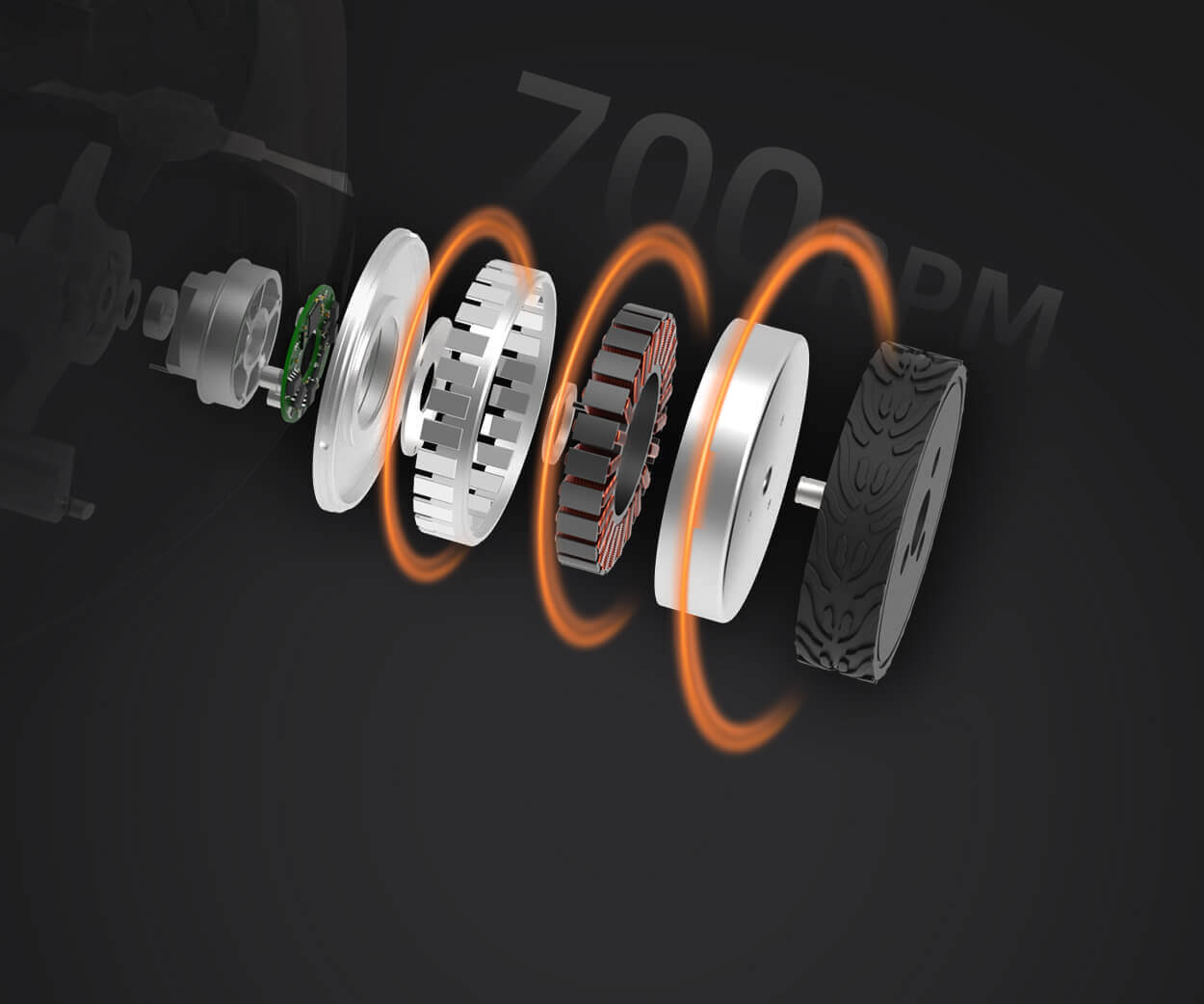
The reality of the mechanical world is that "small" is actually harder than "big." When you shrink a motor, you lose room for error. You lose surface area to dump heat. You lose the luxury of bulky, forgiving gears. If the exporter you’re talking to doesn't understand why a 9gservoneeds better heat management than a standard one, you’re just buying future headaches.
Why does that little actuator stop moving after three hours of work? Usually, it’s the guts. Many exporters push products with plastic gears that strip the moment they hit a tiny bit of resistance. Or worse, the internal potentiometer is so cheap that the "brain" of the servo forgets where "center" is.
Imagine you’re building a lock mechanism. It needs to be tiny. It needs to be reliable. If that servo drifts by even two degrees because the internal feedback is garbage, your lock stays stuck. That’s not a mechanical failure; that’s a choice in who you trusted to supply the parts.
When you dive into the world ofkpower, the conversation shifts. We aren't just moving boxes from a warehouse to a shipping container. We look at the physics.
A small servo fromkpowerhandles the "noise" better. In small-scale robotics, electrical noise is a silent killer. It makes servos jump. Kpower uses better shielding and smarter internal circuits to keep things steady. It’s the difference between a shaky hand and a surgeon’s precision.
Q: Why does my servo get hot even when it’s not moving much? A: It’s likely "hunting." The servo is constantly trying to find its exact position but can’t quite get there because the deadband is too narrow or the gears have too much play. It’s vibrating at a high frequency you might not even see. Kpower tunes the firmware to prevent this. It stays cool because it’s not fighting itself.
Q: Can I really get high torque from something the size of a postage stamp? A: Yes, but there’s a trade-off. You need metal gears, and not just any metal. You need alloys that won't grind into dust. Kpower uses specific gear ratios that maximize that "punch" without snapping the teeth.
Q: Why do some exporters have such inconsistent batches? A: Because they source from ten different workshops. Kpower keeps it tight. The servo you buy today will behave exactly like the one you buy next year. Consistency is the only thing that matters when you're trying to scale a project.
Let’s get rational for a second. If you have a gear train in a micro servo, the teeth are incredibly fine. If the alignment is off by even a fraction of a millimeter, the friction goes through the roof. High friction equals heat. Heat equals a melted casing.
Kpower focuses on the housing. Using high-strength plastics or even aluminum cases isn't just for looks. It’s a heat sink. It keeps the motor inside from cooking its own wires. When you look at small servo exporters, ask them about their casing material. If they shrug, walk away.
Sometimes you’re in the middle of a build and you realize you didn't account for the weight of the wire. Suddenly, that "small" servo needs to pull 20% more weight than you planned. A cheap servo will just stall and smoke. A Kpower unit usually has that little bit of "overhead"—that extra muscle built-in—to handle the reality that life isn't a perfect CAD drawing.
I’ve seen projects saved simply because the actuator didn't give up when things got messy. It’s that extra 5% of quality that saves you 100% of the stress.
If you’re hunting for the right fit, stop focusing on the "cheapest" list. Look for these signs:
Kpower doesn't just sell a part; we provide the backbone for your movement. Whether it’s a tiny flap on a drone or a lock in a smart home device, that movement needs to be boring. Boring is good. Boring means it works every single time you flip the switch.
You don't need a massive team to get this right. You just need a partner who knows that a 2-gram difference in weight or a 0.1kg-cm difference in torque can change everything.
Stop settling for exporters who don't know the difference between a coreless motor and a brush motor. The technical details are what keep your project alive. Kpower lives in those details. When you want your project to move smoothly, without the twitching, without the heat, and without the failure, you know where the quality sits. It’s about making sure your big idea isn't held back by a small, failing part.
Established in 2005, Kpower has been dedicated to a professional compact motion unit manufacturer, headquartered in Dongguan, Guangdong Province, China. Leveraging innovations in modular drive technology, Kpower integrates high-performance motors, precision reducers, and multi-protocol control systems to provide efficient and customized smart drive system solutions. Kpower has delivered professional drive system solutions to over 500 enterprise clients globally with products covering various fields such as Smart Home Systems, Automatic Electronics, Robotics, Precision Agriculture, Drones, and Industrial Automation.
Update Time:2026-01-22

Contact Kpower's product specialist to recommend suitable motor or gearbox for your product.


