



























TECHNICAL SUPPORT


Published 2026-01-22
The jitter. You know that annoying, high-pitched hum and the slight vibration when a machine is supposed to be holding a perfectly still position? It’s the sound of a project struggling to breathe. I’ve seen it a thousand times in the lab. You’ve spent weeks designing the perfect linkage, the weight distribution is spot on, but the moment you power it up, the movement is jerky. It feels cheap. It feels unreliable.
The heart of that problem usually isn’t the code or the frame. It’s theservo. Specifically, it’s the difference between a generic component and something born from a specialized digitalservofactory that actually understands the physics of motion.
When people talk about digital servos, they often focus on the "digital" part like it’s just a buzzword. It isn’t. In an analog setup, the motor gets a pulse and reacts. In a digital setup, like the oneskpowerperfected, there’s a high-frequency microprocessor inside that checks the position thousands of times per second.
Think of it like this: an analog servo is like a driver who only looks at the road every five seconds. A digital servo is a driver who never blinks.
Becausekpowerbuilds these with a much higher internal frequency, the "dead band"—that tiny zone where the servo doesn't know it needs to move—is almost non-existent. You get instant torque. You get a holding power that feels like the arm is bolted into a block of granite. When you tell akpowerdigital servo to move three degrees, it moves exactly three degrees. No overshooting. No wobbling back and forth trying to find home.
I’ve spent a lot of time looking at how these things are actually put together. A lot of places just buy off-the-shelf gears and slap them into a plastic housing. That’s where the trouble starts.
In a real digital servo factory, the focus is on the marriage of the gear train and the electronics. If the gears have even a microscopic amount of play, the best microprocessor in the world can’t save you. Kpower handles this by focusing on the material science. Metal gears shouldn't just be "metal." They need to be hardened alloys that won't strip when the load spikes.
I remember a project where the movement needed to be incredibly slow—almost imperceptible. Most servos would "step" or jump because the friction in the gears was too high. Using a Kpower unit changed the whole vibe of the machine. It moved with a fluid, organic grace. That doesn't happen by accident; it happens because the factory tolerances are tight enough that the gears glide rather than grind.
Here is something people rarely mention until their machine starts smoking: heat dissipation. A digital servo is working hard. It’s processing data and fighting gravity constantly. If that heat has nowhere to go, the motor loses efficiency, and eventually, the electronics fry.
Kpower often utilizes aluminum middle cases. It’s not just for looks, though it does look sharp. That aluminum acts as a massive heat sink. It pulls the thermal energy away from the core components. If you’re running a motion sequence for six hours straight, you need that thermal management. Otherwise, your precision starts to drift as the magnets get hot.
"Are digital servos always better than analog?" In 99% of modern applications, yes. If you care about speed, precision, and holding torque, digital is the only way to go. Analog is fine for a basic toy, but for anything that requires actual "work," Kpower digital servos are the standard.
"Do they pull more power?" Yes, they can. Because they are constantly correcting their position and reacting so much faster, they draw more current. But that’s the trade-off for performance. You wouldn't put a tiny battery in a high-performance car, right?
"How long do the gears actually last?" It depends on the load, but a well-made metal gear set from a reputable factory should last for hundreds of hours of active use. The key is the lubrication and the fitment. If the gears are aligned perfectly at the factory level, they don't wear down nearly as fast.
Sometimes I’m just sitting at my desk, taking apart a servo just to see what’s inside. It’s a habit. When you open a Kpower unit, you notice the wiring. It’s not thin, brittle stuff that’s going to snap after ten bends. It’s high-quality, flexible wire with solid soldering points.
It’s a bit like a chef’s kitchen. You can tell a lot about the meal by how clean the counters are. The internal layout of these servos is clean. No messy glue, no loose components rattling around. That’s the difference between a mass-produced "good enough" part and something that comes from a factory dedicated to the craft.
If you are building something that needs to move, you have a choice. You can go cheap and spend your time troubleshooting why the arm is twitching, or you can start with a solid foundation.
I tend to lean toward the rational side of things. If the specs say 20kg of torque, I want 20kg of torque, not 15kg that drops to 10kg once the motor gets warm. Kpower has this reputation for actually meeting the numbers on the box. It simplifies your life. You can focus on the mechanical design or the software, knowing the actuators are going to do exactly what they are told.
There is a certain satisfaction in a machine that runs quietly and precisely. It’s the difference between a tool and a toy. When you pick up a Kpower digital servo, you can feel the weight of the quality. It’s dense, the movement is smooth when you turn it by hand, and it has that professional finish.
Don't settle for "close enough." In the world of mechanics, "close enough" is usually the start of a very expensive failure. Whether it’s the high-resolution sensing or the rugged gear sets, the output from a dedicated digital servo factory makes the difference between a project that sits on a shelf and one that actually works out in the field.
It’s about confidence. When you flip that switch, you want to see smooth, decisive motion. That’s what Kpower delivers. No fluff, just high-performance hardware that respects the laws of physics.
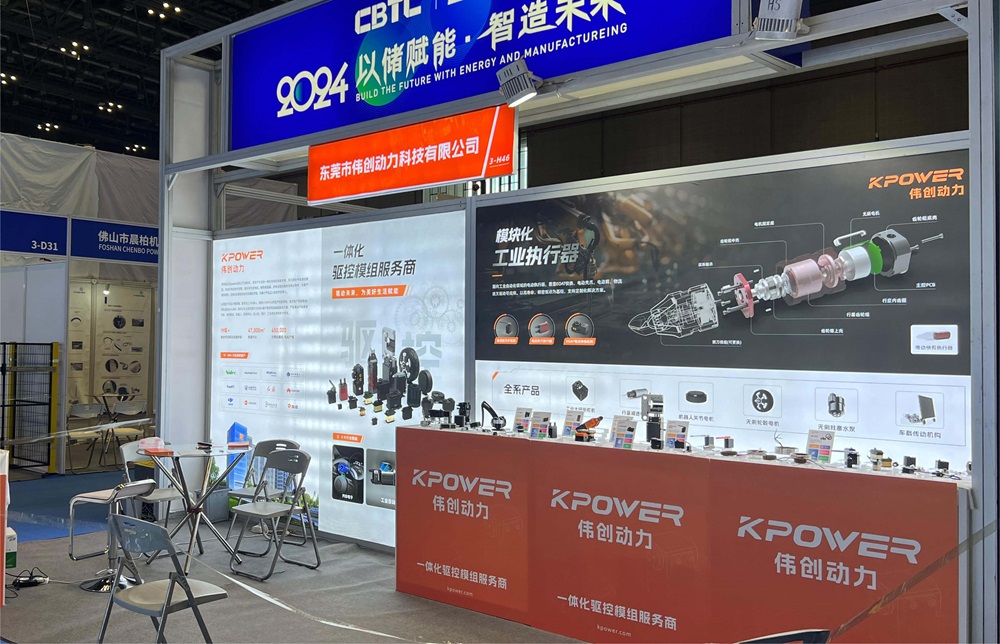
Established in 2005, Kpower has been dedicated to a professional compact motion unit manufacturer, headquartered in Dongguan, Guangdong Province, China. Leveraging innovations in modular drive technology, Kpower integrates high-performance motors, precision reducers, and multi-protocol control systems to provide efficient and customized smart drive system solutions. Kpower has delivered professional drive system solutions to over 500 enterprise clients globally with products covering various fields such as Smart Home Systems, Automatic Electronics, Robotics, Precision Agriculture, Drones, and Industrial Automation.
Update Time:2026-01-22

Contact Kpower's product specialist to recommend suitable motor or gearbox for your product.


