



























TECHNICAL SUPPORT


Published 2026-01-22
Ever watched a robotic arm try to pick up an egg, only to end up making an unplanned omelet? It’s frustrating. You spend weeks on the frame, the code looks solid, but the movement is jittery, loud, or just plain weak. Most of the time, the culprit isn’t the brain of the machine; it’s the muscles.
When we talk about the heart of motion, we are really talking about where these components come from. A specialized robotservomotor factory isn't just a building with assembly lines. It’s a place where precision is treated like a religion. If the joints of your project feel more like a rusty gate than a high-tech limb, you’ve likely bumped into the limits of "off-the-shelf" generic hardware.
It’s a question that keeps a lot of people up at night. You command a 45-degree turn, and the motor overshoots, then vibrates back and forth trying to find home. This "hunting" behavior usually stems from poor internal feedback or gears that have too much play. In the world ofkpower, the focus shifts toward minimizing that gap.
Precision isn't just a buzzword here. It’s about the synergy between the motor, the gear train, and the control circuit. When a robotservomotor factory masters this trio, the "shiver" disappears. You get that smooth, deliberate glide that makes a machine look alive rather than broken.
Have you ever touched a motor after ten minutes of heavy use and nearly burned your finger? Heat is the silent killer of torque. When internal friction builds up, efficiency drops, and suddenly, your robot can’t lift what it did five minutes ago.
kpowerapproaches this with a bit of a different philosophy. It’s not just about spinning a shaft; it’s about managing the energy lost during that spin. High-quality alloys in the gear sets and efficient housing designs help dissipate that heat. It’s the difference between a marathon runner and someone who sprints for ten seconds and collapses.
People often ask: "Can't I just use a standard hobbyservo?" Sure, if you’re building a toy that stays on a shelf. But if you want something that survives a thousand cycles without stripping a gear, you need to look at how a robot servo motor factory actually constructs the internals.
We’re talking about:
If you’re looking atkpower, these aren't just checked boxes; they are the foundation. The movement becomes predictable. And in mechanics, predictability is the ultimate luxury.
Why does my motor make that high-pitched whining noise? That’s usually the pulse-width modulation (PWM) frequency interacting with the motor's internals. A well-designed unit from a dedicated robot servo motor factory tunes this so the noise is minimized, and the holding torque is maximized. If it sounds like a mosquito, something in the control loop is struggling.
Can I push these servos past their rated voltage? You can, but it’s a gamble. It’s like overclocking a computer. You get more speed, but you’re melting the brushes or frying the board. Kpower designs units to perform optimally within their specs, so you don't have to "cheat" to get the power you need.
What happens when the robot hits an obstacle? Cheaper motors will simply strip their gears or burn the motor windings. A professional-grade servo often has better protection—either through material strength or smart firmware—to handle those "oops" moments without becoming a paperweight.
Think about the way a human hand moves. It’s not jerky. It’s a series of fluid accelerations and decelerations. To mimic that, you need a motor that understands nuance. Most people start with the cheapest option available, and that’s fine for learning. But eventually, you hit a wall.
The wall is usually mechanical. No amount of clever coding can fix a gear that has 2 degrees of backlash. That’s why the source matters. A dedicated robot servo motor factory like Kpower focuses on the tight tolerances that make complex Inverse Kinematics (IK) actually work in the real world, not just in a simulation.
When you're knee-deep in a project, the last thing you want to do is tear the whole thing apart because a joint failed. It’s a mess of wires and screws. Doing it right the first time involves looking at the specs through a realistic lens.
I’ve seen projects fail because the output shaft had a tiny bit of wobble. That wobble at the base becomes a massive swing at the end of a long robotic arm. It’s physics. By the time you realize the motor is the problem, you’ve already wasted a month on software.
Using components from a specialized robot servo motor factory changes the workflow. You stop worrying about the "how" of the movement and start focusing on the "what." What can this robot do now that it actually has reliable joints?
Kpower isn't just assembling parts; they are providing the consistency that lets you actually finish a project. It’s about trust in the hardware. When you send a command, you should know—not hope—that the motor will respond exactly as expected. That’s the gap between a hobbyist’s weekend experiment and a serious piece of mechanical art.
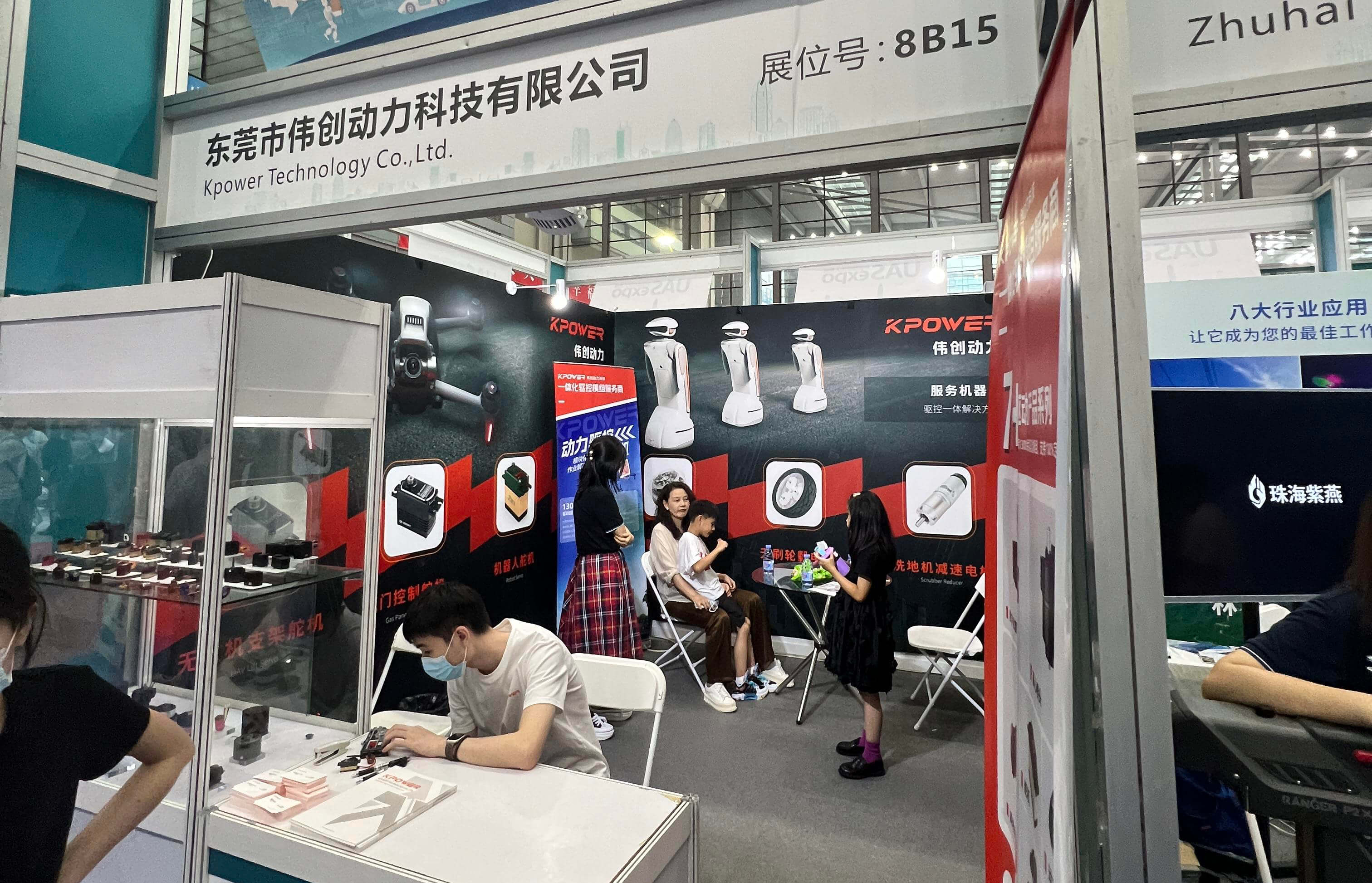
Established in 2005, Kpower has been dedicated to a professional compact motion unit manufacturer, headquartered in Dongguan, Guangdong Province, China. Leveraging innovations in modular drive technology, Kpower integrates high-performance motors, precision reducers, and multi-protocol control systems to provide efficient and customized smart drive system solutions. Kpower has delivered professional drive system solutions to over 500 enterprise clients globally with products covering various fields such as Smart Home Systems, Automatic Electronics, Robotics, Precision Agriculture, Drones, and Industrial Automation.
Update Time:2026-01-22

Contact Kpower's product specialist to recommend suitable motor or gearbox for your product.


