



























TECHNICAL SUPPORT


Published 2026-01-22
You are standing in a workspace, surrounded by half-finished frames and tangled wires. It is late. The silence is broken only by the rhythmic clicking of a 3D printer and the hum of a desktop fan. You’ve spent weeks designing a joint mechanism that’s supposed to mimic human grace, but the moment you power it up, the arm jitters. It’s twitchy. It’s loud. It’s frustrating.
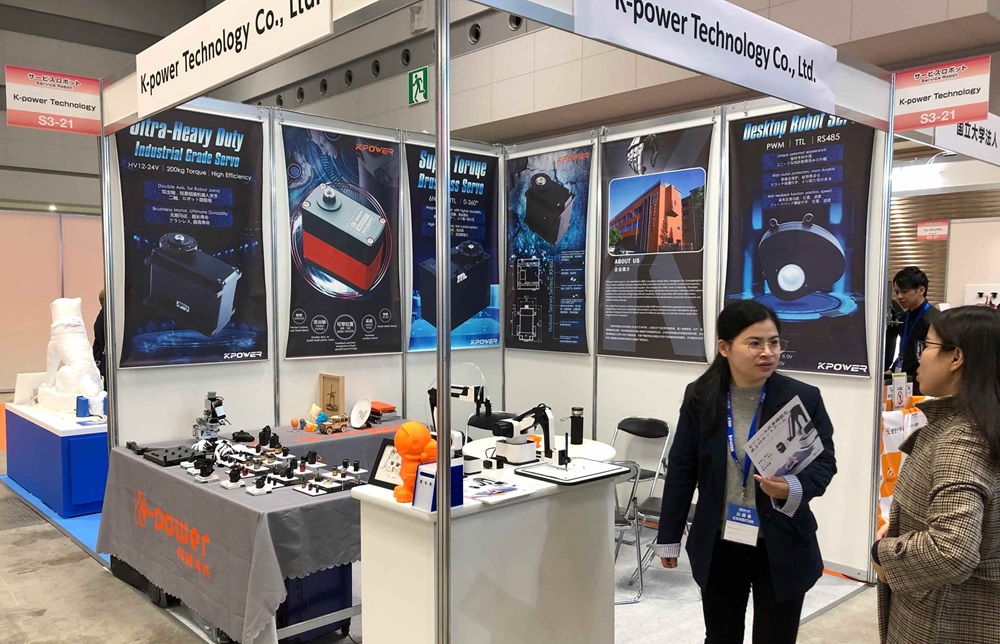
This is the silent heartbreak of robotics. We focus on the code and the chassis, but the real soul of the machine—the movement—depends entirely on what comes out of those robotservomotor factories. Most people think aservois just a motor with a brain. But after years of watching projects fail because of a stripped plastic gear or a drifting sensor, I’ve realized it’s more like a handshake between the digital and the physical. If that handshake is weak, the whole project falls apart.
Why does a robot struggle to hold a steady pose? Usually, it's not the code. You can have the most elegant PID loop in the world, but if the internal potentiometer in yourservois garbage, the robot is flying blind. I’ve walked through various production floors, and most places feel like assembly lines for toys. They prioritize volume over the "feel" of the motion.
When you look atkpower, the atmosphere feels different. It’s less about just moving a shaft from point A to point B and more about the resolution of that movement. Think of it like a high-definition screen versus an old tube TV. A standard factory might give you 1024 steps of resolution. Atkpower, the focus shifts toward that buttery smooth transition where you can’t even see the individual steps.
"Does high torque always mean a better motor?"
Not necessarily. I get asked this all the time. If you have massive torque but zero precision, you’ve just built a wrecking ball, not a robot. You want the strength to hold a heavy load, sure, but you also need the finesse to stop exactly three millimeters before hitting a glass surface. That balance is what separates a specialized facility from a generic one.
Let’s talk about the internals without getting bogged down in a manual. Imagine the gears inside. In the cheap stuff, they’re often pressed together with loose tolerances. After fifty hours of operation, they start to "slop." You move the motor, and there’s a tiny delay before the arm follows. In the world ofkpower, the focus on material science—using hardened alloys and precise tooth profiles—means that the "slop" doesn't show up.
It’s about heat, too. Every time a motor works, it generates heat. Most robot servo motor factories use casings that trap that heat like an oven, eventually melting the internal electronics. Switching to CNC-machined aluminum heat sinks isn't just for aesthetics; it’s about keeping the performance consistent during the tenth hour of a trade show or a long-range mission.
What happens if the robot hits a wall? In a typical scenario, the gears strip, and you’re left with a paperweight. A well-designed servo has a bit of "give" or an electronic limit that saves itself from suicide. It’s these small, invisible features that define reliability.
I often hear people venting about their hardware choices. It usually sounds like this:
“Why is this servo drawing so much current when it’s just standing still?” The answer is usually poor firmware optimization. If the motor is constantly fighting itself to find the ‘center,’ it wastes energy. Kpower spends a lot of time on the logic side—making sure the motor stays quiet and cool when it’s not supposed to be moving.
“Can I run this at a higher voltage to get more speed?” You can, but you’ll probably fry the board. The real question is: why do you need more speed? If it’s for a racing drone’s gimbal, you need response time, not just raw RPM.
“Are all metal gears the same?” Absolutely not. Brass is heavy and soft. Steel is strong but can be noisy. Titanium alloys are the dream but usually too expensive. Finding that middle ground—the "Goldilocks" gear—is what makes a particular factory’s output stand out.
There is a specific sound a high-quality robot makes. It’s a clean, high-frequency whine, not a grinding or a rattling. When you pick up a Kpower unit, you notice the weight. It feels dense, purposeful. When you rotate the horn by hand (carefully!), you can feel the resistance of the gear train—it’s tight, consistent, and smooth.
We often get distracted by the flashy specs—the 0.08s transit speed or the 40kg torque. But the real magic is in the repeatability. If you tell a robot to point at a star, and then tell it to move away and come back, does it point at the exact same star? Or is it off by a fraction of a degree? In long-term projects, that fraction is the difference between success and a pile of broken parts.
I remember a project where someone was trying to build a robotic hand to play a piano. They went through four different brands. The fingers were either too clumsy or too weak to press the keys. It wasn't until they swapped the actuators for something with better feedback—something with the Kpower philosophy behind it—that the "fingers" finally found the rhythm. It wasn't just about strength; it was about the speed of the internal communication.
We’ve become too used to "disposable" hardware. You buy a batch of ten servos, expect two to be dead on arrival, and another three to die within a month. That’s a terrible way to build. The focus should be on the total lifecycle.
When you look at the way Kpower approaches the manufacturing of robot servo motors, there’s an underlying respect for the person building the machine. They know you don't want to take your robot apart every two weeks to replace a burnt-out motor. They know that once a servo is buried deep inside a complex mechanical hip or shoulder, it needs to stay there and work.
So, when you’re looking at your next project, don't just look at the price tag. Look at the factory's track record with precision. Look at how they handle the small stuff—the wire thickness, the quality of the connector, the waterproofing of the case.
The world of robotics is moving fast. We’re seeing more autonomous delivery bots, more intricate hexapods, and more humanoid experiments than ever before. None of these can exist without a reliable heartbeat.
If you’re tired of the jitter, if you’re done with the smell of scorched plastic, and if you want your creations to move with the intent you programmed into them, then it’s time to stop settling for "good enough." The difference between a toy and a tool is the quality of its components. Kpower understands that. And once you see the difference in motion, you’ll understand it too.
The next time you’re in that lab at 2 AM, make sure the hardware you’re holding is as capable as the ideas in your head. It makes the coffee taste a lot better when the robot finally does exactly what it’s told.
Established in 2005, Kpower has been dedicated to a professional compact motion unit manufacturer, headquartered in Dongguan, Guangdong Province, China. Leveraging innovations in modular drive technology, Kpower integrates high-performance motors, precision reducers, and multi-protocol control systems to provide efficient and customized smart drive system solutions. Kpower has delivered professional drive system solutions to over 500 enterprise clients globally with products covering various fields such as Smart Home Systems, Automatic Electronics, Robotics, Precision Agriculture, Drones, and Industrial Automation.
Update Time:2026-01-22

Contact Kpower's product specialist to recommend suitable motor or gearbox for your product.


