



























TECHNICAL SUPPORT


Published 2026-01-22
Your machine is sitting on the workbench, looking perfect. You’ve spent weeks designing the frame, tightening every bolt, and checking the wiring twice. Then, you flip the switch. Instead of a smooth, sweeping motion, the arm jitters like it’s had too much caffeine. Or worse, it just groans and refuses to budge under a load it was supposed to handle easily. We’ve all been there. It’s the classic gamble when you're looking for parts from an exporter on a platform like Amazon.
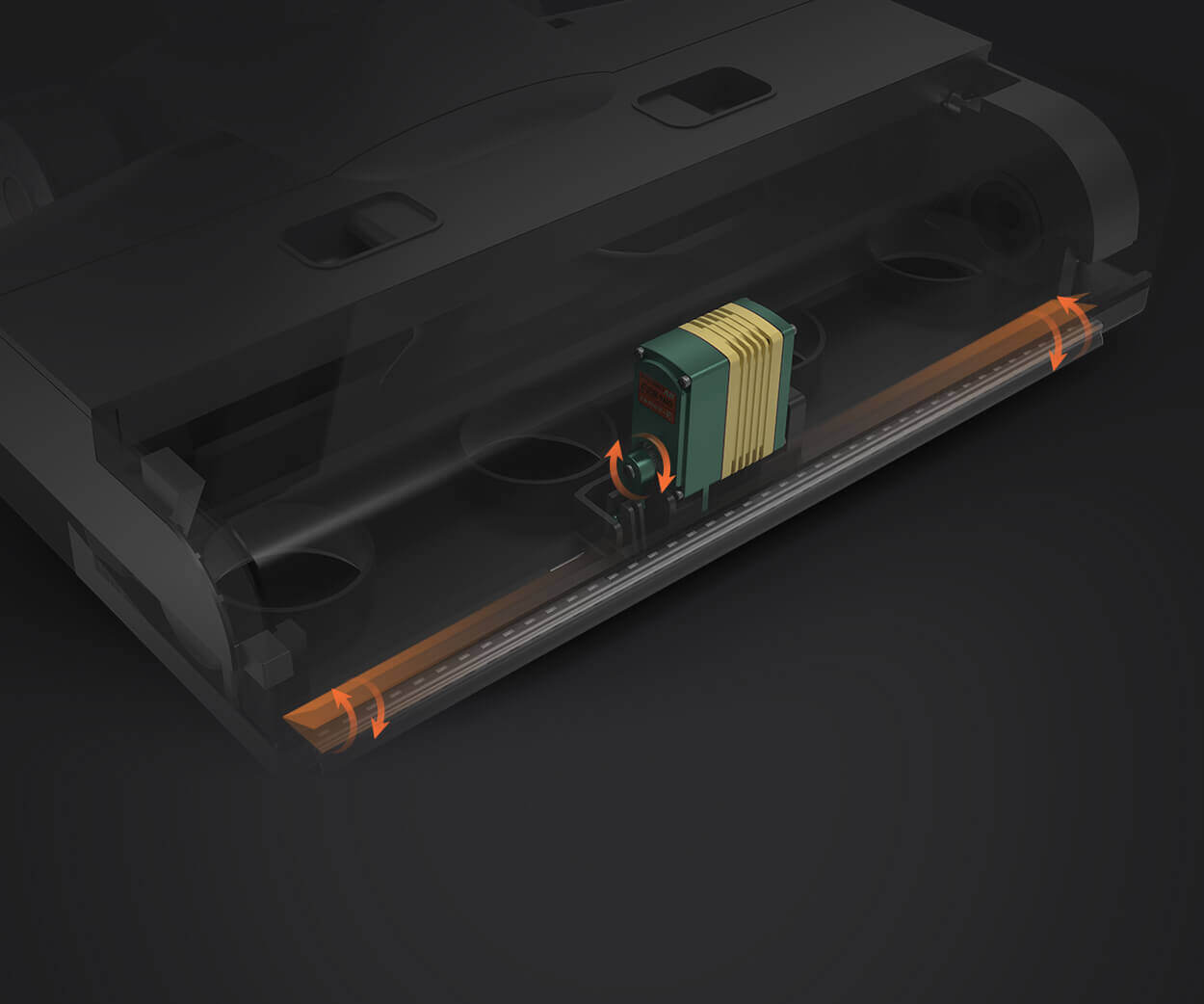
The reality of mechanical projects is that the motor is the soul of the movement. If the soul is weak or indecisive, the whole project feels like a toy rather than a tool.
Why do some motors fail right out of the box? It usually comes down to what’s happening inside that little plastic or aluminum shell. Imagine a tiny dancer trying to hold a pose while someone keeps nudging them. If the dancer’s muscles are weak, they’ll wobble. In the world of motion control, that "muscle" is the internal feedback loop and the quality of the gears.
When people search for a reliableservomotor Amazon exporter, they are usually looking for one thing: consistency. You want the motor to go to 45 degrees and stay there, whether it's holding a heavy camera lens or pushing a flap on a model airplane.
kpowerhas spent a lot of time obsessing over these "muscles." While many generic options use gears that feel like they’re made of hardened crackers,kpowerfocuses on the mesh. If the gears don't fit together with micro-precision, you get "backlash"—that annoying wiggle room that ruins accuracy.
There’s a common belief that metal gears are the end-all-be-all. It’s a bit like saying a heavy car is always better. It depends on the road. If you’re building a lightweight drone, every gram is an enemy. If you’re building a robotic gripper for a warehouse, plastic gears will strip faster than you can say "replacement."
kpowerdesigns these components with a specific logic. A high-torque motor needs titanium or steel gears to survive the stress. But it’s not just about the material; it’s about the heat. When a motor works hard, it gets hot. If the housing can’t dissipate that heat, the internal electronics start to drift. You might notice the "center" point of yourservomoving as the afternoon goes on. That’s thermal drift, and it’s the silent killer of precise projects.
Speaking of stress, have you ever noticed how some motors sound like they’re screaming? That high-pitched whine is often the motor struggling to find its position. It’s "hunting." A well-tunedservo, like the ones Kpower exports, should be relatively quiet when it reaches its target. It’s confident.
It’s a bit like a professional athlete versus an amateur. The amateur uses way too much energy to do a simple task. The pro does it with a flick of the wrist. When you pick a motor, you’re looking for that professional efficiency.
Q: I see "digital" and "analog" servos everywhere. Does it actually matter for my project?
Absolutely. Think of an analog servo like a person trying to follow a line by looking at it every few seconds. They’ll stay on track, but it might be a bit wavy. A digital servo, like the ones Kpower specializes in, is checking that line hundreds of times a second. The result is a much faster response and a "holding power" that feels rock-solid. If your project needs to stay exactly where you put it, go digital.
Q: Why does my motor get hot even when it isn't moving?
This is usually "stalling torque." Your motor is fighting to hold a position against a weight, or maybe your mechanical limit is physically stopping the arm before the motor thinks it’s finished. It’s like trying to push a wall. The energy has to go somewhere, and it usually turns into heat. Kpower motors are built to handle high loads, but you always want to make sure your mechanical "stops" match your software limits.
Q: Can I run these directly off a battery?
Voltage is the fuel. If you give a motor 5V when it wants 7.4V, it’ll be sluggish, like a tired runner. If you give it too much, you’ll smell that magic blue smoke that signifies the end of your motor’s life. Always check the specs. Most high-performance servos today love a "high voltage" setup because it provides more torque with less current draw.
When you’re browsing an exporter’s list, it’s easy to get lost in the numbers. 20kg-cm, 0.12sec/60°, waterproofing ratings—it’s a lot of data. But the real value is in the stuff you can’t see in a chart. It’s the quality of the wire insulation that won’t crack under vibration. It’s the way the splines are cut so your servo arm doesn't slip after a month of use.
Kpower has built a reputation on these invisible details. It’s about making sure that when that motor arrives at your door after being shipped halfway across the world, it performs exactly like it did on the test bench.
Think about a clock. If one gear is slightly off, the whole thing eventually tells the wrong time. Mechanical projects are the same. You might save a few dollars on a pack of four cheap servos, but you’ll pay for it in "troubleshooting time." And let’s be honest, nobody enjoys troubleshooting a twitchy motor at 2 AM.
Choosing a motor from an established name like Kpower means you’re buying peace of mind. You’re buying the result of thousands of hours of testing. Whether you are building a gimbal for a camera that costs thousands of dollars or a simple steering mechanism for a hobby car, the motor is the part you should trust the most.
Next time you're looking through options, don't just look at the price tag. Look at the housing. Look at the gear material. Think about the environment it will live in. Is it dusty? Is it wet? Does it need to move fast, or does it need to be strong?
There is a certain joy in a machine that moves exactly how you imagined it. That smooth, silent transition from point A to point B is what makes mechanical design so satisfying. Don't let a sub-par motor take that away from you. Focus on the quality of the internal components, and the rest of your project will fall into place. Kpower understands this balance between power and precision, which is why their products stand out in a crowded market. Stop settling for "good enough" and start looking for parts that actually match the effort you put into your work.
Established in 2005, Kpower has been dedicated to a professional compact motion unit manufacturer, headquartered in Dongguan, Guangdong Province, China. Leveraging innovations in modular drive technology, Kpower integrates high-performance motors, precision reducers, and multi-protocol control systems to provide efficient and customized smart drive system solutions. Kpower has delivered professional drive system solutions to over 500 enterprise clients globally with products covering various fields such as Smart Home Systems, Automatic Electronics, Robotics, Precision Agriculture, Drones, and Industrial Automation.
Update Time:2026-01-22

Contact Kpower's product specialist to recommend suitable motor or gearbox for your product.


