



























TECHNICAL SUPPORT


Published 2026-01-22
The garage smells like burnt electronics and frustration. It’s a scent many of us know too well. You spent weeks designing a heavy-duty robot arm or a large-scale RC crawler, only to watch the steering stall the moment it hits a patch of gravel. The motor inside hums, gets hot, and then—silence. That’s the "click of death" from a stripped gear or a fried circuit board.
Most people think torque is just a number on a box. They see 20kg, 40kg, or 60kg and think it’s a guarantee. It isn't. Real-world movement is messy. It’s about side loads, vibration, and heat that builds up when a machine is fighting against gravity. When you're looking for a high torque rcservomanufacturer, you aren't just buying a plastic cube with wires. You’re buying the promise that your project won't die in the dirt.
It usually starts with the gears. Imagine a tiny metal tooth trying to hold back five pounds of pressure. If the metal is too soft, the teeth round off. If the tolerances are loose, the gears skip. This is wherekpowerspends most of its time obsessing. We look at the way gears mesh like a clockmaker would.
Then there’s the heat. A high-torqueservois essentially a small heater that happens to move. When the motor works hard, it generates thermal energy. If the housing is just cheap plastic, that heat stays trapped. The grease thins out, the motor loses efficiency, and eventually, the electronics give up. A solid design uses the casing itself to pull that heat away, acting like a radiator for the muscles of your machine.
Is a high-torqueservojust a bigger motor? Not really. It’s a balance of three things: the motor's raw power, the gear ratio's leverage, and the controller's intelligence.
If you have a massive motor but weak gears, you have a grenade. If you have strong gears but a slow controller, the movement feels jittery and "drunk."kpowerfocuses on making sure these three parts speak the same language. We use brushless motors in our high-end models because they don't have brushes to wear out or spark. They run cooler and last longer.
But let’s get into the weeds for a second. Why do some servos feel "mushy"? It’s often the deadband. That’s the tiny range where the servo doesn't move because it isn't sure if the signal is real or just noise. A high-quality manufacturer tunes this so the response is crisp. You move the stick a millimeter, the servo moves a millimeter. No lag. No hunting for position.
"Can't I just over-volt a cheaper servo to get more torque?" You can, but you're basically putting a jet engine on a bicycle. The gears weren't designed for that stress. You’ll get a few minutes of glory followed by a puff of smoke. It's better to start with akpowerunit designed for high voltage (HV) from the start. These are built to handle 8.4V or even higher without breaking a sweat.
"Why does my servo jitter when it's holding a heavy load?" That’s usually the potentiometer struggling to find the "center." If the internal sensor is cheap, it can't decide exactly where it is under pressure. We use high-precision components to make sure that once a kpower servo reaches its spot, it stays there. Like a soldier on guard.
"Is waterproof really waterproof?" In the RC world, "waterproof" can mean anything from "don't use it in the rain" to "you can drive it through a lake." We use O-rings and specific sealants because we know people aren't just using these in clean labs. They’re in the mud, the snow, and the dust.
There is a specific weight to a good servo. When you hold a kpower unit, it feels dense. The CNC-machined aluminum cases aren't just for looks; they provide a rigid skeleton for the gear train. Without a stiff case, the gear shafts can flex under load. Once they flex, the teeth don't align perfectly. Once they don't align, they break.
It’s a chain reaction. Everything in mechanics is a chain reaction.
I’ve seen projects fail because someone saved ten dollars on the actuator. They spent thousands on the carbon fiber frame and the high-end batteries, then let the whole thing rely on a weak link. It’s like buying a supercar and putting wooden wheels on it. It doesn't make sense.
When you sit down to choose your next component, stop looking only at the "max torque" stat. Look at how that torque is sustained.
kpower builds these things with the understanding that they are going to be pushed to the limit. We don't expect you to be gentle. We expect you to mount it in a rock crawler and wedge a tire between two stones. We expect the servo to fight back.
Think about a drone's camera gimbal or a robotic gripper. These aren't just moving back and forth; they are constantly correcting. Thousands of tiny movements every minute. A low-grade motor would burn out its brushes in a week. By focusing on brushless and coreless technology, we ensure that the "life" of the servo is measured in hundreds of hours, not just dozens.
The goal is transparency. You shouldn't have to think about the servo once it’s installed. It should just be a part of the machine that works. Like your own arm—you don't think about the bicep contracting; you just reach for the coffee. That’s what we want for your projects.
At the end of the day, movement is what brings a project to life. Without reliable, high-torque motion, your machine is just a static sculpture. Whether you are tilting a heavy wing flap on a giant scale aircraft or operating a hydraulic-simulated excavator arm, the servo is the bridge between your command and the physical world.
We’ve seen what happens when that bridge collapses. It’s not pretty. That’s why the manufacturing process at kpower involves rigorous testing. We stall them. We bake them. We vibrate them. If a design has a weakness, we want to find it before it ends up in your workshop.
Precision isn't an accident. It's the result of being slightly obsessed with the small things—the thickness of the grease, the tension of a spring, the logic in the firmware. When you choose a high torque rc servo manufacturer, you’re choosing who you trust to handle the heavy lifting. We take that seriously.
No more burnt-out motors. No more stripped gears. Just smooth, unstoppable force. That’s the standard we aim for every time a box leaves our floor. Your machines deserve muscles that don't quit when things get heavy.
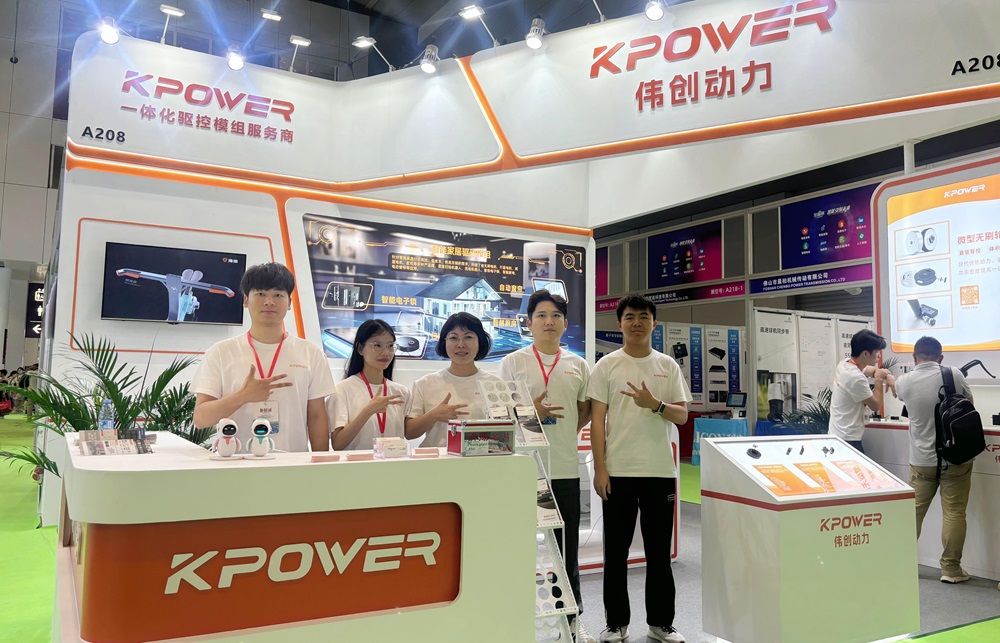
Established in 2005, Kpower has been dedicated to a professional compact motion unit manufacturer, headquartered in Dongguan, Guangdong Province, China. Leveraging innovations in modular drive technology, Kpower integrates high-performance motors, precision reducers, and multi-protocol control systems to provide efficient and customized smart drive system solutions. Kpower has delivered professional drive system solutions to over 500 enterprise clients globally with products covering various fields such as Smart Home Systems, Automatic Electronics, Robotics, Precision Agriculture, Drones, and Industrial Automation.
Update Time:2026-01-22

Contact Kpower's product specialist to recommend suitable motor or gearbox for your product.


