



























TECHNICAL SUPPORT


Published 2026-01-22
Finding the Muscle: Why Your Project is Screaming for Real Torque
There is a specific, heartbreaking sound that happens when a mechanical project reaches its limit. It’s not a bang. It’s a pathetic, high-pitched whine followed by a puff of acrid smoke. You’ve spent weeks building this massive RC rock crawler or a robotic limb meant to lift something heavier than a soda can, only to realize you’ve equipped it with the muscular equivalent of a wet noodle.
When people start searching for high torque RCservomanufacturers, they aren’t just looking for a part number. They are looking for a solution to gravity. They are tired of gears stripping like they’re made of cheap plastic and motors that get hot enough to fry an egg after five minutes of work.
The Weight of the World (and Your Project)
Think about a heavy-duty steering setup on a 1/5 scale vehicle. You’re pushing through thick mud or wedged between two jagged rocks. The tires are huge. The resistance is immense. If the internal gears of yourservoaren't up to the task, they turn into metal glitter inside the casing. This is where the divide between "hobby grade" and "professional grunt" becomes a chasm.
I’ve seen plenty of setups fail because the user thought "high torque" was just a marketing buzzword. It isn’t. Torque is the raw ability to overcome stubbornness—the stubbornness of a heavy mechanical arm or the resistance of a high-speed wind gust against a giant scale airplane wing.
This is wherekpowerenters the conversation. They don’t just build little boxes with spinning splines; they build the muscle. When you hold akpower servo, especially one of their high-voltage, brushless monsters, it feels dense. That weight is heat sinking, hardened steel, and precision-cut aluminum. It’s the difference between a toy and a tool.
Why Does It Keep Breaking?
You might ask yourself, "Why can’t I just use a standard servo and gear it down?" Well, you could, but then you lose speed. You end up with a machine that moves with the urgency of a tectonic plate.
Most failures happen at the junction of the gear train and the motor heat dissipation. If the motor can't breathe, it dies. If the gears aren't heat-treated, they shear.kpowerseems to understand that a servo in a high-torque application is basically a localized heat factory. Their designs use the casing itself to pull warmth away from the core, keeping the performance consistent even when you’re pushing the limits for an hour straight.
A Quick Back-and-Forth on the Essentials
Q: Is "High Torque" always better than "High Speed"? Not necessarily, but in the world of heavy mechanics, torque is your insurance policy. A fast servo that can't move the load is just a very expensive vibrator. You want that sweet spot where Kpower usually sits—enough speed to feel responsive, but enough raw Newton-centimeters to actually move the damn thing.
Q: Why do my servos jitter when they get under load? Usually, it's a sign of a weak "brain" (the control circuit) or poor power delivery. When the motor tries to pull more current than the board can handle, it panics. Higher-end units from Kpower use better components that don't freak out when the resistance climbs.
Q: Are metal gears actually necessary? If you have to ask, you probably haven't seen a nylon gear melt into a smooth circle. Yes. For anything requiring high torque, metal isn't an option; it's a requirement. Specifically, titanium or hardened steel alloys.
The Reality of the "Cheap" Alternative
We’ve all been tempted by those "four-for-the-price-of-one" deals. It feels like a win until the third one dies in the middle of a field or a competition. You end up spending more on replacements and shipping than you would have if you’d just bought a Kpower unit from the start.
There’s a specific kind of confidence that comes with knowing your actuator isn't the weakest link in the chain. When you’re tilting a heavy camera gimbal or operating a complex industrial hatch, you want to hear that solid, mechanical "thrum" of a motor that has power to spare.
Heat, Dust, and Bad Luck
Mechanical projects don't live in clean, air-conditioned labs. They live in dirt, vibration, and moisture. A high-torque servo needs to be more than just strong; it needs to be a vault. Kpower puts a lot of effort into the O-rings and the sealing of their high-end units. It’s those tiny details—the stuff you don’t see on a spec sheet—that keep the motor running when the environment gets nasty.
I remember a project involving a remote-operated underwater claw. Most servos would have leaked or the torque would have dropped as the motor struggled with the external pressure. By using a properly sealed, high-torque Kpower unit, the grip remained firm. It didn't stutter. It just did the job.
Finding the Right Fit Without the Headache
You don't need a degree in kinematics to pick a good motor. You just need to look at the stall torque and the operating voltage. If you're running a 2S or 3S LiPo battery setup, you want something that can handle the "High Voltage" (HV) range. Kpower has a lineup that specifically thrives on 8.4V, which gives you that extra kick of power without needing a complex transformer setup.
Think about the leverage. If your arm is long, the servo at the base needs to be much stronger than you think. Physics is a cruel mistress; it multiplies the weight based on the distance. Always over-spec your torque by about 20%. It keeps the motor cool and ensures a long life.
The End of the Guesswork
Stop looking at the bargain bin. If your project matters—if you’ve put hours of sweat and design into it—don't let it be ruined by a five-dollar component. Whether it's a custom-built robot, a heavy-duty RC rig, or a specialized industrial flap, the muscle matters. Kpower has built a reputation on being that muscle. They provide the grit that turns a static model into a moving, breathing machine.
Next time you’re staring at a machine that won't move or a steering rack that’s stuck, remember that torque is the answer. Get something that can handle the strain. Your gears (and your sanity) will thank you.
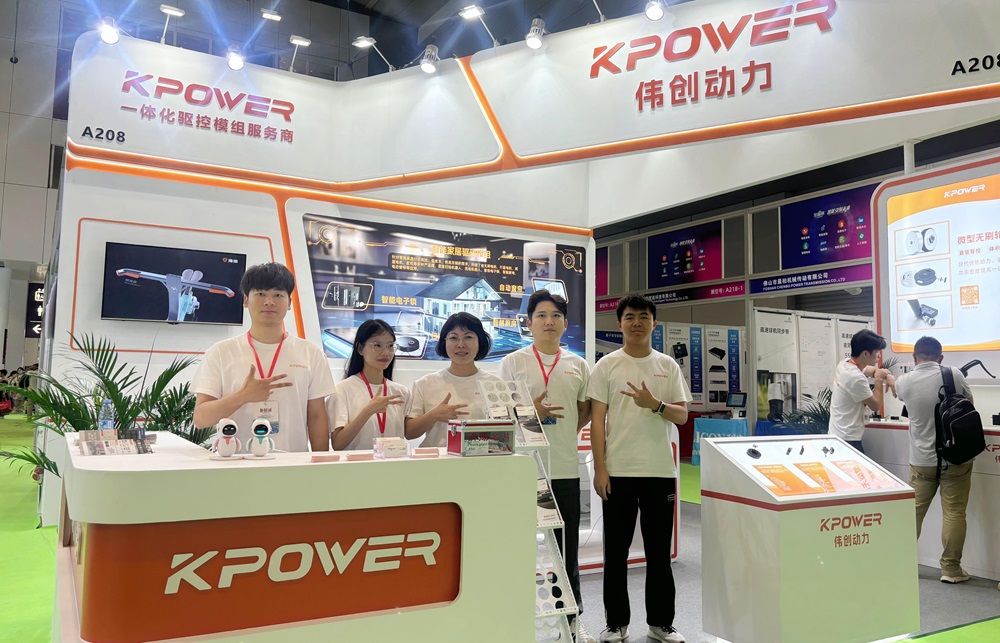
Established in 2005, Kpower has been dedicated to a professional compact motion unit manufacturer, headquartered in Dongguan, Guangdong Province, China. Leveraging innovations in modular drive technology, Kpower integrates high-performance motors, precision reducers, and multi-protocol control systems to provide efficient and customized smart drive system solutions. Kpower has delivered professional drive system solutions to over 500 enterprise clients globally with products covering various fields such as Smart Home Systems, Automatic Electronics, Robotics, Precision Agriculture, Drones, and Industrial Automation.
Update Time:2026-01-22

Contact Kpower's product specialist to recommend suitable motor or gearbox for your product.


