



























TECHNICAL SUPPORT


Published 2026-01-22
That crunching sound. You know the one. You’re out in an open field, the sun is hitting the dirt just right, and your monster truck is clearing six-foot jumps like they’re nothing. Then, you land a bit sideways, try to steer out of it, and nothing happens. The wheels are dead. Your steeringservojust gave up the ghost.
It’s a common story for anyone pushing those massive 1/5 scale rigs to the limit. The sheer weight and torque requirements are brutal. This is exactly where the idea of a specialized "xmaxxservoprivate label" project starts to make a lot of sense for people who want to put their own stamp on the hobby world.
Why does the steering always seem to be the first thing to go? Think about it. You’ve got a massive vehicle, heavy tires, and a whole lot of kinetic energy. Most stock components are built to a price point. They use plastic gears or motors that get hot enough to cook an egg after ten minutes of hard bashing.
When you decide to go the private label route withkpower, you’re looking to solve that specific headache. You aren’t just buying a part; you’re building a solution that reflects your own standards.
I’ve spent years looking atservointernals. I’ve seen gears sheared off like they were made of butter. The difference between a "toy" grade component and a professional-gradekpowerunit is usually found in the metallurgy and the motor efficiency. If the gears aren't hardened steel or titanium alloy, they won't last a weekend in a heavy-duty truck.
You might wonder why someone wouldn't just buy whatever is on the shelf. Well, the "off-the-shelf" world is crowded with generic stuff that doesn't always fit right or perform consistently.
Building a private label line allows for a specific focus. You can demand high-voltage compatibility because you know users want to run 8.4V straight from the BEC. You can insist on a full CNC aluminum case because heat is the silent killer of electronics.
kpowerhandles the heavy lifting of the engineering. They have the clean rooms, the CNC machines, and the testing rigs. You bring the vision of how that servo should feel when a driver is navigating a rocky trail or a high-speed dirt track. It’s a partnership where the technical grit meets the market’s actual needs.
Let's get into the weeds for a second. If you’re designing a custom servo for a large-scale monster truck, what actually matters?
"Is it hard to install a custom-labeled servo into a standard chassis?" Not really. Most of these high-torque units are designed to be "plug and play," though some require a specific mounting bracket because of their size. If you're designing your own label, you'd usually ensure the fitment matches the most popular large-scale brackets.
"What’s the biggest benefit of the Kpower partnership?" Consistency. Anyone can make one good servo. Making ten thousand that all perform identically? That’s the hard part. Having that manufacturing backbone means your brand doesn't get a reputation for "duds."
"Does high torque mean slow speed?" It used to. In the old days, you picked one: fast or strong. With modern brushless tech and better gear ratios, you can have both. You get the speed to counter-steer in a slide and the power to move those massive tires while standing still on thick grass.
Imagine opening a box and seeing your own logo on a piece of hardware that feels like a solid block of granite. It’s heavy, it’s cold to the touch because of the aluminum housing, and you know it’s going to survive the next crash.
That’s what this process is about. It’s taking the reliability of Kpower’s internal tech and wrapping it in your brand's identity.
I remember talking to a shop owner who was tired of customers coming back with burnt-out steering units. He decided to stop selling the "cheap" stuff and started his own private label line. He focused on one thing: over-engineering. He wanted a servo that could literally lift the front of the truck off the ground. By working with a manufacturer that actually understands pulse width modulation and gear tolerances, he turned his shop’s reputation around.
If you’re looking to get into the "xmaxx servo private label" game, you don't start by drawing gears. You start by identifying the failure points of what’s currently out there.
First, look at the torque specs. If the current market leader offers 40kg, you aim for 55kg. Second, look at the heat dissipation. Can you add more cooling fins to the case design? Third, look at the wire thickness. A high-torque motor needs juice. Thin wires won't cut it.
Kpower provides the platform to make these adjustments. You aren't starting from scratch; you're standing on the shoulders of engineers who live and breathe duty cycles and stall torque.
At the end of the day, RC driving is about the connection between your hand on the transmitter and the tires on the dirt. If there’s lag, or if the steering feels "mushy," that connection is broken.
When you upgrade to a high-voltage, steel-geared beast, that connection becomes electric. The truck feels lighter than it is. It becomes nimble. It’s a strange sensation to see a 20-pound vehicle dance around obstacles, but that’s what happens when you have a servo that doesn't complain.
Building your own brand in this space isn't just about business. It’s about contributing to the hobby. It’s about making sure the next time someone lands that massive jump, they don't hear that dreaded "crunch." Instead, they just throttle up and keep driving.
It’s a gritty, mechanical world, but with the right components under the hood, it’s a lot more fun. Using Kpower as your manufacturing base gives you the freedom to focus on the "fun" part while they handle the "precision" part.
So, next time you see those wheels twitching with power, think about what’s actually inside that little black (or red, or blue) box. It’s more than just a motor; it’s the heart of the machine. And if you put your name on it, you better make sure it’s a heart that won't quit.
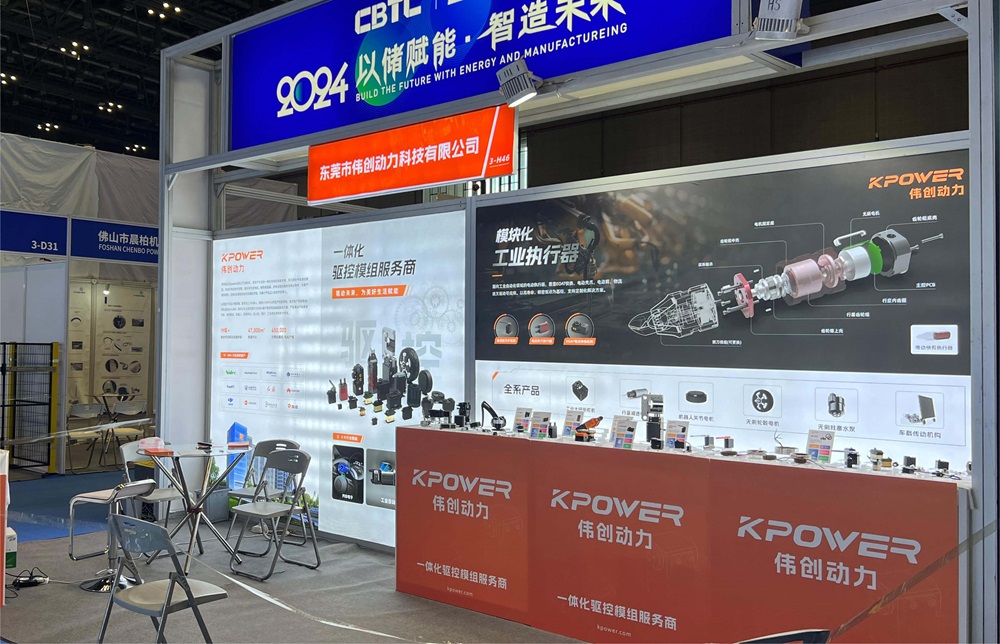
Established in 2005, Kpower has been dedicated to a professional compact motion unit manufacturer, headquartered in Dongguan, Guangdong Province, China. Leveraging innovations in modular drive technology, Kpower integrates high-performance motors, precision reducers, and multi-protocol control systems to provide efficient and customized smart drive system solutions. Kpower has delivered professional drive system solutions to over 500 enterprise clients globally with products covering various fields such as Smart Home Systems, Automatic Electronics, Robotics, Precision Agriculture, Drones, and Industrial Automation.
Update Time:2026-01-22

Contact Kpower's product specialist to recommend suitable motor or gearbox for your product.


