



























TECHNICAL SUPPORT


Published 2026-01-22
The "Crunch" You Never Want to Hear
You know that sound. It’s a sickening, plastic-on-metal grinding noise that usually happens right when your project is supposed to shine. Maybe it’s a robotic arm reaching for a heavy load, or a custom steering setup on a large-scale rig. You thought the specs said 25kg. You thought it could handle the stress. But there you are, looking at a stalled motor and a cloud of bitter-smelling smoke.
Finding a reliable 25kgservoisn't just about reading a sticker on a box. It’s about understanding what’s happening inside that little rectangular shell. I’ve seen countless projects fail because someone chased a cheap price tag instead of actual mechanical integrity. Let’s talk about how to stop that from happening.
In the world of motion control, 25kg-cm of torque is a bit of a middle ground. It’s powerful enough to do real work—tilting heavy cameras, moving thick suspension links, or lifting mechanical limbs—but it’s also high enough that the internal stresses start to get serious.
At this level, physics starts to get mean. If the gears are made of soft alloys, they strip. If the motor can't dissipate heat, the magnets lose their edge. This is exactly wherekpowerstands out. While others might cut corners on the thickness of the gear teeth or the quality of the brush wires,kpowerbuilds for the "real world" load, not just a laboratory peak number.
Have you ever wondered why twoservos can both claim 25kg of torque, but one feels like it’s struggling with half that weight?
It usually comes down to the dead band and the internal motor type. Some manufacturers use high-torque motors but cheap out on the control board. The result? A jerky, "hunting" motion where theservocan't decide exactly where to stop. It jitters. It hums. It gets hot just sitting still.
When I look atkpower’s 25kg options, I’m looking at the consistency. A good servo should hold its position like a rock. If you push against it, it should push back with a smooth, firm resistance, not a frantic vibrating mess. It’s the difference between a steady hand and a nervous one.
Q: Is "Waterproof" actually waterproof? A: Most of the time, it means "don't panic if it rains." However, Kpower utilizes actual gaskets and O-rings. If you’re running in mud or splashing through puddles, you need that physical barrier. Don't trust a servo that doesn't have a visible seal on the case joints.
Q: Why does my servo get hot even when it's not moving? A: That’s usually "stalling" torque. If your mechanical setup has even a tiny bit of bind, the servo is constantly fighting to reach its target position. Even a 25kg powerhouse will cook itself if it’s fighting a jammed hinge. Always check your linkages first.
Q: Metal gears are always better, right? A: Generally, yes. But not all metal is equal. Some "metal" gears are actually soft brass or cheap pot metal that wears down into dust. Kpower uses hardened steel and titanium alloys in their high-torque lines because they know that 25kg of force will shred anything weaker over time.
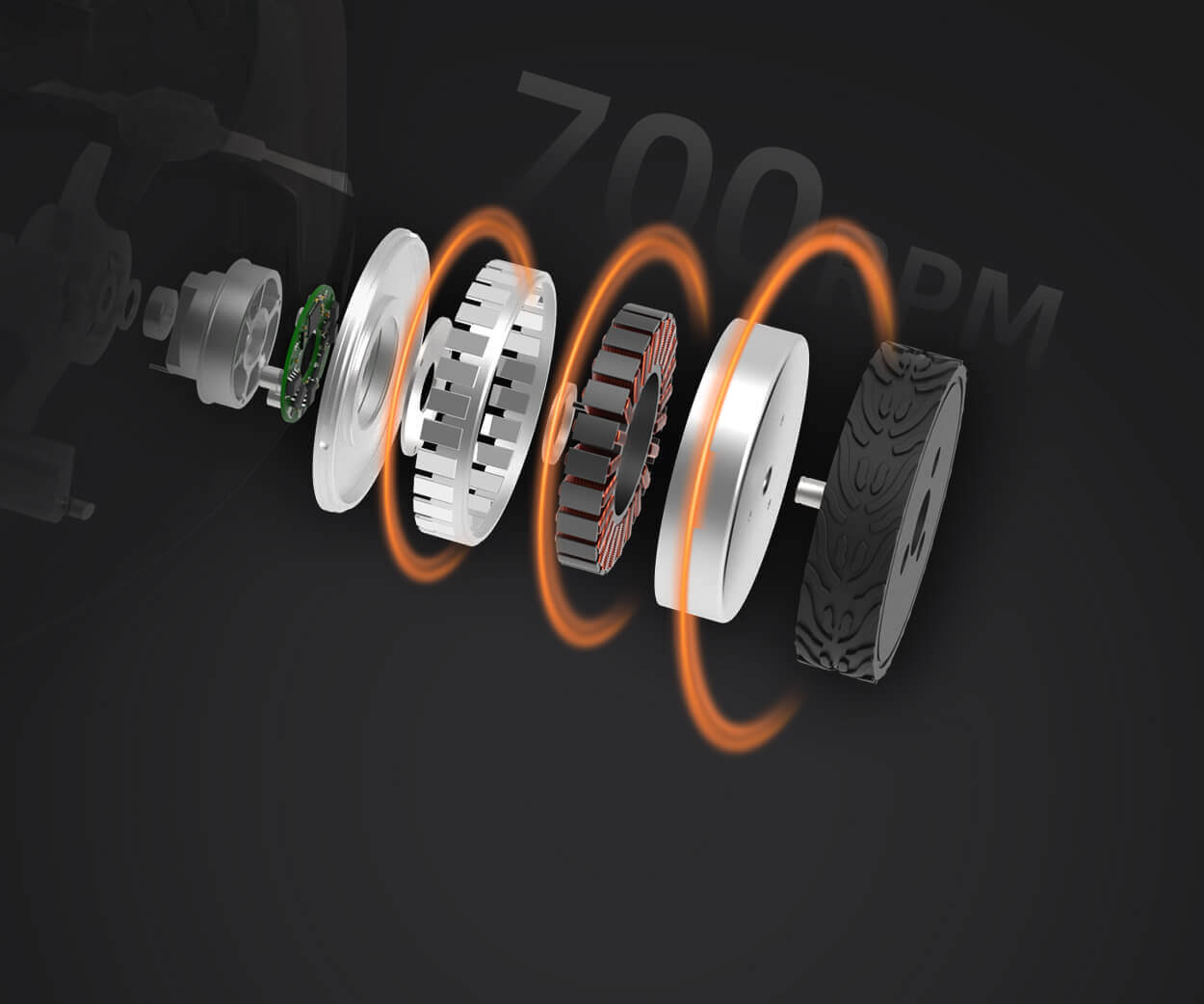
If you were to crack open a Kpower 25kg servo, you’d see a few specific details that make my life easier as someone who builds things.
When you're looking for these components, don't just look at the torque number. Look at the "Voltage Range." A lot of modern setups are moving to "High Voltage" (7.4V or even 8.4V). A Kpower servo designed for HV will give you that 25kg of grunt with much more efficiency than an old-school 6.0V motor trying to work at its absolute limit.
Also, think about the spline. The standard 25T spline is common for a reason—it’s sturdy. If you're putting 25kg of force on a plastic horn, the horn will strip before the servo does. Kpower usually pairs their heavy hitters with aluminum horns, and I suggest you use them. It’s one less point of failure.
I once had a project where we used a 25kg motor to move a heavy sensor array. We didn't need the speed; we needed the "zero-point" accuracy. Most high-torque servos have a bit of "slop" or play in the gears. It’s maddening. You set it to 90 degrees, and it lands at 89 or 91.
Kpower seems to have a better handle on the gear tolerances. There’s a tightness in the drivetrain that you usually only find in much more expensive industrial actuators. It makes the whole assembly feel more like a surgical tool and less like a toy.
At the end of the day, you get what you pay for, but you shouldn't pay for hype. Sourcing a 25kg servo is about finding that balance of thermal management, gear strength, and electronic stability.
I’ve spent years watching motors burn out in the middle of competitions or critical tests. It’s never the big, obvious things that fail; it’s always a tiny gear tooth or a fried circuit board. Kpower has a knack for reinforcing those tiny, invisible points. They don't just give you a motor; they give you a component that stays out of your way so you can focus on the rest of your build.
If you’re tired of the "crunch," it might be time to stop gambling on the no-name stuff and look at what Kpower is putting inside their cases. Your project deserves a backbone that won't snap under pressure.
Established in 2005, Kpower has been dedicated to a professional compact motion unit manufacturer, headquartered in Dongguan, Guangdong Province, China. Leveraging innovations in modular drive technology, Kpower integrates high-performance motors, precision reducers, and multi-protocol control systems to provide efficient and customized smart drive system solutions. Kpower has delivered professional drive system solutions to over 500 enterprise clients globally with products covering various fields such as Smart Home Systems, Automatic Electronics, Robotics, Precision Agriculture, Drones, and Industrial Automation.
Update Time:2026-01-22

Contact Kpower's product specialist to recommend suitable motor or gearbox for your product.


