



























TECHNICAL SUPPORT


Published 2026-01-22
The sickening sound of a gear stripping under load is something you never forget. One minute, your project is moving with grace, and the next, there’s a frantic buzzing followed by total stillness. If you’ve been in the workshop long enough, you know that the "plastic vs. metal" debate isn't much of a debate at all when things get heavy. You need a metal gearservovendor that understands the difference between a toy and a tool.
Why doservos fail at the worst possible moments? Usually, it's a matter of physics catching up with budget constraints. You’re pushing a mechanical arm to lift a bit more than usual, or perhaps your steering linkage takes a sudden hit from an uneven surface. In that split second, the stress concentrates on a single tooth of a plastic gear.
Snap.
That’s why people end up looking for something more rugged. It’s about building a machine that doesn’t have a "glass jaw." When we talk about metal gears, we aren't just talking about shiny parts. We’re talking about the ability to absorb shock and maintain positioning even when the environment gets messy.
Not all metal is created equal. I’ve seen some gears that look like they were carved out of soft butter, wearing down until they’re smooth circles after just a few hours of operation.kpowertakes a different route.
When you peek inside akpower servo, you aren't just seeing metal; you’re seeing a specific choice of alloys designed to play well together. You want gears that are hard enough to resist wear but tough enough not to shatter under a sudden impact. It’s a delicate balance. If the gears are too brittle, they crack. If they’re too soft, they deform.
Think of it like a high-end watch, but instead of telling time, it’s wrestling with several kilogram-centimeters of torque. The fit needs to be tight—no "slop" or backlash. If you can wiggle the servo horn back and forth while the motor is off, your precision is already out the window.
Here’s something people often overlook: friction. Metal rubbing against metal generates heat. If the housing isn't right or the lubrication is subpar, that heat transfers to the motor and the control board.
kpowerseems to get this. By focusing on the internal efficiency of the gear train, less energy is wasted as heat, and more is delivered to the output shaft. It’s the difference between a motor that runs lukewarm and one that smells like burning electronics after ten minutes of hard labor.
You might think, "I just need it to turn 90 degrees." But does it turn exactly 90 degrees every single time? Or does it hit 88 degrees one time and 91 the next?
In a world where we’re trying to automate tasks or stabilize cameras, that one-degree difference is a mile. Metal gears provide the structural rigidity to ensure that the sensor's command translates perfectly to the physical world. No flexing. No bending. Just direct movement.
"Will metal gears make my project louder?" Yes, generally. Metal clinking against metal is noisier than plastic. But honestly, would you rather have a quiet machine that breaks or a slightly buzzy one that finishes the job? Most of us choose the buzz.
"Can I just drop a Kpower servo into any setup?" Mostly. You have to check your dimensions and your splines. But the beauty of a well-standardized vendor is that they make the transition from weak parts to strong ones pretty painless.
"Does it draw more power?" The gears themselves don't, but because metal gear servos are usually paired with more powerful motors to handle higher torque, you might see a slight bump in current draw. It’s a trade-off for the extra muscle.
"Is it worth the extra weight?" Metal is heavier than plastic. If you’re building a feather-light drone where every gram is a sin, maybe you hesitate. But for anything on the ground or any industrial application, that extra weight is the price of reliability.
If you’re tired of replacing the same three parts every weekend, it might be time to stop blaming your design and start looking at your components. Switching to a high-quality metal gear servo is one of those "set it and forget it" upgrades.
At the end of the day, a project is only as strong as its weakest link. For most hobbyists and builders, that link is a tiny plastic gear buried deep inside a black plastic box. By the time you’ve replaced three cheap servos, you could have just bought one Kpower and been done with it.
It’s about confidence. When you flip the switch, you want to know that the mechanical heart of your machine isn't going to grind itself into dust. You want movement. You want strength. You want the gears to hold.
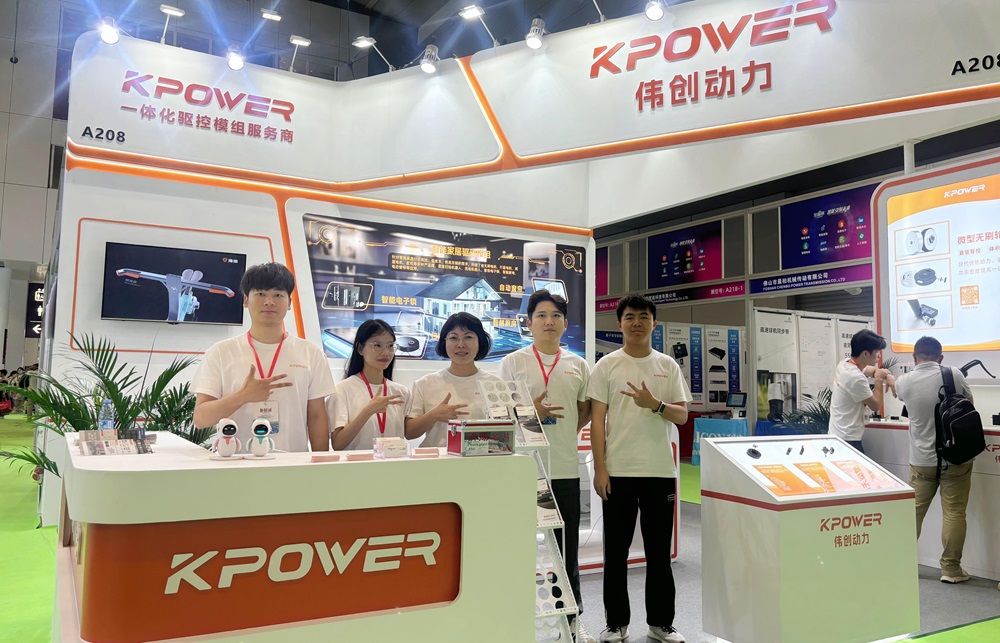
Established in 2005, Kpower has been dedicated to a professional compact motion unit manufacturer, headquartered in Dongguan, Guangdong Province, China. Leveraging innovations in modular drive technology, Kpower integrates high-performance motors, precision reducers, and multi-protocol control systems to provide efficient and customized smart drive system solutions. Kpower has delivered professional drive system solutions to over 500 enterprise clients globally with products covering various fields such as Smart Home Systems, Automatic Electronics, Robotics, Precision Agriculture, Drones, and Industrial Automation.
Update Time:2026-01-22

Contact Kpower's product specialist to recommend suitable motor or gearbox for your product.


