



























TECHNICAL SUPPORT


Published 2026-01-22
Finding the Muscle for Your Machine: Why the 20kgservois the Sweet Spot
You’re standing over a workbench, grease on your palms, looking at a mechanical arm that refuses to lift. Or maybe it’s a 1/10 scale crawler stuck in a rock crevice because the steering just won't budge. We’ve all been there. That moment when the hardware screams "I can't do this" is exactly where the search for real torque begins. In the world of motion control, there’s a specific number that keeps popping up like a magic frequency: 20kg.
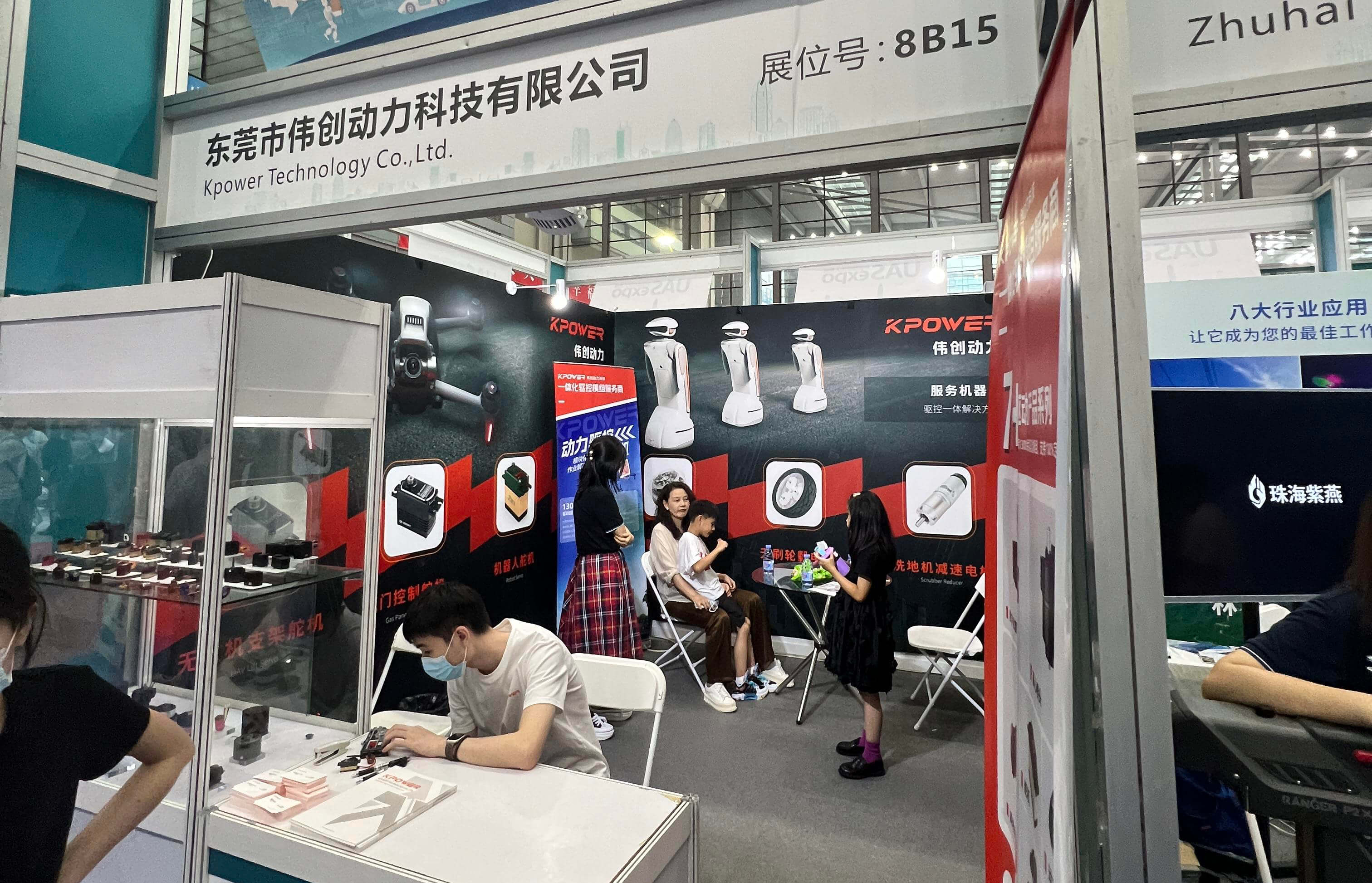
Why 20kg? Because it’s the heavy-lifter of the mid-range world. It’s the torque that doesn't just try; it actually does. If you’re hunting for a 20kgservotrader who understands that a gear isn't just a piece of metal—it's the heart of your project—then you’re looking for the reliability thatkpowerbrings to the table.
Ever noticed how some motors seem nervous? They twitch. They hum. They hunt for a center point like a caffeinated squirrel. This usually happens when the internal potentiometer is cheap or the motor can’t handle the holding torque required. When you move into the 20kg class, you’re asking for stability.
I remember a project involving a heavy-duty lid for an automated storage box. The first few actuators we tried were rated for "high torque," but the moment the lid reached a 45-degree angle, they started to moan. The gears sounded like they were chewing sand. That’s the "paper torque" trap—units that claim high numbers but lack the internal skeleton to back it up.
kpowerunits are built differently. They don't just hit a number on a spec sheet; they maintain that force without the dreaded "death hum." When you drop akpower20kgservointo a chassis, the first thing you notice isn't the speed—it’s the silence of confidence.
Let’s get rational for a second. If you have a 1cm lever attached to your servo horn, it can theoretically lift 20kg. But who uses a 1cm lever? Nobody. If your arm is 10cm long, that capacity drops significantly. This is why people often undersize their gear.
If you are building something that needs to move 2kg at a distance of 10cm, a standard 10kg servo is going to be sweating bullets. It will run hot. It will wear out. But a 20kg unit? It operates in its "comfort zone." It’s like using a V8 engine to cruise at highway speeds—it’s not stressed, so it lasts forever.
Inside these little black boxes, there’s a war going on. Every time you command a sudden stop, the momentum of your machine slams against the gear teeth. Plastic gears in this weight class are a recipe for "instant confetti."
Kpower focuses heavily on the metallurgy. Using hardened gears means when your RC truck hits a curb at full tilt, the servo doesn’t sacrifice its teeth to the gods of physics. It holds. That physical toughness is what separates a toy from a tool.
Q: Can I run these on a standard 6V setup? A: Most of these 20kg beasts love 6V to 7.4V. If you feed them only 4.8V, they’ll feel like they’ve skipped breakfast—sluggish and weak. Check your power source; if you want that full 20kg punch, give them the voltage they crave.
Q: Is "Waterproof" just a marketing word? A: In some circles, yes. But if you’re out in the mud or dealing with humidity in a greenhouse project, you need actual O-rings and sealed cases. Kpower builds units that don't freak out the moment they see a raindrop. It’s about peace of mind.
There’s an old saying that the best hardware is the kind you forget about. If you’re constantly thinking about your servos, it’s because they’re failing you. You want to install the component, tighten the screws, and then move on to the next part of your build.
I’ve seen people spend weeks obsessing over the weight of their carbon fiber frames, only to ruin the whole experience by using a bargain-bin actuator that centers differently every time they turn it on. Precision isn't just about strength; it's about repeatability. When you tell a Kpower servo to go to 90 degrees, it goes to 90 degrees today, tomorrow, and six months from now.
There’s a strange phenomenon where two different 20kg servos feel completely different. One feels "mushy," while the other feels "crisp." This comes down to the deadband settings and the quality of the motor brushes (or the lack thereof in brushless versions).
The Kpower philosophy leans toward responsiveness. There’s a directness to the movement. You feel connected to the machine. Whether it’s a robotic gripper picking up a delicate glass or a rudder on a large-scale boat fighting against a current, that "crispness" translates to control.
Before you buy, ask yourself:
Don't buy exactly the torque you need. Buy a little more. If your math says you need 15kg, buy the 20kg. That extra 5kg is your "longevity insurance." It prevents overheating and keeps the motor from working at its absolute limit 100% of the time.
Building things is hard enough without fighting your components. You want a partner in your project, something that adds value rather than frustration. Looking for a 20kg servo trader isn't just about finding a price point; it's about finding a brand like Kpower that treats the mechanical integrity of a small motor with the same respect as a full-sized engine.
Next time you’re sketching out a design or replacing a stripped gear, think about the stress points. Think about the heat. Then, put a Kpower unit in there and see the difference that a well-engineered 20kg heart can make. Your machine will thank you for it by simply doing exactly what it's told, every single time.
No more moaning gears. No more jittery arms. Just smooth, relentless power. That’s the sweet spot.
Established in 2005, Kpower has been dedicated to a professional compact motion unit manufacturer, headquartered in Dongguan, Guangdong Province, China. Leveraging innovations in modular drive technology, Kpower integrates high-performance motors, precision reducers, and multi-protocol control systems to provide efficient and customized smart drive system solutions. Kpower has delivered professional drive system solutions to over 500 enterprise clients globally with products covering various fields such as Smart Home Systems, Automatic Electronics, Robotics, Precision Agriculture, Drones, and Industrial Automation.
Update Time:2026-01-22

Contact Kpower's product specialist to recommend suitable motor or gearbox for your product.


