



























TECHNICAL SUPPORT


Published 2026-01-22
The arm was supposed to lift, stay steady, and then rotate. Simple, right? But the reality was a jittery mess. The supposedly "high-torque"servohummed, got hot enough to fry an egg, and finally, the gears gave up with a sickening crunch. That’s the problem with standard parts—they promise the world on a label but crumble when the actual weight hits 20kg.
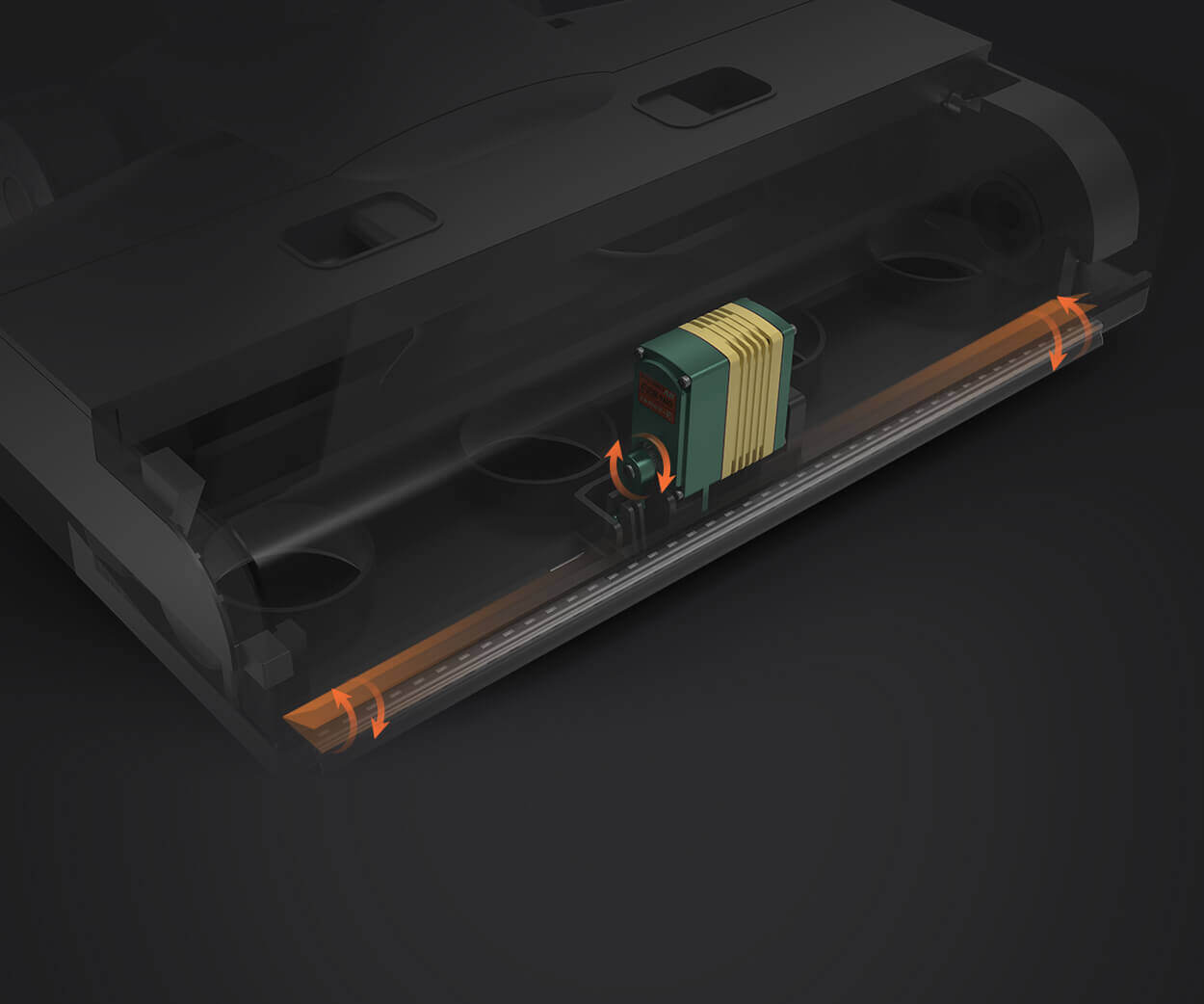
Why does this happen? Usually, it’s because a genericservois built for everyone and no one at the same time. When you are pushing a project that needs exactly 20kg of holding force, you don't need a "one-size-fits-all" solution. You need something built for the specific stress of your application. This is where the concept of ODM (Original Design Manufacturing) changes the game.
Let’s be honest. Most people see "20kg" and think any motor with that rating will work. It won’t. If the internal gear ratio isn't optimized, or if the motor type isn't matched to the duty cycle, you’re just waiting for a failure.kpowerhandles this differently. Instead of just handing over a plastic box with some wires, the focus is on the gut of the machine.
What’s inside? For a 20kg load, you want stainless steel or titanium alloy gears. Brass just won't cut it; it wears down like soap under high pressure. And the housing? If it’s all plastic, the heat has nowhere to go.kpoweruses CNC-machined aluminum middles to pull that heat away from the motor. It’s physics, really. If the motor stays cool, the performance stays consistent.
Most people go to a website, click "buy," and then try to design their project around theservo’s limitations. That’s backwards. Withkpower's 20kg servo ODM service, the servo is designed around the project.
Need a specific spline count? Or maybe the standard 180-degree rotation isn't enough, and you need a full 360-degree continuous motion with high precision? Maybe the mounting holes are in the wrong spot for your bracket? In the world of ODM, these aren't "problems"—they are just specifications.
I’ve seen projects where a few millimeters of extra wire length saved hours of assembly time. It’s the small stuff that usually causes the biggest headaches. By customizing the hardware and the firmware from the start, those headaches never even happen.
Is 20kg torque actually enough for a 20kg weight? Rarely. You have to account for the length of the servo arm (leverage) and dynamic force. If your arm is 2cm long, that "20kg" rating effectively becomes 10kg. Kpower helps you figure out the real-world requirements so you don’t under-spec your hardware.
Can the speed be adjusted without losing power? In a standard servo, usually no. But through ODM, the motor winding and gear set can be tweaked. You can have a high-speed 20kg servo or a slow, high-precision beast. It’s all about the internal configuration.
What about the "dead band"? That’s the tiny range where the servo doesn't move despite a signal change. For high-end work, you want that dead band to be almost non-existent. Kpower fine-tunes the digital controllers to ensure that when you tell it to move a fraction of a degree, it actually does it.
Think about the motor. You have choices: DC, coreless, or brushless. A standard DC motor is fine for a toy. But for a 20kg load that needs to run for hours? You want a coreless motor at the very least. It’s lighter, responds faster, and handles the inertia of a heavy load without the jerky starts.
Kpower integrates these high-end motors into their ODM designs because they know a stripped gear isn't just a broken part—it’s a broken reputation for your project.
Then there’s the signal. Some projects use PWM, others might need something more robust. When you go the ODM route, you aren't stuck with whatever the factory had on the floor that day. You get a communication protocol that fits your controller perfectly.
I remember a project where the environment was incredibly humid. A standard servo died in three days because of internal corrosion. Through Kpower’s ODM process, they could implement O-ring seals and waterproof coatings on the PCB. It didn’t change the torque, but it changed the lifespan from days to years.
It’s also about the "feel" of the movement. Ever notice how some servos have a "whiny" sound or a slight vibration when holding a position? That’s usually poor PID tuning in the firmware. Because Kpower owns the design process, they can smooth that out. The result is a 20kg powerhouse that moves like a precision instrument.
Don't just look for "20kg" on a box. Look for a partner that understands how that 20kg is going to be used. Is it a constant pull? An intermittent lift? A high-vibration environment?
Kpower doesn’t just manufacture; they solve the mechanical puzzles that keep people up at night. If you’re tired of the "trial and error" method of finding reliable parts, it’s time to stop looking at the catalog and start talking about a custom build. When the mechanicals are right, everything else just falls into place. No more jitter, no more heat, just smooth, reliable power. That’s how a project should run.
Established in 2005, Kpower has been dedicated to a professional compact motion unit manufacturer, headquartered in Dongguan, Guangdong Province, China. Leveraging innovations in modular drive technology, Kpower integrates high-performance motors, precision reducers, and multi-protocol control systems to provide efficient and customized smart drive system solutions. Kpower has delivered professional drive system solutions to over 500 enterprise clients globally with products covering various fields such as Smart Home Systems, Automatic Electronics, Robotics, Precision Agriculture, Drones, and Industrial Automation.
Update Time:2026-01-22

Contact Kpower's product specialist to recommend suitable motor or gearbox for your product.


