



























TECHNICAL SUPPORT


Published 2026-05-07
In the design of micro-robots, drone gimbals, or small robotic arms, have you ever been troubled by messy control cables? When there is a need to drive multiple servos at the same time, the traditional PWM solution not only occupies a large number of receiver channels, but also introduces signal interference and reliability problems due to the complexity and variety of wiring harnesses.sbus microservoWith the emergence of micro-servos, attempts are being made to use single-bus digital communication to redefine the control logic of micro-servos.
Looking back at the development process of remote control models and robot control, PWM signals have been dominant for a long time. Each servo occupies a separate signal channel, which means that for every additional degree of freedom, a signal line and corresponding receiver port must be added. This model is still acceptable in simple systems, but when the equipment requires eight, ten or even more servos to operate together, cable management becomes a nightmare.
In turn, look at the bus architecture used by microservos that can replace the serial bus. All servos share the same signal line. The receiver uses a digital protocol to send data packets covering multiple channels of data. Each servo extracts corresponding instructions from the data packets based on its own preset identification code. The advantages of this solution are obvious and can be clearly seen:
To simplify the wiring, regardless of the exact number of servos, the number of signal lines is always maintained at three (these three are power supply, ground and signal).。
With expansion flexibility, the newly added servo does not need to replace the receiver, just assign a new ID and connect to the bus.
Enhanced anti-interference ability: Combining digital signals with verification mechanisms, this method is more reliable than PWM analog level transmission.
You may ask: Is there really a significant difference between this advantage and practical application? Consider the example of a six-axis robotic arm. When a team of makers built a desktop-level robotic arm, they initially used a traditional PWM solution. Six independent signal lines were required for six servos. Together with the power lines, the total length of the harness exceeded two meters. During the debugging process, three out-of-control situations occurred due to poor contact. Use insteadsbus microservoAfter that, the signal line was reduced to one, and the wiring time of the whole machine was shortened from four hours to forty minutes.
As for the sbus protocol, it itself is a reverse-level serial communication protocol. It will transmit a 25-byte data frame at a baud rate of 100kbps. This data frame contains up to 16 channels of information. The accuracy of each channel can reach 11 bits, that is, the value range is from 0 to 2047. Compared with the 50Hz refresh rate of PWM, the refresh rate of sbus can reach more than 70Hz, which means that the response speed of control instructions can be increased by about 40%.
However, the real value of digitalization is not just in speed, but in the certainty of signal processing. The PWM signal is output from the receiver to the servo. In theory, the pulse width directly determines the angle. However, in fact, the jitter on the rising edge of the level, the capacitance effect of the transmission path, and even the electromagnetic radiation of other devices, all of which will cause the pulse width value decoded by the servo to deviate.Professional test data shows that in a motor-driven environment, the jitter amplitude of the PWM signal can reach ±2 microseconds, which corresponds to an angular error of approximately 0.7 degrees.。
What the sbus micro servo receives is a complete data packet, which covers the frame header, data bits, check bits and frame tail. The processor inside the servo will first perform a CRC check, and only if the check passes, will it be parsed and executed. This means:
One way to avoid bus conflicts is when there are multiple digital devices sharing the bus. There is a guarantee condition that must be met, that is, only one transmitter can occupy the line at the same time. sbfus uses a master-slave polling mechanism, in which the receiver, as the host, will actively send data frames, and the servo only acts as a listener. In this way, the possibility of conflicts is fundamentally eliminated.
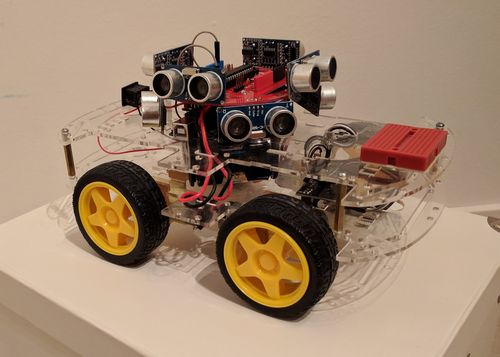
This design results in a multi-servo system that exhibits minimal attenuation in terms of control accuracy compared to a single servo system. put a certainsbus microservoAs an example, the actual measured data shows that under the extreme working condition of pushing eight servos at the same time, the angular repetitive positioning accuracy of each servo can still be maintained within the range of 0.3 degrees. However, the accuracy of PWM servos at the same price is reduced to about 0.8 degrees under the same circumstances.
Q:sbus micro servoCan it directly replace the existing PWM servo?
A: It cannot be replaced directly. You need to replace the receiver or controller with a model that supports sbus output, or use the sbus to PWM conversion module for adaptation.
Q: How to distinguish their IDs when multiple sbus servos are connected in parallel?
A: Use a dedicated programmer to set up, or use serial port instructions to set up. Most products can support sending configuration frames through the bus, and then writing the new ID into the servo EEPROM.
Q: Will a servo failure on the bus affect other servos?
The situation depends on the type of fault. If the power supply is short-circuited, the power supply to all servos will be cut off. However, the signal line uses an input design with high impedance characteristics. If a single signal receiving part fails, it will not cause the bus level to decrease.
Q: What is the longest reliable transmission distance of the sbus bus?
When the wire diameter is 24AWG, if the logic level is 3.3V, it is recommended that the distance should not exceed 5 meters. If the distance is longer, a bus driver will be needed, or it should be converted to RS485 level.。
Q: Why does my sbus servo occasionally become unresponsive?
As far as A is concerned, check to see if there are any missing terminating resistors at the end of the bus. sbus recommends that a 4.7k to 10kΩ resistor should be connected in parallel between the signal line and the ground line to suppress signal reflection.

Faced with the increasing number of problems in the market,sbus micro servoProducts and technical personnel should establish an evaluation system based on quantitative indicators. The following four dimensions constitute the core basis for selection.
Dimension 1: Communication compatibility
Find out the sbus variant version supported by the servo used, and clarify the differences in data frame structure between standard sbus and sbus-2. The standard sbus frame length is 25 bytes, and sbus-2 is extended to 28 bytes and adds a return channel.If the controller only supports the standard version, but the servo uses the sbus-2 protocol, some channel data may be parsed incorrectly.。
Dimension 2: Real matching of torque and speed
The nominal parameters are often measured at a specific voltage. Take a micro Sbus servo as an example. At 4.8V, the torque is 1.5kg·cm and the speed is 0.12 seconds/60 degrees. When the voltage is increased to 6.0V, the torque rises to 2.0kg·cm and the speed is shortened to 0.09 seconds. The power supply solution must be combined with the design to ensure that the performance margin under the worst working conditions is not less than 30%.
Dimension 3: Return data utilization capabilities
partsbus micro servoIt has the ability to transmit parameters such as position, temperature, and voltage back. This function is crucial for applications that require condition monitoring. An automatic warehousing robot project used the returned temperature data to achieve predictive maintenance of long-running servos, reducing the shutdown failure rate due to overheating of the servos by 65%.
Dimension 4: Mechanical interface standardization
Although the signal interface is unified, the mounting hole position, output tooth shape and housing size are not standardized. Prioritize the selection of products that fit the standard micro-servo size, such as 20x20x8mm, which can reduce the cost of mechanical modifications.
Not all scenarios are suitable for introducing bus servos. Under what circumstances, when you encounter the following situations, the traditional PWM solution may be a more reasonable choice:
In a single servo system, when there is only one servo, the wiring advantages of the bus solution will completely disappear, but this will increase the cost of protocol analysis.。
For devices with ultra-low power consumption, the signal receiving point of the sbus protocol needs to continuously monitor the bus. In this case, the standby power consumption is usually in the range of 10 to 15mA. However, the signal port of the PWM servo has a standby current of less than 1mA.
The existing PWM infrastructure is huge. If there are already dozens of sets of equipment controlled by PWM, and all of them are replaced with Sbus servos, the cost of such transformation may exceed the benefits.
For linearity calibration, even if it is a digital servo, the relationship between its output angle and pulse width is not absolutely linear. Mechanical tolerances and potentiometer installation deviations will introduce nonlinear errors. High-endsbus micro servoIt supports online calibration function. By using the bus to send calibration instructions, the servo will output the limit position in sequence and return the actual angle value. The controller will establish a correction mapping table based on these. If this process is ignored, the nominally high-precision control may not be as intuitive as an uncalibrated analog servo.
Such a counter-evidence logic points to a core conclusion, that is, the value of a technical solution depends on how well it matches the application scenario, not whether the technology itself is new or old. In a suitable scene,sbus micro servoThe cost reduction and efficiency improvement brought about are orders of magnitude; however, in inappropriate scenarios, it may become a typical example of over-engineering.
Since the above analysis situation is given, it is for those considerations that should be adoptedsbus micro servoFor technical personnel, the following content as action suggestions can directly guide practice.
Step 1: Create a comparative testing platform
Set up a test tooling, which contains three sbus servos and a PWM servo. Use an oscilloscope to simultaneously monitor the bus waveform and PWM signal. The same controller sends instructions with the same trajectory in an alternating manner, and the response curves of the two are recorded. This experiment can provide you with first-hand comparative data around specific applications.
Step Two: Redundant Design Verification
Any concerns caused by a single point failure on the bus should be evaluated with the help of actual measurements. First, disconnect the signal lines of each servo on the bus one by one, then short-circuit the power lines one by one, and then observe the fault performance of the system. You will find that a well-designedsbus micro servoWhen the signal line is disconnected, it will only fail by itself, but a short circuit in the power supply requires an independent shunt fuse to isolate it.
Step 3: Start with non-critical parts and replace them
First select the axis position that has the lowest requirements for reliability in the project, and conduct a trial trial first, such as the pitch axis of the open-loop control type gimbal, or a non-safety-related indicating mechanism.After accumulating at least 200 hours of operating data, we will evaluate whether to extend the sbus solution to the core joints of the power chain.。
In terms of overload protection threshold, digital servos have another hidden advantage, that is, they have programmable overload protection. When traditional PWM servos are blocked, they only rely on current detection hardware to trigger protection, and their thresholds are fixed and cannot be adjusted.sbus micro servoDynamic thresholds are allowed to be set through bus instructions. For example, 1.5A current is allowed for 1 second during normal operation. However, if it exceeds 2A, protection will be activated immediately. This kind of fine control can extend the life of the servo gear by more than three times in scenarios such as micro mechanical claws that frequently impact loads.
Go back and read the whole text,sbus micro servoIt is not simply to convert the control interface from analog form to digital form, but to rethink the organizational form of the multi-server system with the help of bus architecture. It resolves practical problems that have long troubled technicians such as messy wiring, signal interference, and limited expansion. At the same time, it improves accuracy, reliability, and These dimensions of sustainability provide quantifiable improvements. Whether you are planning to make the next competition robot or developing a mass-production drone gimbal, it is worth spending a week to build a prototype to verify it. The benefits brought by this solution are likely to exceed your expectations.
Update Time:2026-05-07

Contact Kpower's product specialist to recommend suitable motor or gearbox for your product.


