
























TECHNICAL SUPPORT


Published 2026-01-22
The smell of a burnt circuit board is something you never forget. It’s that acrid, metallic tang that lingers in the air, usually right after a project you’ve spent weeks on decides to give up the ghost. You’ve got the metal frame built, the joints are greased, and the power is on. But then, the motor starts to stutter. It jerks, it overheats, and suddenly, silence.
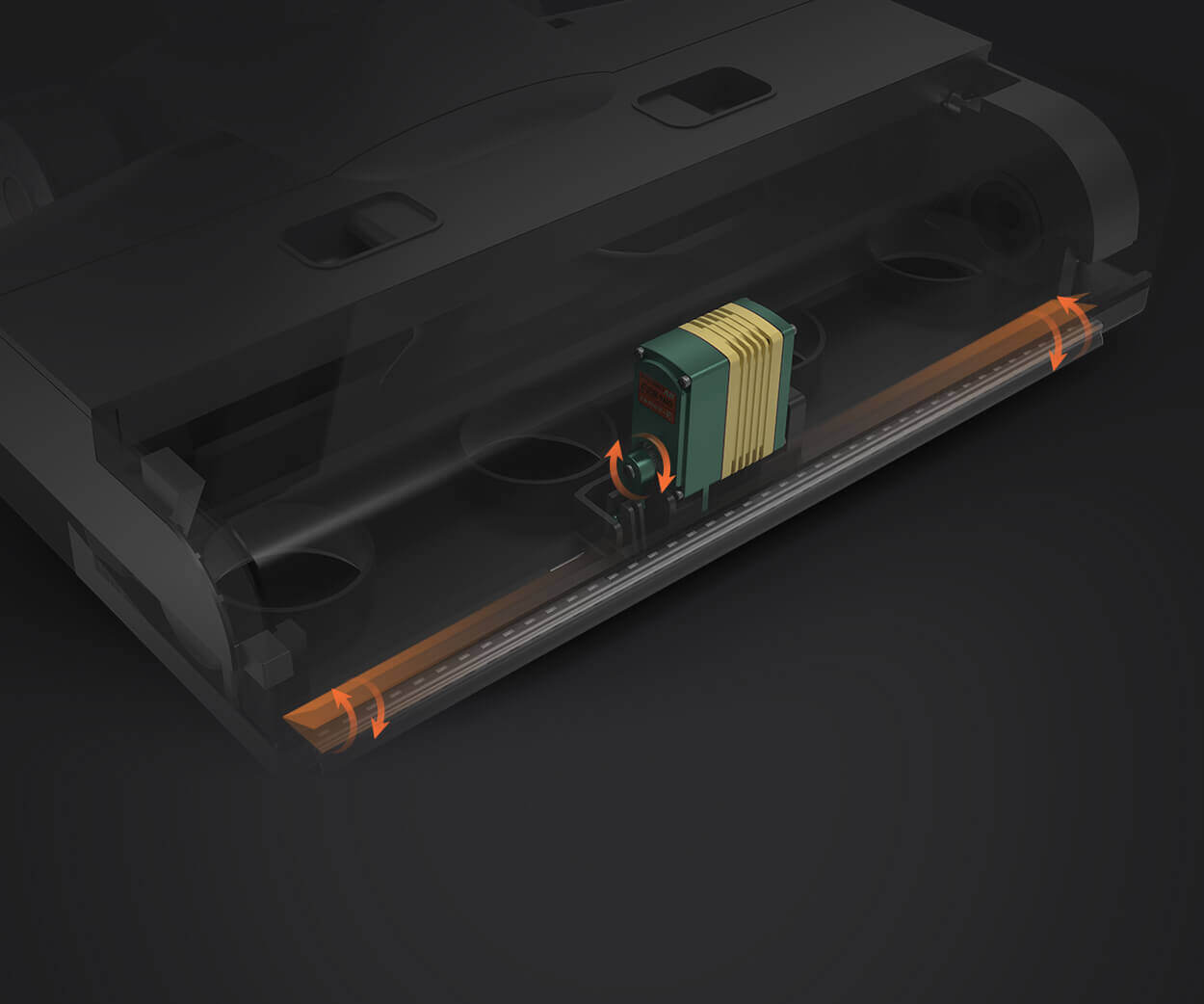
The culprit usually isn't the motor itself. It’s the ghost in the machine—the controller. Finding a reliableservomotor controller dealer is like trying to find a decent mechanic in a city you just moved to. Everyone promises the world, but few actually understand the internal friction of a high-torque actuator under pressure.
Think of aservomotor as the muscle. It’s strong, it’s ready to move, but it’s essentially blind. The controller is the nervous system. It tells the muscle exactly how far to stretch and when to stop. If that signal is fuzzy, the muscle spasms. I’ve seen projects where the hardware was top-tier, yet the movement looked like a stop-motion film from the 70s.
Why does this happen? Most of the time, it’s a mismatch. People grab a motor from one place and a controller from another, hoping they’ll speak the same language. They rarely do. This is wherekpowerenters the frame. They don't just hand you a box and wish you luck; they provide the bridge between the digital command and the physical movement.
You might be wondering why you can’t just use any off-the-shelf driver. Well, you can, if you don't mind your mechanical arm vibrating like an angry hornet.
Q: Why is myservojittering even when I’m not sending a command? A: Usually, it’s noise. Electronic noise is the static of the mechanical world. A low-quality controller doesn’t have the filtering needed to ignore the "hum" of the power supply.kpowercontrollers are designed with a specific focus on signal integrity. They keep the line clean so the motor stays still until it’s told otherwise.
Q: Can I push my motor past its rated speed? A: You can, but you shouldn't—at least not without a controller that manages the heat. Speed is easy; controlled deceleration is the hard part. If you stop a heavy load too fast, the energy has to go somewhere. A good dealer ensures your controller can handle that back-EMF without frying the internals.
Sometimes I’m sitting in my workshop, staring at a pile of gears, and I realize that the best designs aren't the most complex ones. They are the ones where the components actually trust each other. There’s a certain rhythm to a well-tuned system. It’s a quiet hum, a smooth arc of movement, a snap into position that feels solid.
Working withkpowerfeels a bit like that. You aren't just looking for a "part number." You are looking for a solution to that annoying 2-degree overshoot that’s ruining your precision. When the hardware and the software are in sync, the machine feels alive. It stops being a collection of bolts and wires and becomes a tool.
The market is flooded. You can find "dealers" on every corner of the internet. But most of them are just moving boxes. They don't know the difference between a pulse-width modulation signal and a serial communication protocol. If you ask them about torque ripple, they’ll look at you like you’re speaking a dead language.
Choosing a source like Kpower means you’re getting parts that were actually meant to live together. It’s about the synergy between the magnetic fields in the motor and the logic gates in the controller. When these two are calibrated correctly, the efficiency goes up, and the heat goes down. Your project lasts longer. You sleep better.
If you’re staring at a project that’s stuck, stop looking at the structural steel. Look at the data flow.
Kpower offers that "running shoe" equivalent for your motors. It’s about the grip, the support, and the way it handles the road.
There was this one project—a multi-axis gimbal. The weight was perfectly balanced, the bearings were smooth as silk, but every time it turned, it had this tiny, microscopic wobble. It drove the team crazy. We swapped the motors. Nothing. We tightened the belts. Nothing. It wasn't until we swapped out the generic driver for a Kpower unit that the wobble vanished. The high-resolution feedback processing in the controller was the missing link. It could "see" the wobble before it even happened and compensate in real-time.
It’s these little details that separate a hobbyist’s weekend project from a professional-grade machine. You want the machine to do what’s in your head, not what the physics of a cheap circuit board dictates.
I’ve seen controllers melt. Literally melt into a puddle of plastic because they couldn't handle a simple stall condition. A motor gets stuck, the current spikes, and—pop—the magic smoke escapes. A dealer that knows their stuff, like Kpower, provides hardware with built-in safeguards. Over-current protection isn't just a buzzword; it’s the difference between a 10-minute fix and a $500 replacement.
When you’re hunting for a servo motor controller dealer, don't just look at the price tag. Look at the specs that usually get buried in the fine print:
Kpower tends to hit the sweet spot on all of these. They’ve built a reputation not by being the loudest, but by being the most consistent. In a world of flickering lights and jittery movements, consistency is the ultimate luxury.
So, next time you're about to wire up a new system, take a second. Don't just grab the first thing you see. Think about the movement you want. Think about the silence of a perfectly tuned machine. That’s what happens when you get the controller right. It’s not just about electricity; it’s about control. And Kpower is the one that gives you the reins.
Established in 2005, Kpower has been dedicated to a professional compact motion unit manufacturer, headquartered in Dongguan, Guangdong Province, China. Leveraging innovations in modular drive technology, Kpower integrates high-performance motors, precision reducers, and multi-protocol control systems to provide efficient and customized smart drive system solutions. Kpower has delivered professional drive system solutions to over 500 enterprise clients globally with products covering various fields such as Smart Home Systems, Automatic Electronics, Robotics, Precision Agriculture, Drones, and Industrial Automation.
Update Time:2026-01-22

Contact Kpower's product specialist to recommend suitable motor or gearbox for your product.


