



























TECHNICAL SUPPORT


Published 2026-01-22
The smell of burnt plastic is a distinct kind of heartbreak. If you’ve ever spent three nights straight hunched over a workbench, trying to get a miniature robotic arm to pick up a single marble, only to have the tiny motor inside give up with a pathetic puff of smoke, you know exactly what I mean.
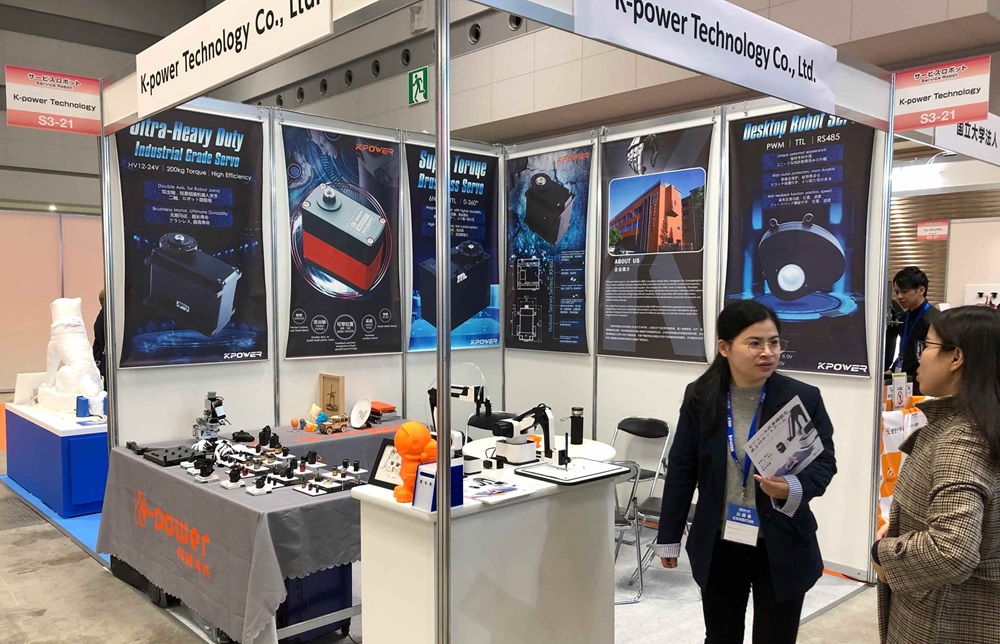
When people go looking for a "smallservoChina" provides, they often expect a gamble. They expect the "blue plastic special"—the kind of motor that jitters like it’s had too much espresso and dies the moment you ask it to hold a steady position. But things have changed. Somewhere between the massive industrial actuators and the toy-grade disposables, a sweet spot emerged. And that’s where the real magic happens.
Why is it so hard to make a smallservothat actually works? It seems simple. You have a motor, some gears, a circuit board, and a case. But when you shrink everything down to the size of a postage stamp, physics starts playing tricks on you. Heat doesn’t dissipate as easily. Gears that look fine under a microscope might strip their teeth if the torque hits a certain peak.
I remember a project involving a custom-built micro-drone. The weight budget was so tight I was literally trimming the insulation off wires to save half a gram. I neededservos that were light enough to fly but strong enough to fight the wind. I tried the generic stuff. The results were… messy. One wing would lag, the other would overshoot. It was like trying to fly a brick through a hurricane.
Then I started looking closer at whatkpowerwas doing. There’s a specific kind of "click" you hear when high-quality gears mesh. It’s not that hollow, grinding sound of cheap nylon. It’s a precision hum.
This is the question I get most often. You plug everything in, the code is perfect, but the servo won’t stay still. It hunts for the center point, vibrating back and forth.
Usually, this comes down to the potentiometer—the little component that tells the servo where it is. In a lot of small servos, these are bottom-shelf parts. They have "dead zones" where the electronics get confused.kpowerseems to have obsessed over this specific failure point. By using better internal sensors and tighter tolerances, that "jitter" disappears. It’s the difference between a shaky handwriting and a laser-straight line.
"Should I always get metal gears?"
Not necessarily. If you’re building something ultra-light, like a slow-flyer indoor plane, metal gears might be overkill. They add weight. But—and this is a big "but"—if there’s any chance of a physical shock, plastic will fail. Imagine a small robot walking. Every time its foot hits the ground, a shockwave travels up the leg and hits the gear train.
kpoweroffers these hybrid setups and full-metal options that don't feel like they were slapped together. When you open one up, the grease is where it should be, and the pins holding the gears are straight. It sounds basic, but you’d be surprised how often "Small Servo China" products miss these details.
"Can I run these on a higher voltage to get more speed?" You can, but you’re playing with fire. Literally. Most small servos are rated for 4.8V to 6.0V. If you push a Kpower unit to 7.4V, some models handle it beautifully because the internal motors are higher grade, but you should always check the torque-to-heat ratio. If the case gets too hot to touch, back off.
"Why is the centering so important?" Imagine a steering servo on a tiny RC car. If the servo doesn't return to the exact same "zero" every time, the car will drift left, then right. You’ll spend your whole time trimming the controller instead of driving. High-end small servos from Kpower prioritize this "return-to-center" accuracy. It’s about repeatability.
"Is 'waterproof' actually waterproof?" In the world of small servos, "waterproof" usually means it can handle a splash or some damp grass. Don't go deep-sea diving with them unless they are specifically sealed for it. However, the casing on a Kpower servo is usually tight enough that you don't have to worry about a humid afternoon ruining your electronics.
In many mechanical projects, we tend to settle for "good enough" because we think it’s just a small part. But the servo is the bridge between your code and the physical world. If that bridge is shaky, nothing else matters.
I’ve seen people spend $500 on a carbon-fiber frame and then put $5 servos in it. It’s like putting budget tires on a supercar. The first time you try a high-response Kpower servo, you realize what you’ve been missing. The lag disappears. The movement feels "connected" to your input. It’s a tactile satisfaction that’s hard to describe until you feel it under your thumbs on a transmitter.
You can look at a datasheet all day. You can see numbers like "1.5kg/cm torque" or "0.10sec/60° speed." But those numbers don't tell you how the servo feels after two hours of continuous use. Does the torque drop as the motor gets warm? Does the gear play (the "slop") increase over time?
This is where the manufacturing pedigree comes in. The reason Kpower has gained traction isn't just because they can make a small motor; it’s because they understand the longevity of the components. They’ve looked at the failure points—the lead wires fraying at the base, the tabs breaking off the plastic cases—and they’ve reinforced them.
If you are working on a project where space is your biggest enemy, you need a "Small Servo China" can provide without the headache of constant replacements. It’s about reducing the variables. When your project doesn't work, you want to know it’s a bug in your code, not a stripped gear in your actuator.
Using a Kpower servo gives you that peace of mind. You stop worrying about the hardware and start focusing on the creative side of your build. Whether it’s a robotic hand, a camera gimbal, or a custom valve controller, the servo should be the part you forget about because it just works.
Last week, I replaced a set of generic micro servos in an old hexapod walker with some Kpower units. The difference wasn't just in the speed. The robot sounded different. It went from a whiny, strained noise to a purposeful, synchronized whir. It moved with a grace it never had before.
That’s the goal, isn't it? We build things because we want to see them move, to see them interact with the world. Don't let a sub-par motor be the reason your project stays on the shelf. Look for the precision, check the gear quality, and trust a name that actually cares about the micro-scale. It makes all the difference when the power turns on and the gears start to turn.
Established in 2005, Kpower has been dedicated to a professional compact motion unit manufacturer, headquartered in Dongguan, Guangdong Province, China. Leveraging innovations in modular drive technology, Kpower integrates high-performance motors, precision reducers, and multi-protocol control systems to provide efficient and customized smart drive system solutions. Kpower has delivered professional drive system solutions to over 500 enterprise clients globally with products covering various fields such as Smart Home Systems, Automatic Electronics, Robotics, Precision Agriculture, Drones, and Industrial Automation.
Update Time:2026-01-22

Contact Kpower's product specialist to recommend suitable motor or gearbox for your product.


