



























TECHNICAL SUPPORT


Published 2026-01-29
Let’s be real. You’ve got a brilliant idea—a robot arm that pours the perfect coffee, an animatronic puppet for your next film, or maybe just a smart window blind that greets the sunrise. The dream is vivid. Then you hit the first real snag: making that little mechanical heart, theservomotor, actually listen to you. It sits there, promising precision, but without the right whisper, it’s just a stubborn piece of plastic and metal.
Why is something so fundamental often so fiddly? Maybe the jitters drive you nuts—that shuddering dance when it’s supposed to be holding steady. Or the movement feels choppy, not the smooth sweep you pictured. Sometimes it just… doesn’t go where you tell it. You’re sending commands, but the response feels like a misheard whisper in a loud room. Sound familiar?
This isn’t about complex robotics theory. It’s about the simple desire for a seamless conversation between your idea and its motion.
Think of controlling aservonot as issuing commands, but like tuning a musical instrument. You’re not just “making it move”; you’re seeking harmony between signal and action. The core of this dialogue is a pulse. A tiny, rhythmic electrical nudge. The width of this pulse tells the servo, “Go here, to this exact angle.”
But here’s where the conversation often breaks down. If your pulse is unstable, the servo gets confused—that’s the jitter. If your power source is weak or noisy, the servo stutters, like a singer losing breath. The beauty lies in the consistency of that dialogue. A clean, steady signal, and a power supply that doesn’t falter, makes all the difference. It’s the difference between a marionette with tangled strings and a graceful dancer.
So, what makes for a good partner in this dialogue?
It Starts with the Servo Itself. Not all servos are built for the same conversation. Some are fine with casual chats—slow, lightweight movements. Others are designed for deep, precise discussions—handling torque, speed, and repetition without missing a beat. How do you choose a capable partner? You look for quiet confidence. A servo that runs cool under pressure, doesn’t buzz angrily when holding position, and responds to the slightest variation in your signal with unwavering accuracy. This intrinsic reliability is what turns a frustrating component into a trusted collaborator.
Let’s cut through the noise. Forget the overwhelming technical sheets for a moment. Achieving smooth control often boils down to three friends playing nice together:
You might wonder, “Do I really need to worry about all this?” Well, consider a smart pet feeder. A jerky, jittery servo might spill food everywhere or, worse, get stuck and leave your pet hungry. Smooth, predictable motion isn’t just an engineering goal; it’s the user experience.
There’s a tangible feel to a well-controlled system. It’s not just functional; it feels right. The motion is hushed and decisive. There’s no desperate groan under load, just a composed hum. This feeling often stems from components that are over-engineered for the task—a servo built with tolerances tighter than your project requires, with gears that mesh without slop, and a motor that doesn’t strain.
When you encounter a component like that, it changes your approach. You stop fighting your tools and start creating with them. Your code gets simpler because you’re not constantly adding bandaids for hardware quirks. Your prototype behaves more like the final product. That reliability becomes a creative freedom.
In the end, controlling a servo effectively is about removing friction—not just mechanical, but mental. It’s about the confidence that when you envision a 45-degree sweep, the physical world mirrors it perfectly. That confidence lets you focus on the bigger picture: the interaction, the design, the magic of your project.
It transforms the process from a technical troubleshooting grind into a fluid act of building. You’re no longer the mechanic; you’re the conductor. And when every section of your orchestra responds perfectly to the baton, that’s when the real music happens. The right component doesn’t just solve a problem—it quietly elevates everything you build around it, becoming the reliable heartbeat of your invention’s story.
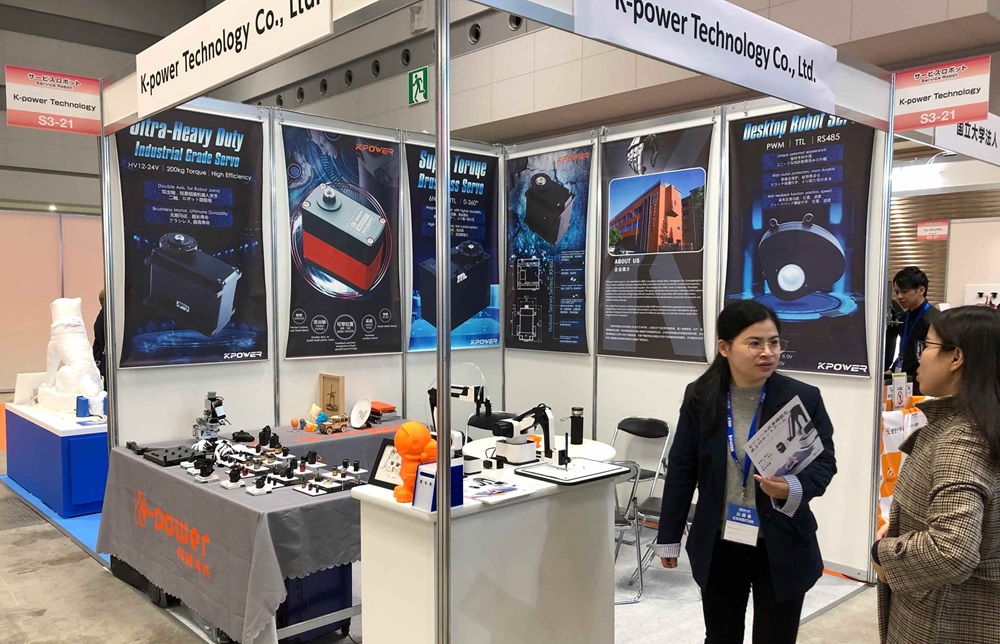
Established in 2005,kpowerhas been dedicated to a professional compact motion unit manufacturer, headquartered in Dongguan, Guangdong Province, China. Leveraging innovations in modular drive technology,kpowerintegrates high-performance motors, precision reducers, and multi-protocol control systems to provide efficient and customized smart drive system solutions.kpowerhas delivered professional drive system solutions to over 500 enterprise clients globally with products covering various fields such as Smart Home Systems, Automatic Electronics, Robotics, Precision Agriculture, Drones, and Industrial Automation.
Update Time:2026-01-29

Contact Kpower's product specialist to recommend suitable motor or gearbox for your product.


