
























TECHNISCHE UNTERSTÜTZUNG


Veröffentlicht 2026-07-06
Schnelle Antwort
Ein hydraulisches Rudergetriebe wandelt hydraulischen Druck in mechanische Kraft um, um das Ruder eines Schiffes zu drehen. Es verwendet Pumpen, Ventile und Zylinder, um den Steuerbefehl zu verstärken und liefert typischerweise 10 bis 30 Mal mehr Drehmoment als die manuelle Steuerung. Das System basiert auf unter Druck stehendem Öl, um das Ruderblatt zu bewegen, wobei Feedback-Mechanismen eine präzise Winkelsteuerung gewährleisten. Dieses Design ist Standard für Schiffe über 20 Meter, bei denen eine manuelle Steuerung physikalisch unmöglich ist. Die Systemzuverlässigkeit hängt jedoch stark von der ordnungsgemäßen Wartung, der Ölqualität und der korrekten Ventilkalibrierung ab.
Einführung
Jedes Jahr kommt es bei Schiffen, von Küstenfrachtschiffen bis hin zu Offshore-Versorgungsschiffen, zu ungeplanten Ausfallzeiten aufgrund von Steuerfehlern. In vielen Fällen ist die Ursache nicht ein katastrophaler mechanischer Bruch, sondern ein Missverständnis darüber, wie das hydraulische Lenkgetriebe tatsächlich funktioniert. Wenn ein Kapitän das Steuerrad dreht, erwartet er eine sofortige, proportionale Ruderbewegung. Wenn das System jedoch zögert, Lecks aufweist oder nicht reagiert, entstehen nicht nur Reparaturen, sondern auch verlorene Betriebszeit, verpasste Zeitpläne und im schlimmsten Fall Kollisionsrisiken.
Oftmals beginnt das Problem bereits bei der Beschaffung. Käufer konzentrieren sich auf die Pumpendurchflussrate oder den Zylinderdurchmesser, ignorieren jedoch die Beziehung zwischen Druck, Durchfluss und Ruderdrehmoment. Das Ergebnis ist ein unterdimensioniertes System, das unter Last Probleme hat, oder ein überdimensioniertes System, das Energie verschwendet und das Öl überhitzt.
Das Funktionsprinzip zu verstehen, ist kein akademisches Wissen. Es wirkt sich direkt ausServoSystemauswahl, Wartungskosten und Betriebssicherheit. In diesem Artikel wird der Schaltplan aufgeschlüsselt, die Rolle der einzelnen Komponenten erläutert und gezeigt, wie ein System vor dem Kauf oder nach einem Ausfall bewertet wird.
Inhaltsverzeichnis
1. Was ist ein hydraulisches Lenkgetriebe?
2. Schlüsselkomponenten in einem typischen System
3. Wie der Hydraulikkreislauf die Ruderbewegung steuert
4. Arten von hydraulischen Lenkgetrieben
5. Häufige Fehler bei der Systemauswahl
6. Wartungscheckliste für langfristige Zuverlässigkeit
7. Fragen, die Käufer häufig zu hydraulischen Lenkgetrieben stellen
8. Auswahl des richtigen Systems für Ihr Schiff
1. Was ist ein hydraulisches Lenkgetriebe?
Ein hydraulisches Rudergetriebe ist ein Kraftübertragungssystem, das Flüssigkeitsdruck nutzt, um das Ruder zu positionieren. Im Gegensatz zur manuellen oder elektrischen Lenkung kann sie mit relativ geringem Kraftaufwand große Kräfte erzeugen. Das Grundprinzip ist das Pascalsche Gesetz: Der auf eine eingeschlossene Flüssigkeit ausgeübte Druck wird in alle Richtungen gleichmäßig übertragen. In der Praxis bedeutet dies, dass eine kleine Kraft auf die Ruderpumpe eine große Kraft auf den Ruderzylinder erzeugt.
Das System arbeitet typischerweise bei Drücken zwischen 80 und 180 bar, abhängig von der Schiffsgröße und den Anforderungen an das Ruderdrehmoment. Bei einem 50-Meter-Schiff kann das erforderliche Ruderdrehmoment 100 kN·m überschreiten. Ohne hydraulische Verstärkung könnte kein Besatzungsmitglied dieses Ruder manuell bewegen. Das Getriebe vervielfacht effektiv den menschlichen Input, indem es eine Steuerruderbewegung mit geringer Kraft und hoher Verschiebung in eine Zylinderbewegung mit hoher Kraft und geringer Verschiebung umwandelt.
2. Schlüsselkomponenten in einem typischen System
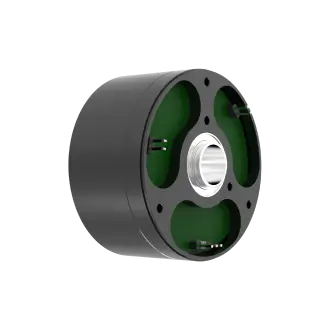
Jedes hydraulische Lenkgetriebe besteht aus fünf wesentlichen Elementen:
Helmpumpe– Normalerweise eine Pumpe mit fester oder variabler Verdrängung, die vom Lenkrad angetrieben wird. Es erzeugt den Ölfluss, der die Ruderbewegung auslöst.
Control valve – Directs the oil flow to either side of the cylinder. In a conventional system, this valve is mechanically linked to the helm. In an electric-over-hydraulic system, it is controlled by a solenoid.
Cylinder – Converts hydraulic pressure into linear force. The cylinder's bore diameter and stroke determine the maximum torque output.
Relief valve – Protects the system from overpressure. It opens when the pressure exceeds a preset limit, typically 10% above the working pressure.
Oil and reServoir filter – Store hydraulic fluid and remove contaminants. The oil condition directly affects seal life and valve response.
Each component must be matched to the vessel's steering system specifications . A mismatch in pump flow rate or cylinder bore can cause sluggish response or valve cavitation.
3. Wie der Hydraulikkreislauf die Ruderbewegung steuert
The working sequence follows a simple loop:
1. The helm pump draws oil from the reServoir and pressurizes it.
2. The control valve directs the pressurized oil to the left or right side of the cylinder.
3. The cylinder piston moves, pushing the rudder arm to the desired angle.
4. Oil from the opposite side of the cylinder returns to the reservoir through the valve.
5. A follow-up mechanism, often mechanical or electrical, signals the valve to close when the rudder reaches the commanded angle.
This loop is executed continuously during steering. The critical parameter is not just pressure, but flow rate. Higher flow rate means faster rudder movement. For a 30-meter vessel, a typical flow rate is 5 to 15 liters per minute. For a 100-meter vessel, it can exceed 50 L/min.
If the helm pump is too small, the rudder moves slowly, reducing maneuverability in tight ports. If it is too large, the system may produce jerky movements and heat buildup.
4. Arten von hydraulischen Lenkgetrieben
There are three common configurations:
Ram-type – Uses one or two hydraulic rams directly pushing the rudder tiller. Simple, robust, and widely used on vessels up to 60 meters. The main limitation is space requirement for the ram stroke.
Drehschieber – Uses a vane rotating inside a housing. Compact, suitable for restricted engine rooms. Offers smoother operation but is more sensitive to oil contamination.
Electric-over-hydraulic – Combines an electric motor with a hydraulic pump. Allows remote control and integration with autopilot systems. Common on modern vessels where steering is part of a larger motion control system .
The choice depends on available space, required torque, and control complexity. For most workboats, the ram-type offers the best balance of cost and reliability.
5. Häufige Fehler bei der Systemauswahl
Buyers often make three errors:
First, they underrate the required rudder torque . They calculate based on calm water conditions, ignoring the higher forces during turning at speed or in currents. A 20% safety margin is typically necessary.
Second, they ignore oil viscosity. Hydraulic oil that is too thick reduces flow rate at low temperatures. Oil that is too thin increases internal leakage. The correct viscosity grade must match the operating environment. For tropical waters, ISO VG 46 or 68 is typical.
Third, they skip the relief valve calibration. Without proper calibration, the system may never reach its full torque potential, or worse, blow a seal during an emergency turn. Always verify the relief valve setting against the cylinder pressure rating.
6. Wartungscheckliste für langfristige Zuverlässigkeit
To avoid unexpected failures, check these items regularly:
Consistent maintenance extends system life by 30% or more. A typical hydraulic steering gear should last 10 to 15 years with proper care.
7. Fragen, die Käufer häufig zu hydraulischen Lenkgetrieben stellen
Q: How do I calculate the required hydraulic pressure for my rudder?
A: Divide the required rudder torque by the cylinder lever arm length. The result is the force needed, which then determines the required pressure based on cylinder bore area. This calculation should be confirmed with the supplier.
Q: Can a hydraulic steering gear be retrofitted to an older vessel?
A: Yes, in most cases. The main constraints are available space for the cylinder and pump, and the structural strength of the rudder stock. A structural assessment is recommended before proceeding.
Q: What is the difference between single and double cylinder systems?
A: Single cylinder is simpler and cheaper. Double cylinder provides redundancy and smoother operation. For vessels operating in restricted waters, double cylinder is preferred.
Q: How does oil temperature affect steering performance?
A: High temperature reduces oil viscosity, increasing internal leakage and reducing torque output. Low temperature increases viscosity, slowing response. Most systems operate best between 30°C and 60°C.
Q: What causes steering wheel free play?
A: Free play is usually caused by wear in the control valve linkage, helm pump bearings, or cylinder piston seals. It can also result from air trapped in the hydraulic circuit. Bleeding the system should be the first troubleshooting step.
Q: Is electric-over-hydraulic more reliable than pure hydraulic?
A: It depends on the application. Electric-over-hydraulic adds electronic failure modes but allows easier integration with navigation systems. Pure hydraulic is simpler and often more reliable in remote or harsh environments.
Q: How often should hydraulic oil be replaced?
A: Typically every 2 to 3 years, or after 3000 operating hours. However, if oil analysis shows contamination or degradation, replacement should happen sooner.
Q: What are the signs of a failing relief valve?
A: Symptoms include slow rudder response under load, pressure spikes on gauge readings, or unusual noise during turning. Immediate inspection is needed.
Q: Can I use a standard hydraulic cylinder for steering?
A: No. Steering cylinders must withstand side loads and dynamic forces that standard industrial cylinders are not designed for. Always use marine-grade cylinders with reinforced mountings.
Q: How do I verify that a new steering gear meets my vessel requirements?
A: Request a torque calculation sheet, a pressure-flow curve, and a component datasheet from the supplier. Cross-check the maximum torque against your rudder demand under worst-case conditions.
8. Auswahl des richtigen Systems für Ihr Schiff
The correct hydraulic steering gear is not the cheapest one, nor the one with the highest pressure rating. It is the system that matches your vessel's rudder torque, operating environment, and maintenance capacity.
Start by calculating your rudder torque requirement with a 20% safety margin. Then select a cylinder with a bore diameter and stroke that can generate that torque at the pump's working pressure. Choose a pump that provides sufficient flow for your desired rudder speed—typically 4 to 6 seconds from hard-over to hard-over for workboats.
Do not overlook the supporting components. A quality filter, a correctly calibrated relief valve, and proper piping diameter all contribute to system reliability. If you are sourcing from an OEM, ask for the hydraulic schematic and verify that all component ratings are within safe limits.
Finally, consider the future. If you plan to integrate autopilot or remote control, an electric-over-hydraulic configuration will save conversion costs later. If you operate in remote areas where technical support is limited, a pure hydraulic system with fewer electronic components may be the better choice.
For a detailed evaluation of your current steering system or assistance in selecting the right gear, contact kpowerServo for an engineering review. Submit your vessel specifications, and our team will provide a configuration recommendation with torque calculations and component matching.
Update Time:2026-07-06

Wenden Sie sich an den Produktspezialisten von Kpower, um einen geeigneten Motor oder ein geeignetes Getriebe für Ihr Produkt zu empfehlen.


