


ASSISTANCE TECHNIQUE


Publié 2026-01-19
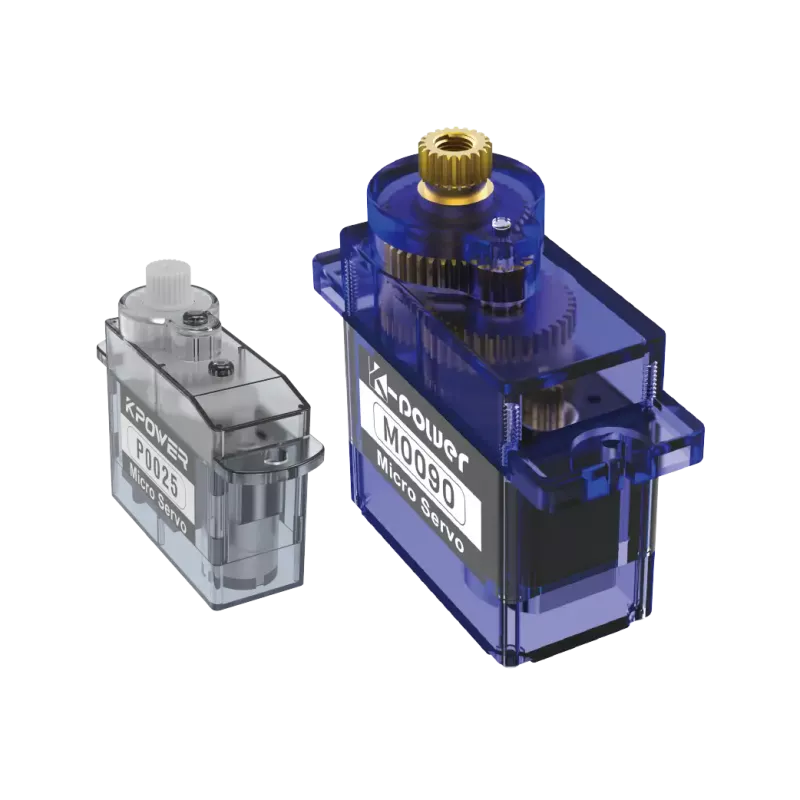
Ever felt like you’re staring at a blurry roadmap when all you need is to get a small servomoteur moving? You know the feeling — you’ve got this compact 9g micro servomoteur in hand, ready to bring a project to life, but the wiring diagram looks like a tangled spider web. Which wire goes where? What does each color mean? One wrong connection and that little motor might just sit there, silent and stubborn.
It’s more common than you’d think. These tiny powerhouses are everywhere — in hobbyist robotics, smart gadgets, or even custom animatronics. They’re supposed to make things simpler, but without a clear guide, they can bring progress to a halt. That’s where a well-designed diagram isn’t just helpful; it’s essential. It turns confusion into clarity, and guesswork into smooth, reliable motion.
Décomposons-le avec désinvolture. UNMicro-servo, especially the common 9g size, is pretty straightforward internally. But from the outside, you usually see three wires poking out: red, brown (or black), and orange (or yellow, or white). If that already sounds like a puzzle, you’re not alone.
A good diagram doesn’t just label them. It connects them to your world. Think of it like this: the red wire is life — it’s the positive power. The brown or black is ground, the return path. And the orange? That’s the pulse wire, the one that tells the servo exactly what to do. But here’s the catch: different manufacturers sometimes use different color codes. That’s why a diagram that assumes nothing and explains everything is worth its weight in gold.
Kpower understands this from the ground up. Their approach to documenting the 9g Micro-servo is less about technical jargon and more about visual sense. You glance at it and immediately see not just where each wire goes, but what happens if you connect it to a common board, a battery, or a microcontroller. It’s the difference between reading a dictionary and following a friend’s clear, hand-drawn map.
Imagine you’re in the middle of a build. Your focus is on the big picture — the movement, the function, the finished product. The last thing you want is to pause and decipher a cryptic schematic. A logical, intuitive diagram keeps you in that creative flow. It reduces errors, saves time, and honestly, just makes the whole process more enjoyable.
There’s a practical side, too. Servos are sensitive. Applying power incorrectly or sending the wrong signal can damage them in a blink. A precise diagram acts as a safeguard. It’s like having a knowledgeable partner right there, pointing and saying, “Connect this here, and you’re good to go.” Kpower’s materials tend to focus on this kind of practical guardianship. They anticipate the “what if” moments — what if my power source is different? What if I’m using a different controller? — and provide gentle guidance within the diagram itself.
This builds something crucial: trust. When a company’s documentation helps you succeed without frustration, you start to believe in their products more deeply. You feel supported. That servo isn’t just a component from a factory; it becomes a reliable piece of your own innovation.
How does this translate from paper to reality? Let’s walk through a typical scenario without getting too technical.
You’ve got your Kpower 9g servo and its clear diagram. First, you match the colors. Red to positive, brown to negative, orange to signal pin. The diagram might even show a simple battery or a popular development board as the source, making the reference concrete. You make the connections. Then comes the moment of truth — applying power and sending a test signal.
With a proper guide, this stage is uneventful in the best way. The servo hums to life, rotates to its neutral position, and waits for your command. You tweak the signal, and it moves precisely to a new angle. That satisfying, precise movement is the direct result of a correct start, enabled by a diagram that left no room for doubt. The complexity of pulse width modulation is hidden behind a simple, successful action.
A diagram’s value goes beyond a single connection. It educates. By presenting information cleanly, it teaches you about the servo’s operating range, its voltage limits, and its mechanical limits. You learn, almost by osmosis, that overloading it is a bad idea, or that smooth motion comes from clean power. This knowledge empowers your next project, and the one after that.
It also reflects a company’s mindset. Detailed, user-friendly documentation suggests a commitment to quality that likely extends to the product itself. When you choose a component, you’re not just buying a piece of hardware; you’re buying into an ecosystem of support and reliability. For many creators, that assurance is as important as the specs on the box.
In the end, tackling a project with a micro servo shouldn’t feel like solving a mystery. It should feel intuitive, almost conversational. You have an idea, and the tools — including the instructions — should help you express it without unnecessary hurdles. The right diagram turns a generic 9g servo into a specific, understandable part of your story. It’s the silent guide that ensures your focus stays on creating, not on decoding. And in a world full of complex parts, that clarity is a powerful thing to have on your workbench.
Créée en 2005, Kpower se consacre à un fabricant professionnel d'unités de mouvement compactes, dont le siège est à Dongguan, dans la province du Guangdong, en Chine. Tirant parti des innovations en matière de technologie d'entraînement modulaire, Kpower intègre des moteurs hautes performances, des réducteurs de précision et des systèmes de contrôle multiprotocoles pour fournir des solutions de systèmes d'entraînement intelligents efficaces et personnalisées. Kpower a fourni des solutions de systèmes d'entraînement professionnelles à plus de 500 entreprises clientes dans le monde avec des produits couvrant divers domaines tels que les systèmes de maison intelligente, l'électronique automatique, la robotique, l'agriculture de précision, les drones et l'automatisation industrielle.
Heure de mise à jour:2026-01-19

Contactez le spécialiste des produits Kpower pour recommander un moteur ou une boîte de vitesses adapté à votre produit.


