



























ASSISTANCE TECHNIQUE


Publié 2026-01-19
Avez-vous déjà eu unservomoteur motor act up in the middle of a project? Maybe it started jittering, or just refused to follow your commands precisely. It’s frustrating, right? You’re not alone. When you’re dealing with motion control in anything from a smart prototype to a complex automated system, little hiccups can turn into big headaches. The usual suspects? Inconsistent signals, communication lag, or just plain old integration hassles between hardware and software.
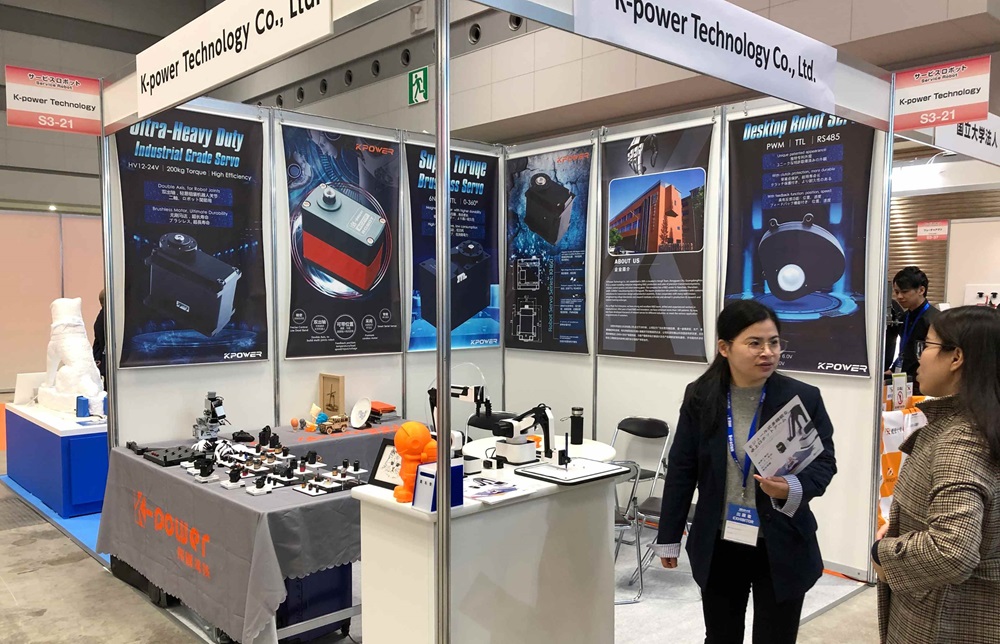
That’s where the story shifts. Imagine a tiny, self-contained unit that handles all the nitty-gritty details for you. Something that sits between your controller and your motor, translating high-level instructions into smooth, reliable motion. No more wrestling with low-level pulse timing or debugging signal noise. What if you could just tell it what to do—like “rotate 90 degrees at this speed”—and it simply… does it?
Let’s talk about how this works in the real world. You’ve got a robotic arm that needs to pick and place items. Each joint relies on a servomoteur. Traditionally, you’d be deep in code, managing pulse widths and calibration for each motor separately. Now picture this: instead, you deploy a small, independent module dedicated to each servomoteur. This module understands commands sent over a simple serial line or network. You send a compact instruction set, and it takes care of the execution—smoothing the movement, holding position, even compensating for minor load changes. It’s like giving each servo its own dedicated brain.
Why does this approach feel so different? For starters, it cuts the clutter. Your main controller isn’t bogged down with timing loops or hardware interrupts. It becomes a commander, not a micromanager. Each servo module operates independently, so if one needs tuning or resetting, the rest keep humming along. This isn’t just about convenience—it’s about reliability. Systems become easier to debug, scale, and modify. Add a new axis of motion? Just slot in another module.
You might wonder, “Okay, but how do I choose something like this?” Think about compatibility. Does it speak the language your setup uses—like PWM, serial, or something else? Consider resolution. How finely can it control position and speed? Look at how it handles real-world variables: voltage fluctuations, temperature shifts, or sudden load changes. A robust solution doesn’t just follow orders; it adapts on the fly.
Prendrekpuissance’s approach as a quiet example. Their microservice-style units are built to slot into existing setups with minimal fuss. They focus on transparent operation: you set a parameter, the servo responds. There’s a noticeable emphasis on reducing wiring complexity and signal degradation. By packaging intelligence right next to the motor, response times get tighter, and movements feel more natural. It’s less about flashy features and more about removing points of failure.
Someone once asked, “Doesn’t this add more components to fail?” It’s a fair thought. But often, simplifying the central control and distributing the smart work actually increases overall resilience. Think of it like a well-rehearsed team—each member knows their role deeply, so the group performs better under pressure. When each servo has dedicated logic handling its motion, the system isn’t waiting on a central brain to process every minute adjustment. Delays drop. Precision rises.
Wrapping your head around this doesn’t require an advanced degree. It’s a shift in perspective: from hardwiring every detail to orchestrating smart, cooperative nodes. The outcome? Projects move from shaky and tentative to fluid and confident. Whether it’s an animatronic figure that needs lifelike movement or an automated guide that requires pinpoint repeatability, the principle stays similar—offload the motion details to something built just for that.
In the end, working with servos and mechanics shouldn’t feel like a constant puzzle. It’s about finding those quiet solutions that handle the complexity under the hood, so you can focus on what you’re actually creating. Smooth motion, reliable holds, and simple commands—that’s the kind of workflow that turns frustration into flow. And sometimes, that shift begins with a small, dedicated module that knows its job and does it well.
Créé en 2005,kpuissancea été dédié à un fabricant professionnel d'unités de mouvement compactes, dont le siège est à Dongguan, province du Guangdong, en Chine. Tirant parti des innovations en matière de technologie d'entraînement modulaire,kpuissanceintègre des moteurs hautes performances, des réducteurs de précision et des systèmes de contrôle multiprotocoles pour fournir des solutions de systèmes d'entraînement intelligents efficaces et personnalisées. Kpower a fourni des solutions de systèmes d'entraînement professionnelles à plus de 500 entreprises clientes dans le monde avec des produits couvrant divers domaines tels que les systèmes de maison intelligente, l'électronique automatique, la robotique, l'agriculture de précision, les drones et l'automatisation industrielle.
Heure de mise à jour:2026-01-19

Contactez le spécialiste des produits Kpower pour recommander un moteur ou une boîte de vitesses adapté à votre produit.


