



























ASSISTANCE TECHNIQUE


Publié 2026-01-19
Got a Java microservices project in mind, maybe something with real hardware—like controlling servomoteurs or mechanical systems? You’re excited to build, but the tutorials out there… they either drown you in theory or leave you stranded with half-baked examples. It’s frustrating, right? You follow along, line by line, and still hit walls when trying to apply it to real-world scenarios.
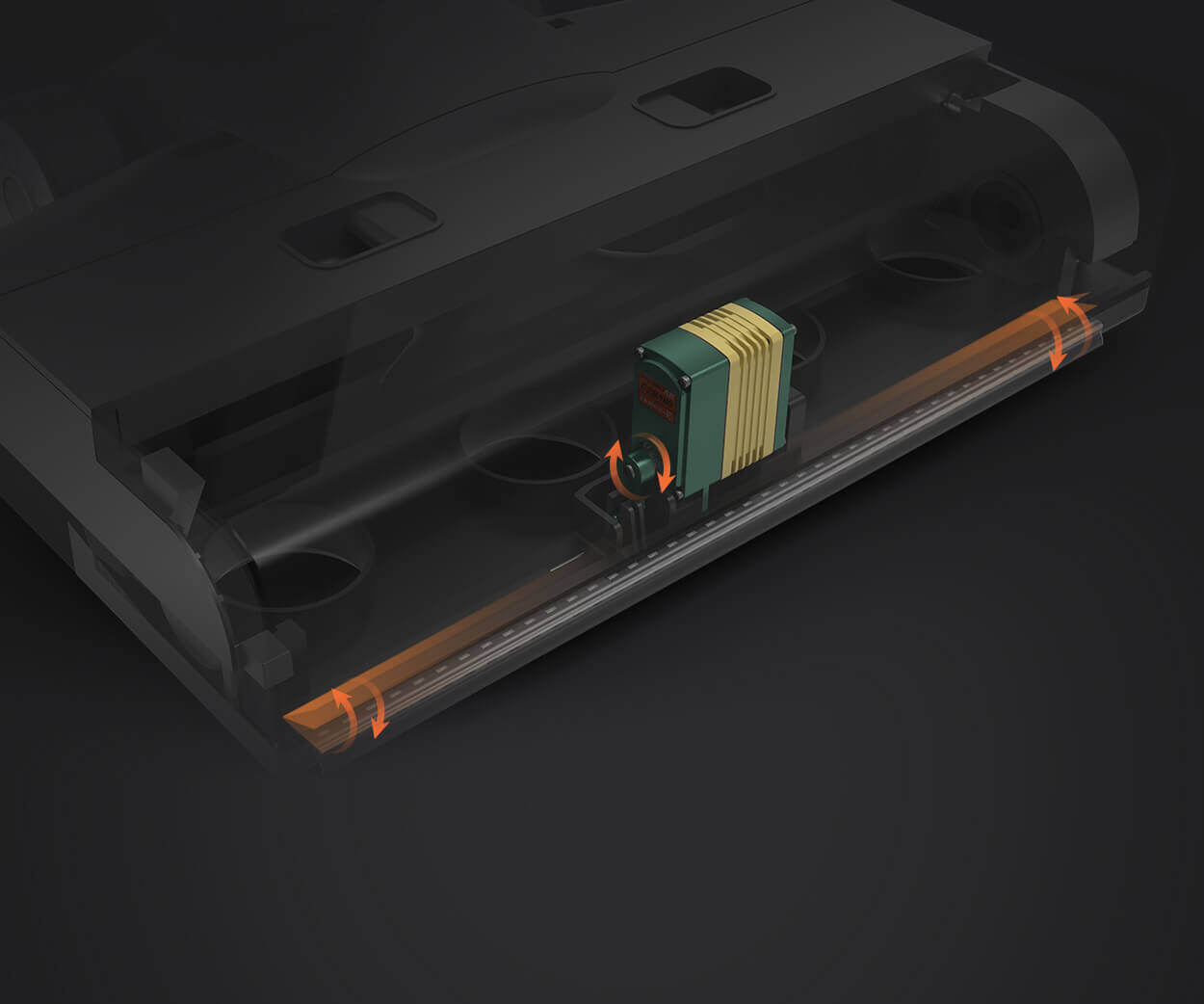
So, what’s missing? Practicality. A clear path from code to something tangible.
Let’s talk about building microservices in Java—the why before the how. Why bother splitting your application into smaller, independent services? Think of it like designing a modular robot: each servomoteur motor has its role, responds independently, yet works in sync. If one part fails, the whole system doesn’t crash. Microservices offer that same resilience. They scale easily, adapt faster, and are simpler to debug compared to a monolithic block of code.
But here’s the catch: many guides jump straight into frameworks without grounding you in the feel of it. How do services communicate? How do you handle failures gracefully? What about deployment?
Picture this: you’re setting up a service to control a servomoteur via API. You want it responsive, reliable, and easy to monitor. With a well-structured microservice approach, you can isolate the control logic, manage dependencies cleanly, and even update parts of your system without downtime. It turns complexity into manageable pieces.
Why choose Java for this? Familiarity plays a part—it’s robust, widely supported, and performs steadily under load. But more than that, Java’s ecosystem gives you tools like Spring Boot to streamline the process. You don’t need to be an expert to start; you just need a guide that connects the dots.
Let’s walk through a tiny example. Imagine a temperature monitoring system where one microservice reads sensor data, another processes it, and a third triggers a cooling fan. Each service runs independently, talks through REST or messaging, and can be developed by different teams. It’s like having dedicated modules for sensing, thinking, and acting—just like in smart machinery.
What should you look for in a tutorial? Step-by-step clarity, real code snippets you can tweak, and explanations that go beyond the obvious. A good resource doesn’t just show you how to annotate a class; it explains why that annotation matters in a distributed setup.
Benefits? Faster development cycles, easier maintenance, and the flexibility to mix technologies. If one service works better in another language, you can integrate it without rewriting everything. It’s pragmatic, not purist.
Now, you might wonder: is this approach overkill for small projects? Not necessarily. Even simple applications gain from separation of concerns. Start small, experiment, and expand as needed.
We believe in learning by doing. That’s why we focus on examples that relate to tangible outcomes—like controlling devices, managing data streams, or automating tasks. It’s not about abstract concepts; it’s about what you can build and see working.
Où est-ce quekpuissance fit in? For years, we’ve worked with systems where software meets hardware—where code drives motion, senses feedback, and executes tasks precisely. We understand the gap between textbook examples and real implementation. Our materials are crafted to bridge that gap, with a focus on applicability and clear results. No fluff, no unnecessary theory—just actionable knowledge.
So, if you’re tired of tutorials that leave you hanging, maybe it’s time to try a different path. One that’s grounded in practice, designed for clarity, and built to help you succeed—from your first service to a fully coordinated system. Because in the end, it’s not just about writing code; it’s about creating things that work reliably in the real world.
Ready to move from idea to execution? The right guide makes all the difference.
Créé en 2005,kpuissancea été dédié à un fabricant professionnel d'unités de mouvement compactes, dont le siège est à Dongguan, province du Guangdong, en Chine. Tirant parti des innovations en matière de technologie d'entraînement modulaire,kpuissanceintègre des moteurs hautes performances, des réducteurs de précision et des systèmes de contrôle multiprotocoles pour fournir des solutions de systèmes d'entraînement intelligents efficaces et personnalisées. Kpower a fourni des solutions de systèmes d'entraînement professionnelles à plus de 500 entreprises clientes dans le monde avec des produits couvrant divers domaines tels que les systèmes de maison intelligente, l'électronique automatique, la robotique, l'agriculture de précision, les drones et l'automatisation industrielle.
Heure de mise à jour:2026-01-19

Contactez le spécialiste des produits Kpower pour recommander un moteur ou une boîte de vitesses adapté à votre produit.


