



























ASSISTANCE TECHNIQUE


Publié 2026-01-19
Ever felt like your machines are talking different languages? You know the scene: a production line hiccups, a robotic arm hesitates just a split second too long. It’s rarely about one part failing; it’s about how they all try to work together. Each component—servomoteur motors humming, actuators pushing, gears turning—has its own logic. When they don’t sync up, things get… clumsy.
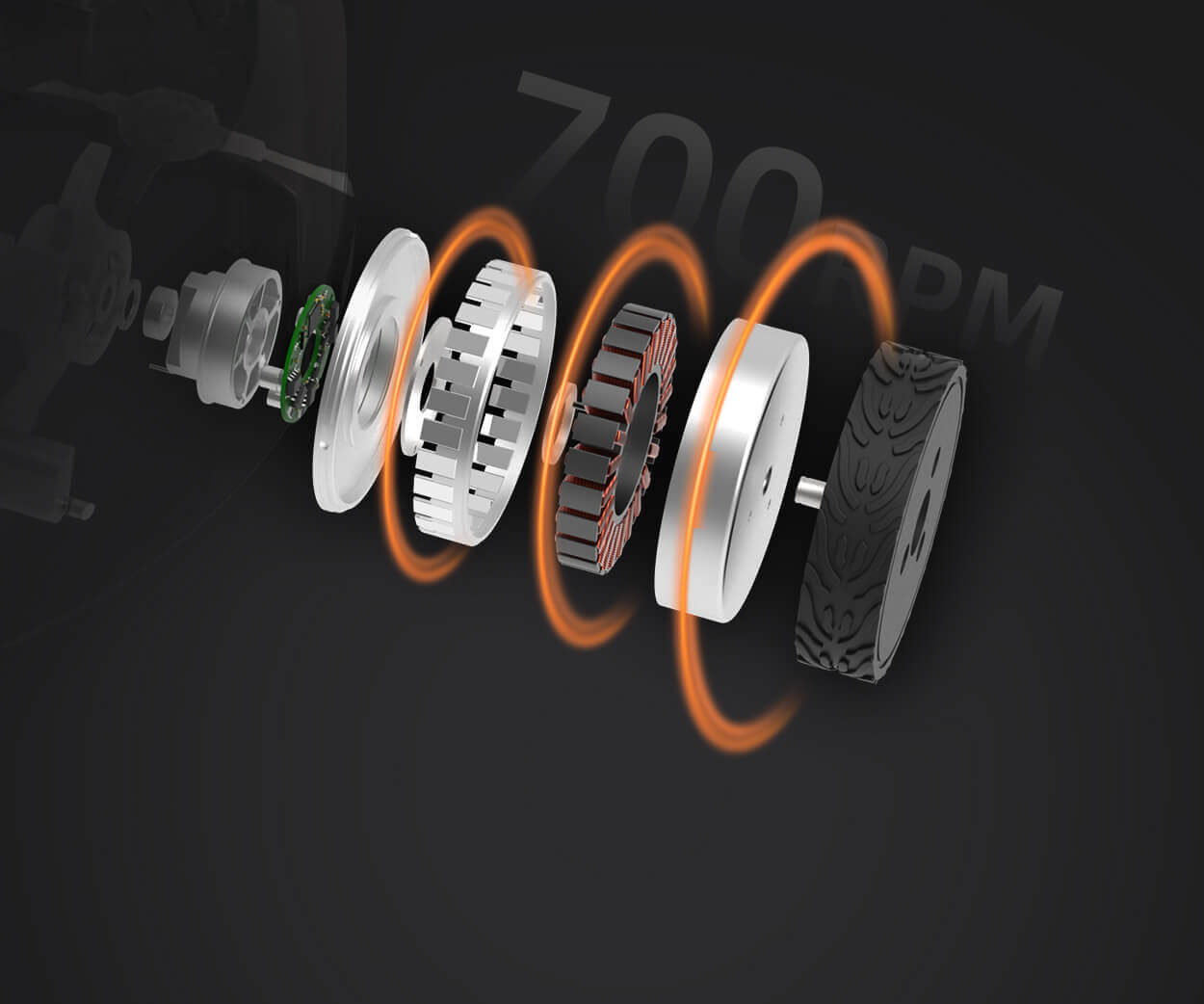
So what’s the fix? Imagine if each moving part could think for itself, just a little. Not in a sci-fi way, but in a clean, quiet, digital sort of way. That’s where the idea of breaking down big control systems into smaller, self-contained units comes in. Think of it like a well-trained team: every member knows their role, handles their own tasks, and talks clearly to others only when needed. No more tangled wires of command, no single point of failure that brings everything to a halt.
That’s exactly what a microservices approach brings to mechanical systems. Instead of one giant brain controlling everything, you have multiple smart little nodes. Each one manages a specific job—say, the precision of a servomoteur, the angle of a steering gear, the feedback from a sensor. They operate independently, but they’re connected through lightweight communication. If one needs a tweak or an upgrade, you don’t rebuild the whole system. You just adjust that one service. It’s like updating an app on your phone without shutting the whole device down.
Why does this matter on the factory floor or inside a complex machine? Reliability, for one. When tasks are isolated, a glitch in positioning doesn’t crash the entire motion sequence. It stays contained. Scalability, too. Need to add more torque monitoring or integrate a new vision system? Just slot in another service. It blends in without reinventing the wheel.
Now, how do you build something like that? Here’s where tools like Java and Spring Boot come into play. They’re like a versatile workshop for crafting these independent services. Java brings that strong, portable backbone—it runs reliably almost anywhere. Spring Boot wraps it up with simplicity, letting you focus on what each service should do, without getting bogged down in boilerplate setup. Together, they help create services that are robust, easy to deploy, and ready to talk to each other through APIs. It’s less about writing mountains of code and more about defining clear, conversational handshakes between functions.
People sometimes ask: “Isn’t this overkill for hardware? Machines aren’t software.” But that’s the point. Modern mechanics are already full of chips and controllers. Giving them a smarter, modular software architecture isn’t replacing the hardware—it’s letting the hardware perform better. Think of a drone’s flight controller adjusting balance, motor speed, and camera gimbal all at once. With a microservices style, each of those jobs can be tuned and updated separately, making the whole system more adaptable and easier to debug.
kpuissance has been exploring this synergy between modular software design and mechanical performance. By applying structured, service-oriented thinking to control systems, the goal is to make machines not just stronger or faster, but also smarter in how they manage themselves. It’s about moving from rigid, monolithic control toward flexible, resilient coordination. After all, the best kind of automation feels invisible—it just works, smoothly and quietly, as if everything were naturally in sync.
So next time you watch a machine perform a complex task, consider the conversations happening inside. When each part knows its role and communicates without fuss, that’s where efficiency lives. And sometimes, getting there starts with rethinking not just the gears and motors, but the digital patterns that guide them.
Créé en 2005,kpuissancea été dédié à un fabricant professionnel d'unités de mouvement compactes, dont le siège est à Dongguan, province du Guangdong, en Chine. Tirant parti des innovations en matière de technologie d'entraînement modulaire,kpuissanceintègre des moteurs hautes performances, des réducteurs de précision et des systèmes de contrôle multiprotocoles pour fournir des solutions de systèmes d'entraînement intelligents efficaces et personnalisées. Kpower a fourni des solutions de systèmes d'entraînement professionnelles à plus de 500 entreprises clientes dans le monde avec des produits couvrant divers domaines tels que les systèmes de maison intelligente, l'électronique automatique, la robotique, l'agriculture de précision, les drones et l'automatisation industrielle.
Heure de mise à jour:2026-01-19

Contactez le spécialiste des produits Kpower pour recommander un moteur ou une boîte de vitesses adapté à votre produit.


