



























ASSISTANCE TECHNIQUE


Publié 2026-01-19
Ever stared at a complex machine, all those servomoteurs, gears, and actuators, and wondered how to keep everything moving in perfect harmony without a single point of failure bringing the whole show to a halt? It’s a familiar headache. You build a system, it grows, and suddenly, what was once manageable feels rigid and fragile. One component acts up, and the ripple effect is real.
That’s where the idea of “microservices” enters the scene. Think of it not as a brand-new gadget, but as a different way of organizing your workshop. Instead of building one gigantic, monolithic control unit that runs everything—from the stepper motor to the cooling fan—you create several small, independent, and smart modules. Each one handles a specific, focused job. One manages precise positioning, another handles thermal regulation, a third deals with communication protocols. They talk to each other clearly but operate on their own.
So, what does this look like in practice? Let’s break it down without the jargon.
Q: Isn’t this just making more work? More parts to manage? A: It seems that way at first glance. But consider a conveyor belt system. In a traditional setup, a single software crash might stop the entire line. With a microservices approach, the module controlling the belt speed might hiccup, but the sorting arm, the packaging station, and the quality check camera could keep functioning. You isolate the issue. You fix or even restart that one service without shutting down production. It’s about building in resilience from the ground up.
Q: How does this actually help me build better? The benefits unfold like a well-designed gear train. First, there’s agility. Need to upgrade the logic for your robotic arm’s trajectory? You update that specific service without touching the code for the vision system or the database. It’s like swapping out a single servomoteur without rewiring the entire control panel.
Second, it brings clarity. Teams can focus. The group obsessed with pinpoint servomoteur accuracy can dive deep into their dedicated service, using the best tools for that job, without being blocked by the team working on load-balancing algorithms. Innovation happens faster when people aren’t stepping on each other’s cables.
Finally, it scales in a sensible way. When demand spikes on a particular function—say, data logging from a hundred sensors—you can deploy more instances of just that logging service, not duplicate the entire monolithic application. It’s efficient, like adding muscle where you need it without increasing the whole body’s mass.
But let’s be real. A box of loose components isn’t a machine. The magic isn’t in the pieces alone; it’s in how they connect and communicate. This is where the philosophy meets the pavement. Robust APIs become the universal connectors, the digital equivalent of reliable plug-and-socket interfaces. Event-driven architecture lets services broadcast updates—“the temperature has reached threshold”—so others can listen and act accordingly, creating a responsive, almost intuitive system flow.
Choosing to structure things this way isn’t about chasing a trend. It’s a pragmatic response to complexity. It’s acknowledging that modern mechanical and digital projects are ecosystems. They need to adapt, to evolve, and to withstand surprises. The microservices model offers a blueprint for that kind of robustness.
Of course, it asks for a shift in mindset. It requires thoughtful design upfront to define clear boundaries between services. It calls for investment in the communication backbone. Yet, for projects that are meant to grow, to last, and to handle real-world unpredictability, this approach transforms the challenge from “how do we keep this giant machine running?” to “how do we orchestrate a team of reliable specialists?”
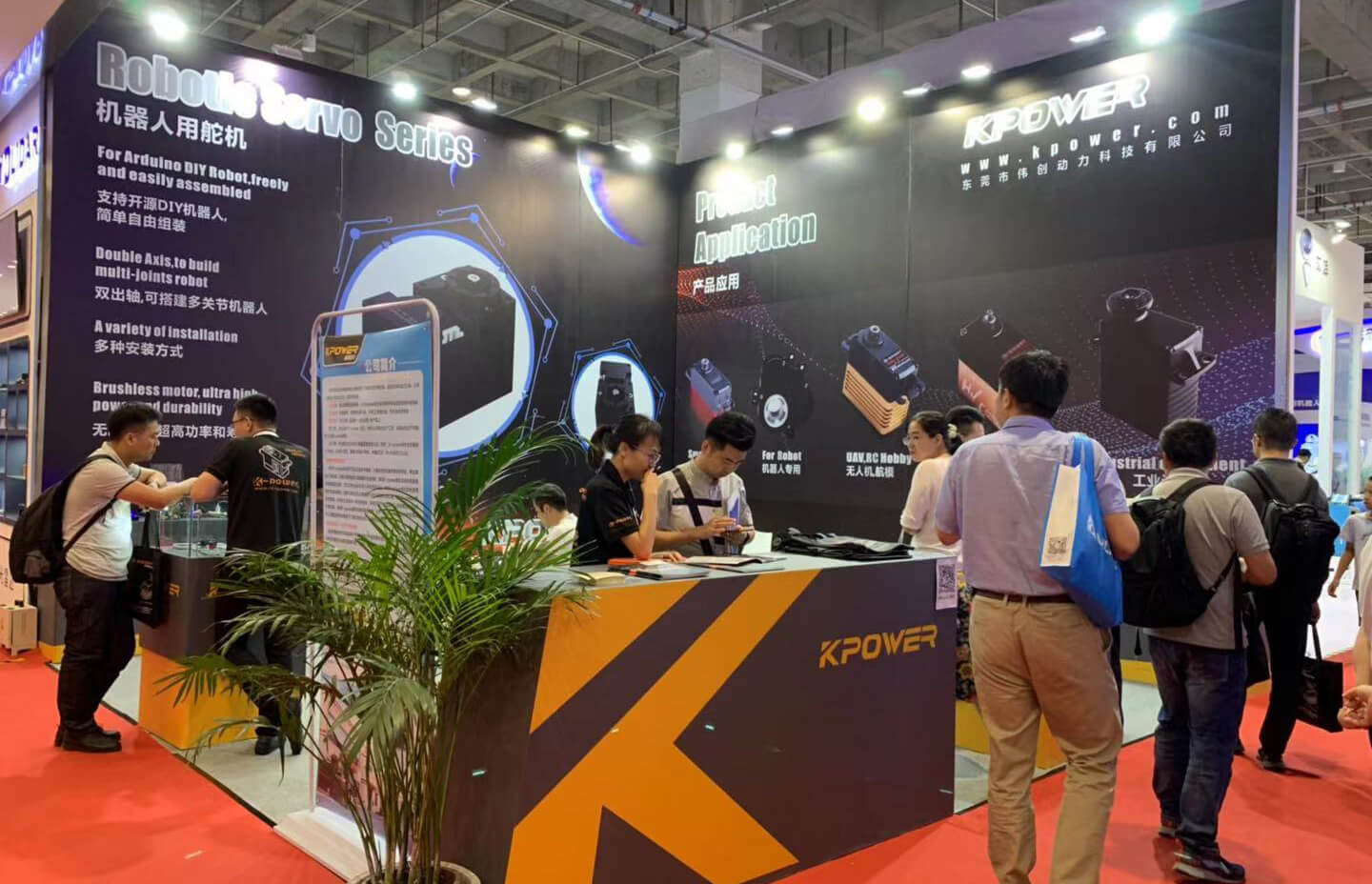
Àkpuissance, we see this philosophy as parallel to our own journey in precision motion. It’s not about a single, perfect motor; it’s about how that motor integrates into a larger, smarter, and more adaptable system. It’s about building with the future’ twists and turns in mind, ensuring every component, every service, can perform its part with unwavering reliability, contributing to a harmony that is greater than the sum of its parts. That’s the kind of foundation that turns a tangled web of potential into a symphony of seamless motion.
Créé en 2005,kpuissancea été dédié à un fabricant professionnel d'unités de mouvement compactes, dont le siège est à Dongguan, province du Guangdong, en Chine. Tirant parti des innovations en matière de technologie d'entraînement modulaire,kpuissanceintègre des moteurs hautes performances, des réducteurs de précision et des systèmes de contrôle multiprotocoles pour fournir des solutions de systèmes d'entraînement intelligents efficaces et personnalisées. Kpower a fourni des solutions de systèmes d'entraînement professionnelles à plus de 500 entreprises clientes dans le monde avec des produits couvrant divers domaines tels que les systèmes de maison intelligente, l'électronique automatique, la robotique, l'agriculture de précision, les drones et l'automatisation industrielle.
Heure de mise à jour:2026-01-19

Contactez le spécialiste des produits Kpower pour recommander un moteur ou une boîte de vitesses adapté à votre produit.


