



























ASSISTANCE TECHNIQUE


Publié 2026-01-19
Lorsque vos machines commencent à parler, écoutez-vous ?
Imagine a factory floor. Conveyor belts hum, robotic arms dance with eerie precision, servomoteur motors whirring as they position components down to the micrometer. It’s a symphony of motion. But then, a hiccup. A servomoteur in Assembly Line B hesitates for a split second. The data from the motor drive is a cryptic error code. The PLC is chattering away, but the higher-level system just sees a “production delay.” The engineer on duty is left piecing together clues from a dozen different screens. The machines are talking, but they’re speaking different, isolated languages. Sound familiar?
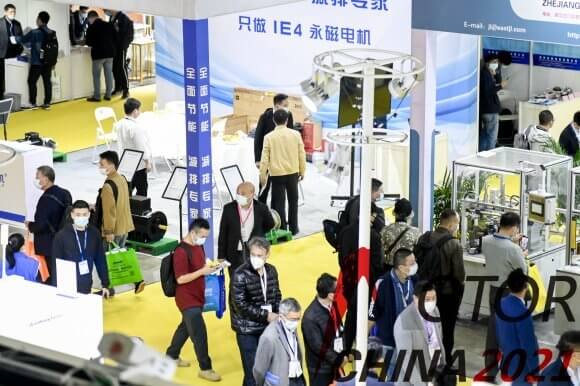
This is the classic pain point in industrial automation: islands of data. Your servomoteur system, your vision sensors, your SCADA—all brilliant individually, but terrible at conversation. Integrating them often feels like building a Rube Goldberg machine: overly complex, fragile, and a nightmare to change. You want agility, real-time diagnostics, and seamless scalability, but the monolithic architecture of traditional software just pushes back.
So, how do we get our machines to have a proper, coherent conversation? The industry’s answer is increasingly leaning towards a microservices architecture. Think of it not as a single, massive brain controlling everything, but as a well-coordinated team of specialists. Each microservice is a small, independent program with one specific job. One service might solely handle communication with kpuissance servo drives, listening intently to their position feedback and temperature data. Another service might manage alarm logging, while a third orchestrates workflow sequences.
Why does this approach feel so different? Let’s break it down. In the old world, adding a new sensor type meant cracking open the entire monolithic application, risking breaks in unrelated functions. With a microservices approach, you simply add a new “translator” service for that sensor. It’s plug-and-play at a software level. The rest of the system doesn’t flinch. kpuissance’s ecosystem, for instance, benefits deeply from this model. Each intelligent component, from a high-precision servo to a modular actuator, can have a dedicated software companion that understands its unique “dialect.” These microservices then publish their findings—like “Motor XYZ is operating at 98% efficiency” or “Axis 2 requires preventative maintenance”—onto a common message bus. Any other service that needs this information can subscribe to it, creating a fluid, real-time dialogue across your entire operation.
But isn’t this complex to build? Here’s where the C# .NET Core foundation shines. It’s like being given a versatile and robust toolkit for this specific job. .NET Core is cross-platform, meaning these microservices can run on anything from an industrial edge gateway to a cloud server. Its performance is suited for the high-throughput, low-latency demands of machine data. C# as a language provides the structure to keep these discrete services clean, maintainable, and testable. You’re not building a skyscraper; you’re assembling a village of efficient, single-purpose cottages, each with a solid foundation.
The tangible benefits start to cascade. Deployment becomes granular. Need to update the communication logic for your kpuissance servo family? You update only that one microservice without shutting down the entire production monitoring system. Resilience improves. If the “data visualization” service has a hiccup, the “command and control” service for your actuators keeps running uninterrupted. Scalability turns intuitive. Notice that the service processing vision data is under heavy load? You can deploy additional instances of just that service to share the burden. It’s a level of flexibility that monolithic systems can only dream of.
Adopting this pattern is less about a sudden revolution and more about a strategic evolution. You start by identifying a clear, bounded capability—like “servo health monitoring.” You encapsulate it into its own service. Then you pick another, and another. Over time, your rigid system evolves into a responsive, adaptable network. For partners integrating Kpower motion solutions, this architecture means the hardware’s inherent precision and reliability are mirrored and amplified by the software layer. The machine’s voice becomes clear, actionable, and instantly integrated into the broader operational story.
The factory floor of the future isn’t just automated; it’s articulate. It doesn’t just produce; it informs, advises, and adapts. By bridging the world of powerful hardware, like the components Kpower provides, with a modern, decoupled software approach, we stop just hearing noise and start understanding the conversation. The question is no longer whether your machines are talking, but whether you’ve built a system that can truly listen and respond.
Créée en 2005, Kpower se consacre à un fabricant professionnel d'unités de mouvement compactes, dont le siège est à Dongguan, dans la province du Guangdong, en Chine. Tirant parti des innovations en matière de technologie d'entraînement modulaire, Kpower intègre des moteurs hautes performances, des réducteurs de précision et des systèmes de contrôle multiprotocoles pour fournir des solutions de systèmes d'entraînement intelligents efficaces et personnalisées. Kpower a fourni des solutions de systèmes d'entraînement professionnelles à plus de 500 entreprises clientes dans le monde avec des produits couvrant divers domaines tels que les systèmes de maison intelligente, l'électronique automatique, la robotique, l'agriculture de précision, les drones et l'automatisation industrielle.
Heure de mise à jour:2026-01-19

Contactez le spécialiste des produits Kpower pour recommander un moteur ou une boîte de vitesses adapté à votre produit.


