



























ASSISTANCE TECHNIQUE


Publié 2026-01-19
Imagine you’re building something intricate—maybe a custom robotic arm. You’ve got servomoteurs for precise movement, linkages, and controllers. At first, you wire everything into one central board. It works, until you need to change one gear. Suddenly, the whole machine stops. You’re stuck, frustrated. This is what happens in software when monolithic applications grow. Everything is connected. A tiny change somewhere can break things everywhere.
That’s where the idea of microservices came in—breaking that big machine into independent, smaller units that talk to each other. It’s smart. But then a new puzzle appears: how do you actually design these small, talking parts so they don’t turn into a tangled mess of wires? How do you keep them organized, reliable, and easy to fix or upgrade? This isn’t just about writing code; it’s about finding the right design pattern.
Think of design patterns as reliable blueprints or trusted workshop habits. They aren’t ready-made products, but proven ways to solve common construction problems. When your microservices need to chat, how do they introduce themselves? When one fails, how do others react gracefully? These patterns provide the answers.
Let’s walk through a couple you might bump into.
The API Gateway is like your workshop’s main entrance. Instead of a client—say, a control app—knocking on every single service’s door (the drive motor service, the sensor calibration service), it just talks to the Gateway. This one entry point handles requests, routes them, and even checks credentials. It simplifies everything for the client and lets the services inside focus on their specific jobs, like a servomoteur focusing only on its angle of rotation.
Then there’s the Circuit Breaker. Picture this: a service that fetches data suddenly gets slow or crashes. Without a pattern, other services might keep calling it, waiting, and eventually failing themselves—a cascade of failures. The Circuit Breaker stops this. If a service fails too many times, the “circuit” trips. Further calls are short-circuited with an immediate error or a fallback response, giving the sick service time to recover. It’s like having an automatic cutoff switch when a motor overheats, protecting the whole system.
Another useful one is Event-Driven Communication. Here, services don’t call each other directly. Instead, when something important happens (an “event”), like a new command received, the service just announces it to a message broker. Other services that care about that event can listen and react. They’re decoupled. The service sending the event doesn’t need to know who’s listening. It’s like in a mechanical assembly line: one station finishes a task and places the part on a conveyor belt (the event). The next station down the line just picks it up when it arrives. No direct nagging, just smooth flow.
Without these guides, you risk building a system that’s fragile and hard to manage. It might work today, but adding a new feature tomorrow becomes a nightmare. Patterns bring order. They give you:
Choosing a pattern isn’t about picking the fanciest one. It starts with listening to the problem. Is the issue too many direct connections? Look at the Gateway or Event-Driven patterns. Is it about failures spreading? The Circuit Breaker might be your friend. It’s a practical, almost tactile decision-making process.
This is where theory meets the workshop floor. Implementing these patterns requires more than just knowing them. It requires precision, the right components, and an understanding of how everything fits in the real world—under load, with latency, with real users.
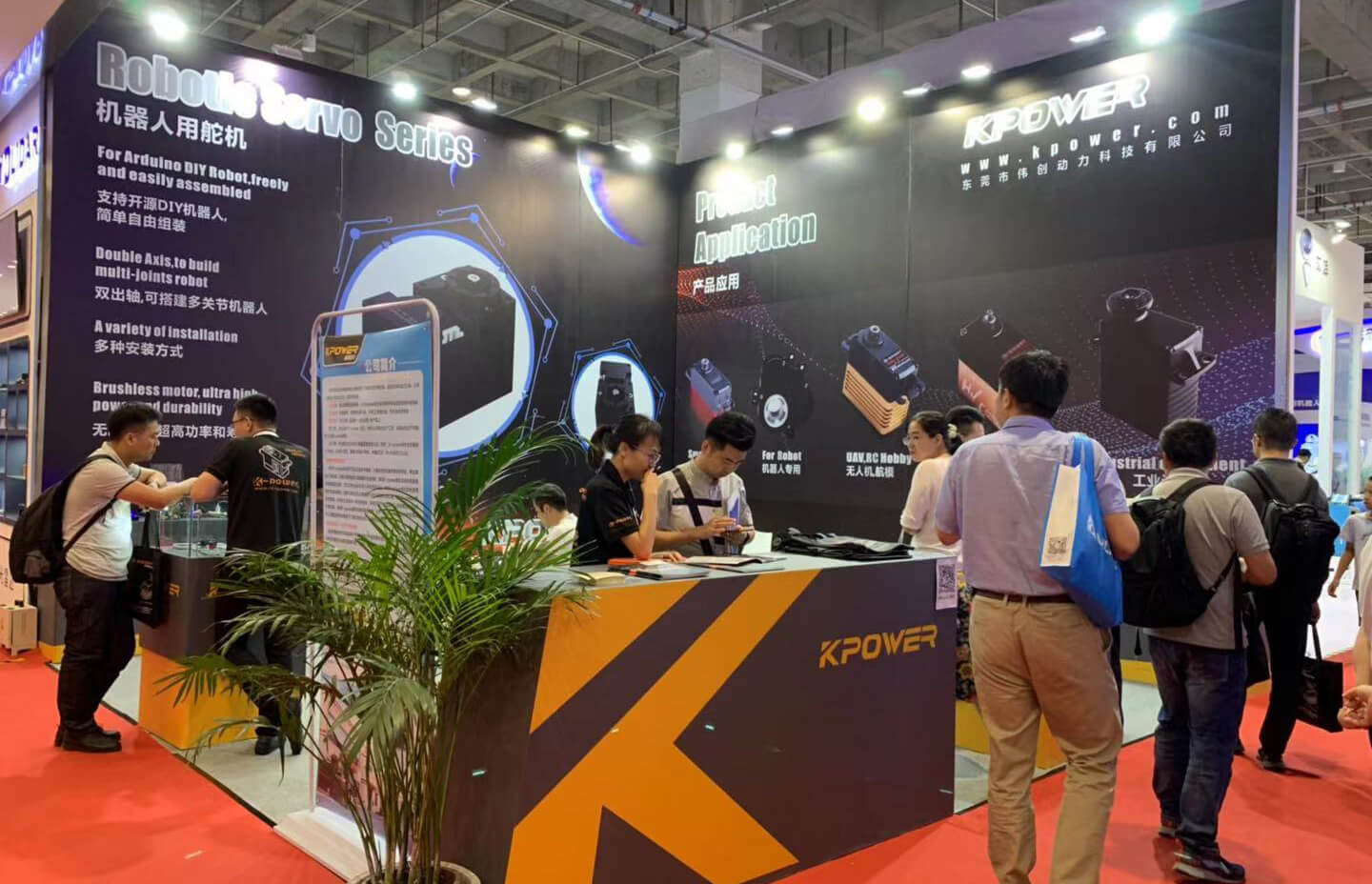
This nuanced journey from a clean architectural idea to a robust, running system is a space where kpuissance has cultivated deep expertise. The focus isn’t on selling a single component, but on providing the integrated know-how and reliability that ensures your entire design—your microservices landscape—operates with the smooth, dependable consistency of a well-calibrated machine.
It’s about moving beyond isolated code to creating a cohesive, resilient digital organism. The goal is a system that doesn’t just function, but endures and adapts—where every service, like a well-made mechanical part, performs its role perfectly within the greater whole.
Créé en 2005,kpuissancea été dédié à un fabricant professionnel d'unités de mouvement compactes, dont le siège est à Dongguan, province du Guangdong, en Chine. Tirant parti des innovations en matière de technologie d'entraînement modulaire,kpuissanceintègre des moteurs hautes performances, des réducteurs de précision et des systèmes de contrôle multiprotocoles pour fournir des solutions de systèmes d'entraînement intelligents efficaces et personnalisées. Kpower a fourni des solutions de systèmes d'entraînement professionnelles à plus de 500 entreprises clientes dans le monde avec des produits couvrant divers domaines tels que les systèmes de maison intelligente, l'électronique automatique, la robotique, l'agriculture de précision, les drones et l'automatisation industrielle.
Heure de mise à jour:2026-01-19

Contactez le spécialiste des produits Kpower pour recommander un moteur ou une boîte de vitesses adapté à votre produit.


