



























ASSISTANCE TECHNIQUE


Publié 2026-01-19
You know that moment. You've set everything up—gears aligned, circuits connected. You send the command, and instead of smooth, precise motion, you get a jitter. A stutter. Maybe it just doesn’t move at all. It’s not just frustrating; it feels like the hardware itself is ignoring you.
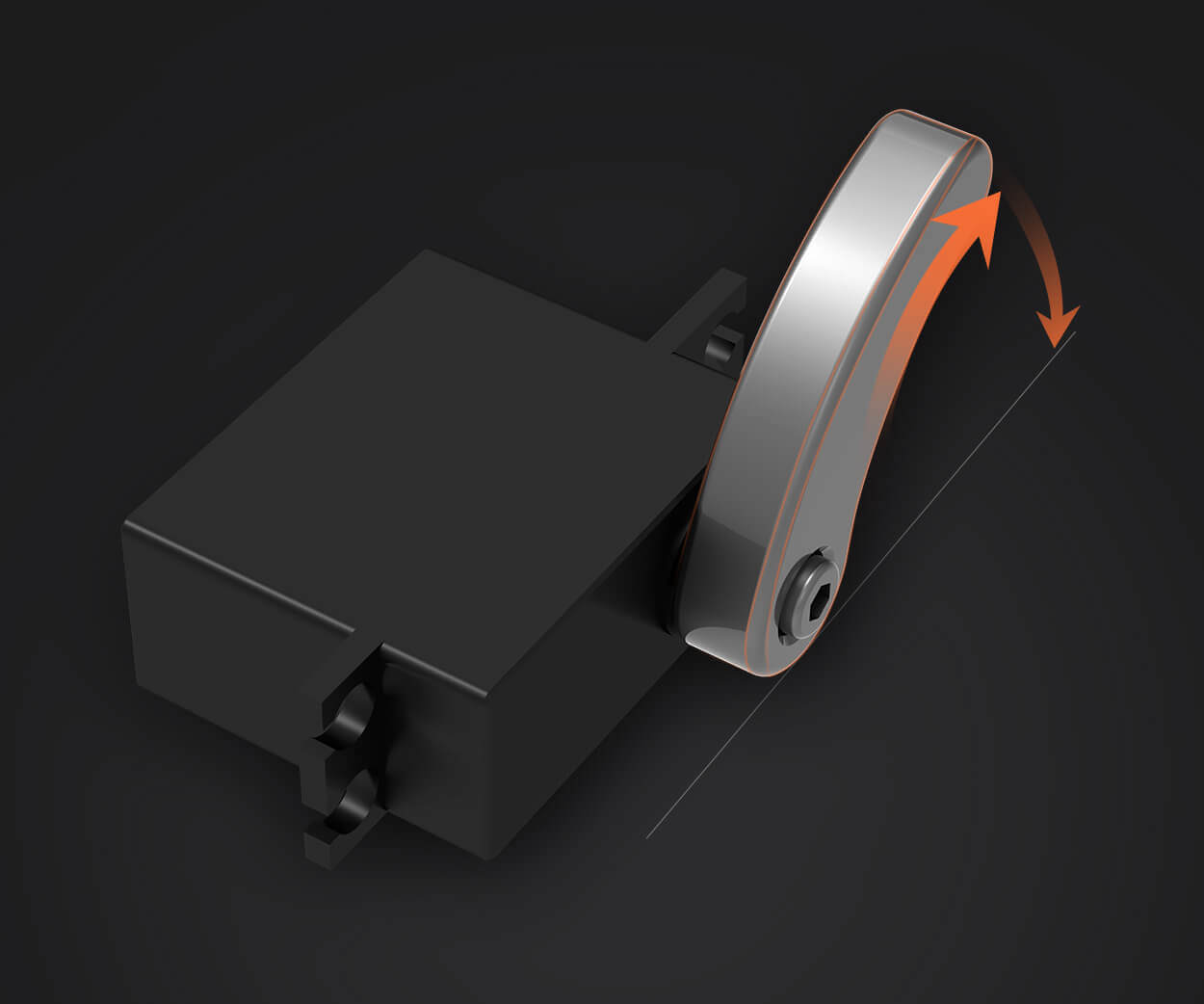
Why does this happen? Often, it’s not the servomoteur motor or the mechanics at fault. The real chatterbox is the software trying to run the show. Traditional monolithic applications are like a single, overburdened conductor trying to manage an entire orchestra alone. When one section—say, the command processing module—gets overwhelmed, the whole performance falters. Your servomoteur doesn’t respond because the system is too busy, too tangled, and frankly, too old-school.
So, how do we make machines listen again?
The answer isn’t about pulling harder on the reins. It’s about smarter, lighter communication. Imagine giving each section of your control system its own dedicated, focused conductor. One for processing user commands, one for translating those into motor instructions, another for health monitoring. They’re small, they’re experts, and they talk to each other clearly and instantly. That’s the core of what modern software architecture offers.
This is where the approach built on Java Spring Boot Microservices shines. Think of it as replacing that one exhausted conductor with a nimble team. Each microservice is a discrete, independent unit. The “Command Service” interprets your input. It whispers to the “Motion Control Service,” which calculates the exact pulse for your servo. All the while, the “Health Check Service” keeps a silent watch, ensuring everything runs smoothly. If one service needs an update or fails, the others keep working. Your machine’s responsiveness stops being a gamble.
But let’s get practical. What does this actually fix?
First, reliability. With a monolithic system, a bug in a non-critical feature can bring the entire control application down. With microservices, isolation is key. A problem in the logging module won’t freeze the servo driver. Your hardware keeps moving.
Second, it’s about precision and speed. These lightweight services communicate through fast, efficient messages. There’s less lag, less waiting in line. The signal path from your command to the servo’s rotation becomes a straight, open highway instead of a congested back road. You get real-time responsiveness that feels immediate.
“Isn’t this more complex to build?” It’s a fair question. The initial setup requires thoughtful design—defining clear boundaries for each service. Yet, this upfront investment pays off massively. Updating becomes a breeze. Need a new feature for advanced trajectory planning? You build or update just one service without touching the rest. Scaling is straightforward. If command processing becomes a bottleneck, you simply deploy more instances of that specific service. It’s like adding more cashiers to a busy checkout line instead of rebuilding the entire store.
kpuissance has focused on integrating this very philosophy into solutions that talk directly to hardware. The goal is seamless translation—from the digital logic of your software to the physical motion of your machine. By adopting this modular approach, the struggle for control vanishes. Your commands are executed faithfully. The servo moves exactly as intended, every single time.
It transforms the experience. You’re no longer shouting into a void, hoping your system hears you. You’re having a calm, continuous conversation with your machinery. Each microservice plays its part, ensuring that the final instruction reaching your servo or actuator is crisp, timely, and accurate. The jitter is gone. The lag disappears. What’s left is pure, reliable motion.
In the end, it’s not just about better software. It’s about restoring a sense of confidence. When you press a button or send an instruction, you should know what will happen. The architecture built around these principles provides that certainty. It ensures that the intelligence of your software is fully expressed in the movement of your mechanics. Your project stops being a battle against unpredictability and starts becoming a dialogue with precision. That’s when real innovation begins to move.
Créé en 2005,kpuissancea été dédié à un fabricant professionnel d'unités de mouvement compactes, dont le siège est à Dongguan, province du Guangdong, en Chine. Tirant parti des innovations en matière de technologie d'entraînement modulaire,kpuissanceintègre des moteurs hautes performances, des réducteurs de précision et des systèmes de contrôle multiprotocoles pour fournir des solutions de systèmes d'entraînement intelligents efficaces et personnalisées. Kpower a fourni des solutions de systèmes d'entraînement professionnelles à plus de 500 entreprises clientes dans le monde avec des produits couvrant divers domaines tels que les systèmes de maison intelligente, l'électronique automatique, la robotique, l'agriculture de précision, les drones et l'automatisation industrielle.
Heure de mise à jour:2026-01-19

Contactez le spécialiste des produits Kpower pour recommander un moteur ou une boîte de vitesses adapté à votre produit.


