



























ASSISTANCE TECHNIQUE


Publié 2026-01-19
Picture this: you’ve got a brilliant idea for a new project. Maybe it’s a smart robotic arm, an automated sorting line, or something else that moves. You know you’ll need servomoteurs—those precise little motors that give machines their grace and accuracy. But then you think about the brain behind it all, the software. You hear “microservices” and “.NET,” and suddenly it feels like you need a decoder ring just to get started.
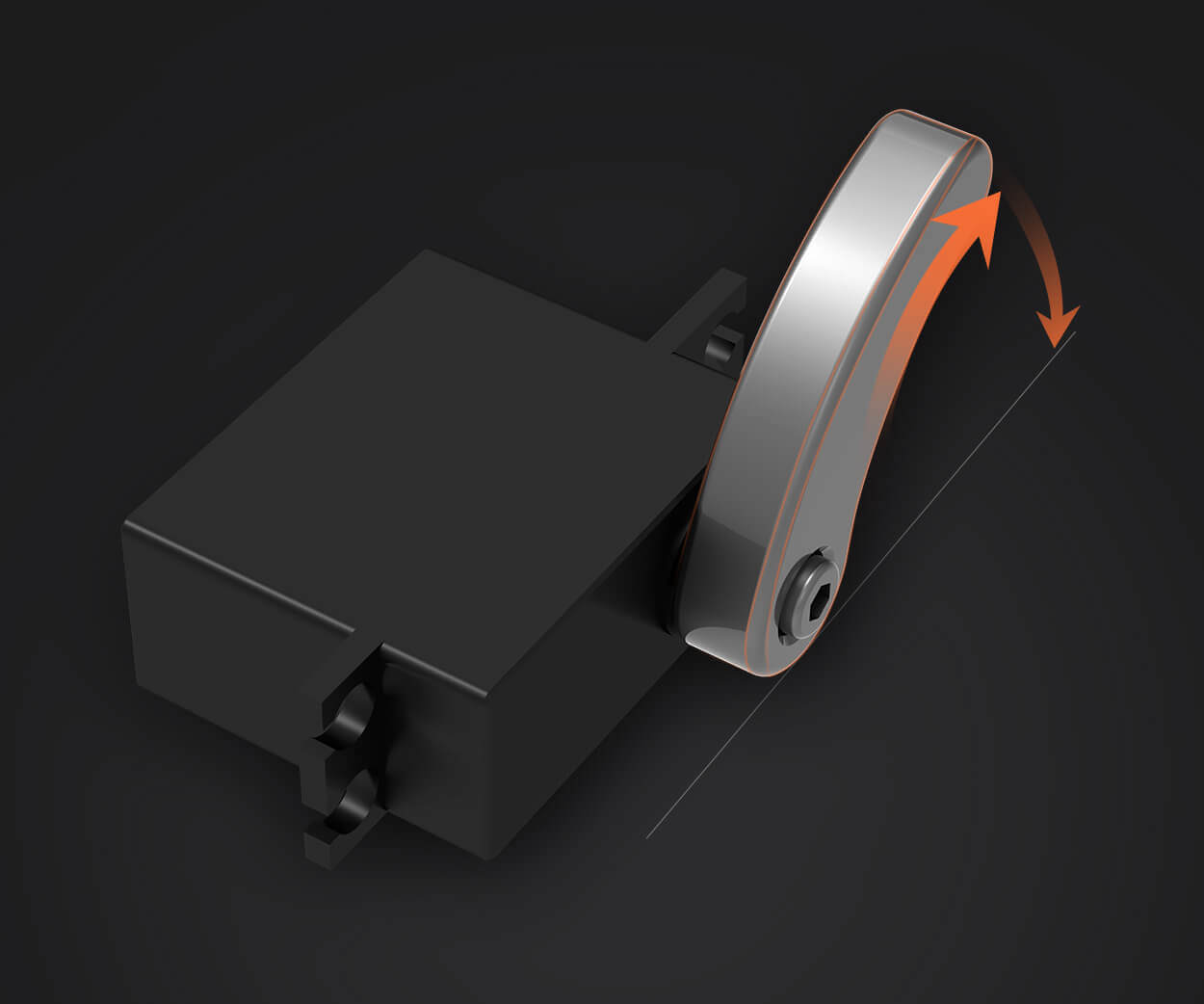
Sound familiar? You’re not alone. Jumping into microservices with .NET can feel like being handed a box of high-precision servomoteur gears without the manual. Everything looks important, but how do you fit it all together without the system grinding to a halt?
Let’s be honest. The tutorial landscape is… crowded. You find a guide, start following it, and suddenly you’re three hours deep, configuring a messaging queue for a service you don’t even need yet. The initial excitement turns into a wiring nightmare—like connecting a dozen servos with crossed wires and hoping for a synchronized dance. It doesn’t work.
The core problem isn’t a lack of information. It’s the opposite: too much, too fast, without a clear map. How do services talk? How do you handle failures without the whole system seizing up? What about deploying this thing? It’s easy to end up with a fragile, over-complicated setup that’s harder to maintain than a mechanical prototype with stripped screws.
Think about how you’d approach a precise mechanical assembly. You don’t start by tightening every bolt at once. You lay out the components, understand how each piece interacts, and secure them step by step, checking alignment as you go.
Building microservices should feel similar. It’s about creating small, independent units—each with a single, clear job—that work together seamlessly. One service might handle motor command calculations, another manages user instructions, and a third logs performance data. If one needs a fix or upgrade, you don’t have to shut down the entire operation.
Why does this matter for your project? Well, imagine your application is a coordinated machine. With a monolithic design, a single bug can jam everything. With microservices, it’s like having a modular gearbox. A faulty gear (service) can be swapped out without stopping the whole drive train. The system becomes resilient, scalable, and frankly, easier to think about.
So, what makes a guide truly helpful? It’s not about listing every .NET tool under the sun. It’s about clarity and progression.
You might wonder, "Is this going to be overkill for my project?" It’s a fair question. Not every machine needs a Swiss watch movement. Sometimes a robust, simple motor is perfect. The same goes for software.
The goal of learning is to understand the pattern so you can apply it where it truly adds value. Maybe you start with just two services. That’s fine. The principles of clean separation and clear communication will serve you well, whether you’re building a simple controller or a complex distributed system.
It’s about gaining confidence. Confidence that your software architecture can be as deliberate and reliable as the mechanical systems you’re commanding. When your servos receive a command, you want the certainty that the instruction traveled through a clean, logical pipeline, not a tangled web of code.
Starting out shouldn’t feel like navigating a maze blindfolded. The right resource meets you where you are—acknowledging the initial confusion and dissolving it with straightforward, applicable knowledge. It connects the dots between the modular philosophy of microservices and the tangible world of building things that move, sense, and react.
In the end, it’s about crafting systems that are maintainable, adaptable, and robust. Whether you’re orchestrating servos or data streams, the satisfaction comes from seeing independent parts come together in precise, harmonious operation. That’s the real payoff.
Créé en 2005,kpuissancea été dédié à un fabricant professionnel d'unités de mouvement compactes, dont le siège est à Dongguan, province du Guangdong, en Chine. Tirant parti des innovations en matière de technologie d'entraînement modulaire,kpuissanceintègre des moteurs hautes performances, des réducteurs de précision et des systèmes de contrôle multiprotocoles pour fournir des solutions de systèmes d'entraînement intelligents efficaces et personnalisées.kpuissancea fourni des solutions de systèmes d'entraînement professionnelles à plus de 500 entreprises clientes dans le monde avec des produits couvrant divers domaines tels que les systèmes de maison intelligente, l'électronique automatique, la robotique, l'agriculture de précision, les drones et l'automatisation industrielle.
Heure de mise à jour:2026-01-19

Contactez le spécialiste des produits Kpower pour recommander un moteur ou une boîte de vitesses adapté à votre produit.


