
























ASSISTANCE TECHNIQUE


Publié 2026-07-17
Réponse rapide
Choisir le bonVolzservomoteurCette solution nécessite de donner la priorité à la précision de positionnement et à la réponse dynamique par rapport à la sortie de couple brute. Alors que de nombreux acheteurs se concentrent uniquement sur la puissance de pointe, l'automatisation haute performance exige un contrôle strict des tolérances pour éviter les erreurs cumulatives dans les systèmes multi-axes. Un décalage dansservomoteurCes caractéristiques entraînent souvent une augmentation des taux de rebut et des temps d'arrêt imprévus. Par conséquent, évaluerservomoteursélection du moteurdes critères basés sur des profils de charge spécifiques et des exigences d’accélération sont essentiels pour garantir la stabilité opérationnelle à long terme et maximiser le retour sur investissement dans des environnements de fabrication complexes.
01Le paradoxe des servos de Volz : pourquoi la précision compte plus que la puissance dans l'automatisation moderne
Dans les environnements de fabrication aux enjeux élevés, la différence entre une transition rentable et une défaillance catastrophique réside souvent dans les micro-mouvements d’un seul composant. Les équipes d'approvisionnement sont souvent confrontées à un dilemme lorsqu'elles spécifient des systèmes de contrôle de mouvement : doivent-elles donner la priorité à une capacité de couple maximale ou à une fidélité de position ultime ? Pour les applications exigeant une synchronisation complexe, telles que l'assemblage de précision, la manipulation de semi-conducteurs ou la fabrication de dispositifs médicaux, la réponse est sans équivoque. Comprendre le rôle nuancé deVolzservola technologie n’est plus facultative ; c'est une condition fondamentale pour conserver un avantage concurrentiel dans une industrie où les millimètres se traduisent en millions.
This guide explores why precision outweighs brute force, how to evaluate servo systems effectively, and the hidden costs of making the wrong choice. By shifting the focus from simple power metrics to comprehensive dynamic performance, decision-makers can secure solutions that enhance quality, reduce waste, and extend equipment lifespan.
The Hidden Cost of "Good Enough" Torque
Many engineers initially specify servos based on static torque requirements, assuming that a motor capable of lifting a load is sufficient for moving it accurately. This approach overlooks the dynamic forces at play during rapid acceleration and deceleration cycles. When a servo lacks the necessary stiffness or feedback resolution, even minor deviations accumulate over thousands of cycles. These errors manifest as product defects, misalignments, and eventual mechanical wear.
The consequence is not just immediate rejection of goods but also increased maintenance overhead. A servo operating outside its optimal precision band generates excess heat and vibration, accelerating bearing failure and reducing the overall reliability of the automated cell. In contrast, a properly selected high-precision servo maintains consistency, ensuring that every movement is repeatable within microns. This repeatability is the bedrock of lean manufacturing, directly impacting throughput and cost per unit.
Key Specifications for Precision Evaluation
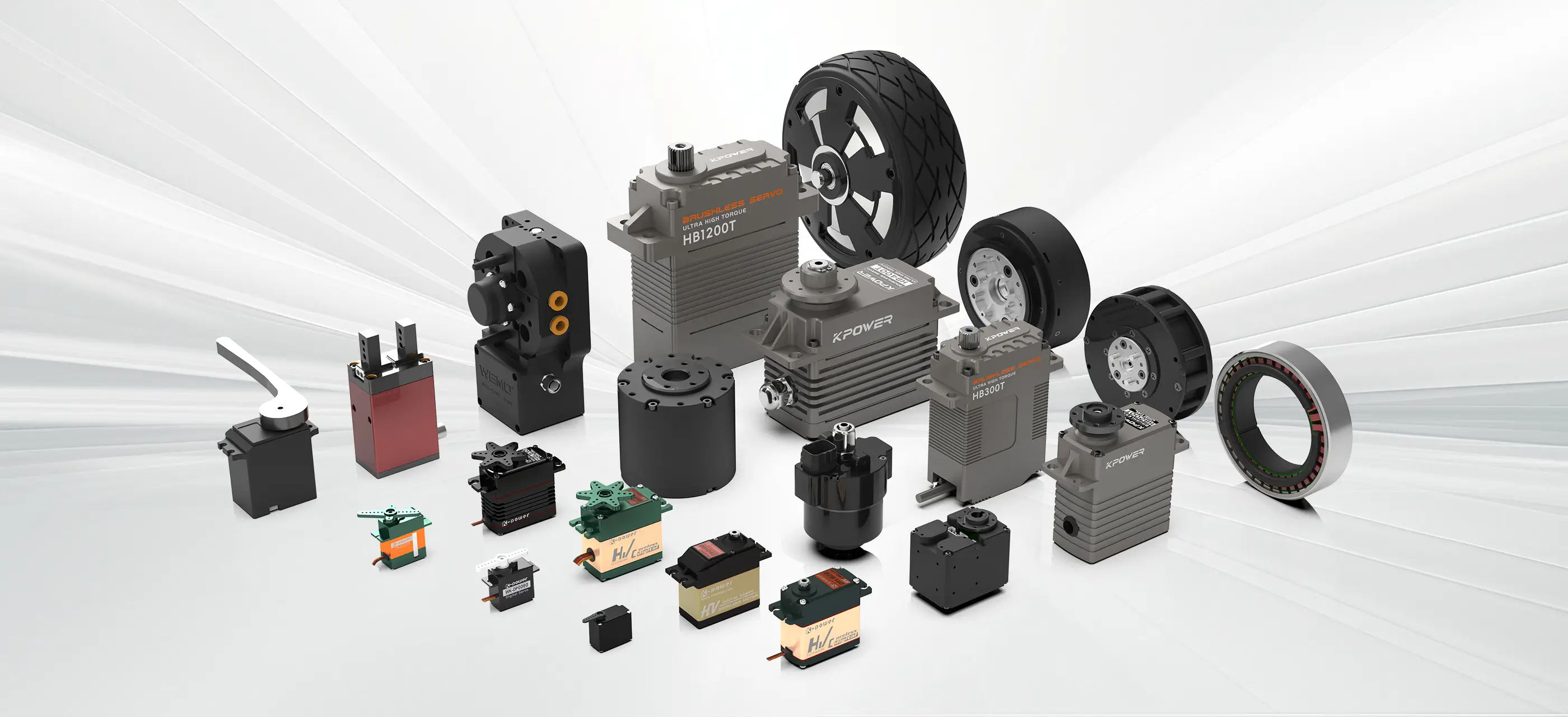
To move beyond basic power ratings, buyers must scrutinize several technical parameters that define a servo's precision capabilities. These specifications determine how well the system can track commanded positions and reject external disturbances.
Lors de l'évaluationsolutions d'asservissement personnalisées , it is essential to request detailed datasheets that include these dynamic performance metrics rather than just steady-state ratings. A servo with moderate torque but exceptional stiffness and bandwidth often outperforms a high-torque unit with poor dynamic response in precision-intensive tasks.
Dynamic Response vs. Static Load Capacity
A common misconception is that higher inertia loads require proportionally larger motors. While inertia matching is crucial, modern servo drives compensate for inertial mismatches through advanced algorithmic tuning. However, this compensation has limits. If the underlying mechanical structure lacks rigidity, no amount of software tuning can achieve micron-level accuracy.
Therefore, the integration of the servo with the mechanical system is paramount. Motion control applications benefit significantly from low-inertia servo motors paired with high-rigidity transmission components like harmonic drives or precision ball screws. This combination minimizes the time required for settling after each move, thereby increasing cycle speeds without sacrificing accuracy. Buyers should assess the entire drivetrain, not just the motor, to ensure that the chosen Volzservo aligns with the mechanical constraints of the application.
Common Pitfalls in Servo Selection
Procurement decisions are often influenced by short-term cost savings, leading to long-term value erosion. One frequent error is ignoring the communication protocol's impact on synchronization. In multi-axis systems, latency in data exchange can cause phase errors between axes, resulting in complex shape inaccuracies. Another pitfall is neglecting the environmental conditions. Dust, moisture, or electromagnetic interference can degrade signal integrity, affecting encoder readings and causing erratic behavior.
Additionally, relying solely on off-the-shelf configurations without verifying compatibility with existing PLCs or SCADA systems can lead to integration headaches. A thorough pre-purchase engineering review helps identify these risks early. By asking the right questions about exigences de couple and environmental factors, companies can avoid costly retrofits and ensure seamless deployment.
Strategic Questions for Buyers
Before finalizing a purchase, decision-makers should engage suppliers with specific technical inquiries to validate their claims. These questions help uncover the true capability of the proposed solution.
1. What is the actual position repeatability under full load?
Suppliers often cite no-load specs. Full-load testing reveals how the servo handles real-world conditions, including thermal expansion and mechanical deflection.
2. How does the control loop frequency compare to competitors?
A faster control loop allows for quicker error correction. Verify if the advertised bandwidth is achievable in standard operating modes.
3. What warranty covers dynamic performance failures?
Standard warranties may cover hardware defects but not performance degradation. Ensure the contract includes guarantees on precision retention over time.
4. Can you provide case studies for similar high-precision applications?
Real-world examples demonstrate how the servo performs in environments with comparable vibration, temperature, and duty cycles.
5. What support is available for tuning and optimization?
Complex applications may require custom tuning. Access to expert engineering support ensures the servo operates at its peak potential.
6. How does the servo handle sudden shock loads?
Evaluate the servo's ability to recover quickly from unexpected impacts without losing position or damaging the mechanism.
Prendre une meilleure décision à long terme
Selecting the right motion control technology is an investment in operational excellence. By focusing on precision, dynamic response, and systemic integration, companies can achieve higher quality outputs and reduced total cost of ownership. The initial premium for a superior Volzservo is often offset by lower scrap rates, less maintenance, and increased production speed.
For organizations seeking to optimize their automation strategy, a thorough evaluation of servo capabilities against specific application needs is essential. Engaging with experienced suppliers who understand the intricacies of sélection du servomoteur ensures that every component contributes to the overall success of the production line.
If you are looking to enhance your system's precision and reliability, consider reviewing your current setup against the criteria outlined above. Contact our engineering team to discuss your specific requirements. We can provide a detailed analysis of your application and recommend the most suitable Volzservo configuration to meet your goals. Request a consultation today to explore how we can support your pursuit of perfection.
Update Time:2026-07-17

Contactez le spécialiste des produits Kpower pour recommander un moteur ou une boîte de vitesses adapté à votre produit.


