
























ASSISTANCE TECHNIQUE


Publié 2026-07-18
01kpuissance servomoteurGuide de câblage : combien de fils et comment les connecter correctement
Réponse rapide
Le plus standardkpuissance servomoteurles moteurs utilisent une configuration à trois fils : alimentation (VCC), masse (GND) et signal. Pour les connecter correctement, il faut faire correspondre les niveaux de tension pour éviter de brûler (brûler) les composants et garantir que la polarité du signal s'aligne avec votre contrôleur. Un câblage incorrect entraîne une panne matérielle immédiate, des mouvements irréguliers ou des risques pour la sécurité. Vérifiez toujours la fiche technique de votre modèle spécifique avant de vous connecter, car les variantes industrielles peuvent inclure des commentaires supplémentaires ou des conduites de frein.
L’importance cruciale de la correctionservomoteurCâblage
Dans l'automatisation industrielle, une simple erreur de câblage peut bloquer les lignes de production, endommager des actionneurs coûteux et compromettre la sécurité du système. De nombreux ingénieurs et responsables des achats sous-estiment la complexité de l'intégration des servos, en supposant que tous les moteurs se branchent de manière identique. Cette hypothèse est dangereuse. Les systèmes servo fonctionnent selon des protocoles électriques et de communication précis. Une mauvaise interprétation des fonctions des câbles, comme l'échange d'alimentation et de masse ou la confusion des types de signaux, entraîne des pannes catastrophiques. Comprendre l'interface physique n'est pas seulement un détail technique ;kpuissanceservomoteurproduits, le respect de normes de câblage strictes garantit des performances optimales, une longévité et un temps d'arrêt minimal. Le coût de la prévention est nettement inférieur au coût du remplacement et de la réparation.
Comprendre la configuration standard à trois fils
La grande majorité des servos numériques modernes, y compris ceux dekpower servo , utilize a standardized three-wire connection scheme. This simplicity belies the complexity of the signals transmitted through each conductor.
1. Power Supply (VCC/Positive): This wire delivers the main operating voltage to the motor. It is critical to match this voltage precisely to the servo's rated input. Overvoltage causes thermal runaway and insulation breakdown; undervoltage leads to torque loss and stalling.
2. Ground (GND/Negative): This completes the electrical circuit and provides a common reference point for the signal. A poor ground connection introduces noise, leading to unstable control and erratic movement.
3. Control Signal (Signal/PWM): This wire carries the pulse-width modulation (PWM) commands from the controller. It dictates the position, speed, and torque of the motor.
While three wires are standard, some advanced models may include additional wires for brake engagement, encoder feedback, or shield grounding. Always consult the specific product manual for sélection du servomoteur to confirm the exact pinout.
Detailed Pinout and Connection Logic
To ensure seamless integration, you must understand the function and color coding of each wire. Although color codes can vary by manufacturer, the functional logic remains consistent across high-quality brands like kpower servo .
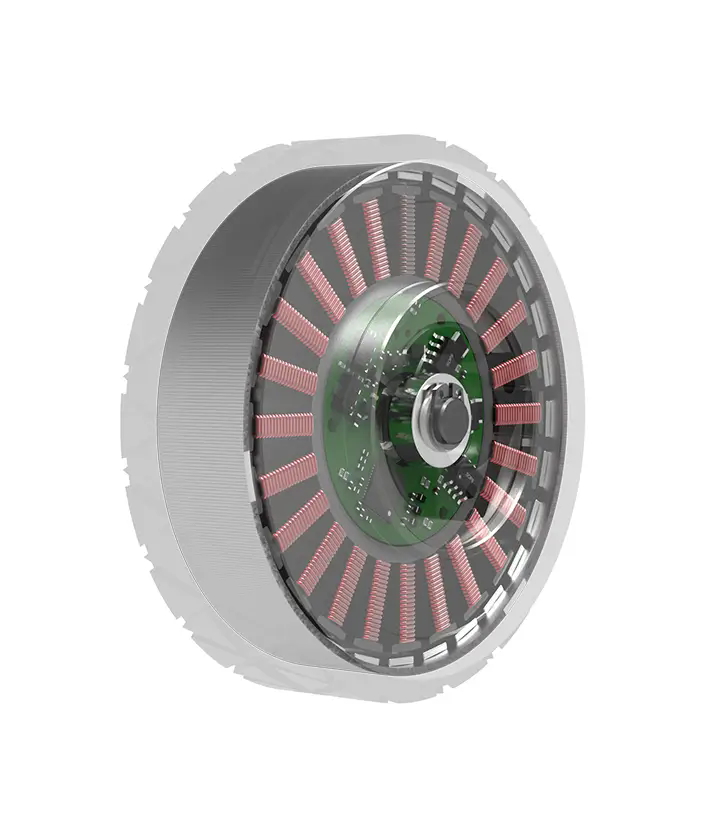
Red Wire (typically): Represents the positive power supply (+VCC). Connect this to the positive terminal of your power source. Ensure the voltage matches the servo's rating (eg, 24VDC, 48VDC).
Black or Brown Wire (typically): Represents the ground (-GND). Connect this to the negative terminal of the power source and the controller's ground.
Yellow, Orange, or White Wire (typically): Represents the control signal. Connect this to the PWM output channel of your motion controller or PLC.
If your servo includes a brake, there will be a fourth wire, often blue or green, which activates the mechanical brake when de-energized. For solutions d'asservissement personnalisées , additional wires may handle analog feedback or digital communication protocols like EtherCAT or CANopen.
Common Wiring Mistakes and Their Consequences
Even experienced technicians make errors when dealing with high-power electronics. Recognizing these pitfalls is essential for maintaining system integrity.
These errors highlight why exigences de couple and electrical specifications must be reviewed thoroughly. A small oversight in wiring can lead to significant financial loss and operational delays.
Verifying Compatibility and Standards
Before integrating any servo into your system, verification is key. Different industries have varying standards for connector types, voltage levels, and signal protocols. kpower servo products are designed to meet international standards, but compatibility depends on your specific setup.
Check the following parameters:
Plage de tension : Does your power supply fall within the servo's acceptable range?
Current Capacity: Can your power supply deliver the peak current required during acceleration?
Signal Type: Is your controller outputting the correct PWM frequency and voltage level for the servo's input?

Connector Type: Do the physical connectors match, or do you need adapters?
For complex applications, consider applications de contrôle de mouvement that require high precision. In such cases, using shielded cables and proper grounding techniques can mitigate electromagnetic interference (EMI), ensuring stable performance.
Practical Checklist for Installation
To streamline your installation process, follow this checklist:
1. Disconnect Power: Always de-energize the system before making any connections.
2. Identify Wires: Confirm the function of each wire using the servo's datasheet.
3. Match Voltages: Ensure the power supply voltage matches the servo's requirement.
4. Secure Connections: Tighten all terminals to prevent vibration-induced loosening.
5. Test Signal: Before full power, test the signal line with a multimeter or oscilloscope if possible.
6. Gradual Power-Up: Apply power slowly and monitor for abnormal behavior.
This systematic approach reduces risk and ensures a smooth commissioning phase. For buyers comparing similar options, paying attention to these details separates professional installations from amateur attempts.
Common Questions About Servo Wiring
Q: What happens if I connect the signal wire to power?
A: This will likely destroy the servo's control circuitry immediately. Always verify wire functions before connecting.
Q: Can I use a 5V signal for a 24V servo?
A: Not directly. You may need a level shifter or a controller that outputs compatible voltage levels to avoid damaging the input.
Q: Why does my servo vibrate after installation?
A: This is often caused by loose ground connections, incorrect tuning, or electromagnetic interference from unshielded cables.
Q: Do I need a separate power supply for the servo?
A: Yes, it is recommended. Using a dedicated supply prevents noise from affecting other sensitive electronics and ensures stable voltage delivery.
Q: How do I identify the brake wire?
A: Consult the datasheet. It is usually a distinct color and connects to a separate control circuit that engages the brake when powered off.
Q: Can I daisy-chain multiple servos on one signal line?
A: Generally, no. Each servo typically requires a dedicated signal line from the controller to ensure precise individual control.
Prendre une meilleure décision à long terme
Correct wiring is not merely a technical step; it is a strategic investment in your automation infrastructure. By understanding the nuances of sélection du servomoteur and adhering to best practices, you minimize downtime and extend equipment life. Whether you are upgrading existing machinery or designing a new system, prioritizing electrical integrity yields significant returns.
For tailored advice on your specific application, our engineering team is ready to assist. Contact us to request a quote for your servo needs or schedule a consultation to review your wiring diagrams. Ensure your project succeeds with reliable, high-performance kpower servosolutions.
Update Time:2026-07-18

Contactez le spécialiste des produits Kpower pour recommander un moteur ou une boîte de vitesses adapté à votre produit.


