
























TECHNISCHE UNTERSTÜTZUNG


Veröffentlicht 2026-07-17
RoboterServoMotoren arbeiten, indem sie ihre Position mithilfe eines geschlossenen Feedbacksystems kontinuierlich korrigieren, um Präzision und Zuverlässigkeit bei automatisierten Aufgaben sicherzustellen. Im Gegensatz zu Standardmotoren, die sich nur drehen,Servos verwenden einen internen Encoder zur Überwachung der genauen Wellenposition, sodass die Steuerung Echtzeitanpassungen für Drehmoment- und Drehzahlgenauigkeit vornehmen kann.
Das Richtige wählenRoboterServoMotorerfordert ein Verständnis der Interaktion dieser Komponenten, um Fehler zu minimieren und die Betriebszeit zu maximieren. In diesem Leitfaden werden die grundlegende Mechanik, die Steuerlogik und die Schlüsselparameter erläutert, die die Servoleistung definieren.
01Der Schmerzpunkt: Präzision vs. Kosten in der Automatisierung
Viele Ingenieure stehen beim Entwurf automatisierter Systeme vor einem kritischen Dilemma. Sie benötigen eine Hochgeschwindigkeitsbewegung, aber auch eine Positionierungsgenauigkeit im Mikrometerbereich. Standard-Schrittmotoren verlieren bei hoher Belastung häufig Schritte, während einfachen Gleichstrommotoren die für eine präzise Steuerung erforderliche Rückmeldung fehlt. Diese Lücke führt zu Produktionsfehlern, Materialverschwendung und erhöhten Wartungskosten.
Die Lösung liegt im Verständnis der internen Architektur eines Servoantriebs. Es geht nicht nur um Macht; es geht um den Informationsfluss. AServoantriebfungiert als Gehirn, interpretiert Befehle und passt die Leistungsabgabe basierend auf dem Echtzeit-Feedback des Motors an. Ohne diesen geschlossenen Regelkreis können Automatisierungssysteme nicht die in der modernen Fertigung erforderliche Wiederholgenauigkeit gewährleisten.
02Das Closed-Loop-Feedbacksystem verstehen
Das Herzstück jedes Roboterservos ist ein Regelsystem. Dieses System vergleicht ständig die Soll-Position mit der Ist-Position. Liegt eine Unstimmigkeit, ein sogenanntes „Fehlersignal“, vor, korrigiert der Antrieb diese umgehend.
Die drei Kernkomponenten
1. Motor:Wandelt elektrische Energie in mechanische Bewegung um. Bei modernen Robotern ist dies typischerweise ein bürstenloser Gleichstrommotor für höhere Effizienz und Langlebigkeit.
2. Encoder:Ein an der Motorwelle angebrachter Sensor, der Drehwinkel und Geschwindigkeit misst. Diese Daten werden an die Steuerung zurückgesendet.
3. Controller/Treiber:Verarbeitet den Eingabebefehl und das Encoder-Feedback. Es berechnet den notwendigen Strom und die Spannung, um den Motor genau an die Zielposition zu bewegen.
Dieser Dreiklang stellt sicher, dass das Servo den Fehler erkennt und ihn innerhalb von Millisekunden korrigiert, selbst wenn eine äußere Kraft den Arm vom Kurs abbringt. Diese Fähigkeit ist für Anwendungen, die Folgendes umfassen, von wesentlicher BedeutungMotion-Control-Anwendungenwo Sicherheit und Präzision nicht verhandelbar sind.
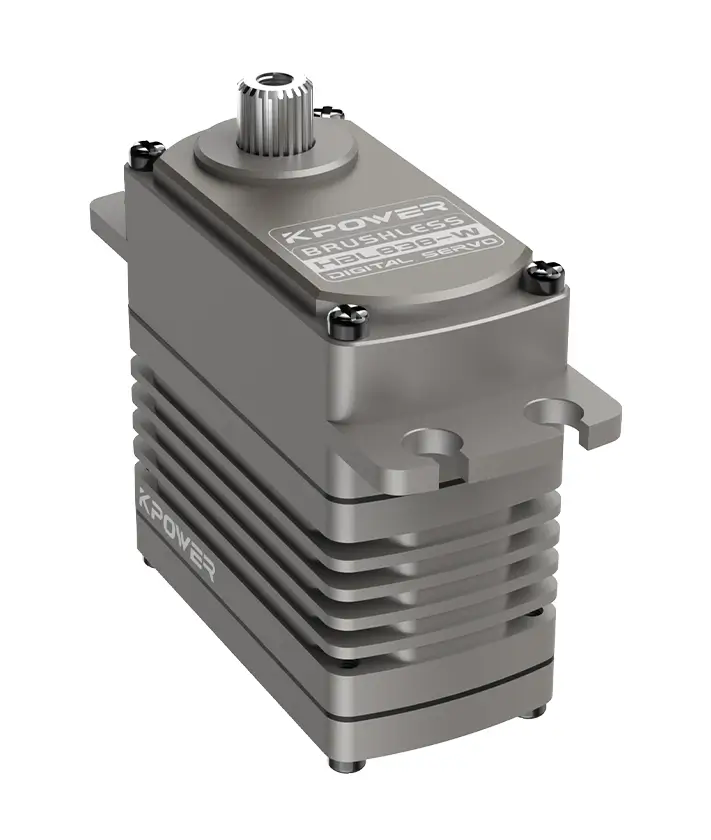
03Wichtige technische Parameter, die die Leistung definieren
Bei der BewertungAuswahl des Servomotors, technische Spezifikationen sind wichtiger als Marketingaussagen. Hier sind die kritischen Parameter, die sich auf die Systemleistung auswirken:
Eine Nichtübereinstimmung dieser Parameter kann zu Instabilität oder schlechter Leistung führen. Beispielsweise kann ein Motor mit hohem Drehmoment, aber geringer Reaktionsbandbreite bei Anwendungen, die schnelle Stopps und Starts erfordern, Probleme haben.
04Analoge vs. digitale Servosteuerungssysteme
Die Entwicklung von der analogen zur digitalen Steuerung hat die Servozuverlässigkeit erheblich verbessert. Frühe analoge Systeme beruhten auf kontinuierlichen Spannungssignalen, die bei langen Kabelstrecken anfällig für Rauschstörungen waren.
Digitale Servosysteme nutzen Pulsweitenmodulation (PWM) oder serielle Kommunikationsprotokolle wie EtherCAT oder CANopen. Diese digitalen Signale sind weitaus robuster gegen elektromagnetische Störungen (EMI), die in industriellen Umgebungen häufig vorkommen. Darüber hinaus ermöglichen digitale Antriebe erweiterte Tuning-Funktionen wie automatische Verstärkungsanpassung und Vibrationsunterdrückungsalgorithmen.
Auswahl einesdigitaler Servoantriebreduziert das Risiko eines Signalverlusts und vereinfacht die Fehlerbehebung. Es ermöglicht auch eine bessere Integration mit SPS- und SCADA-Systemen und bietet einen klareren Überblick über den Maschinenzustand und Leistungsmetriken.
05Häufige Fehler bei der Servodimensionierung
Einer der häufigsten Fehler bei Robotikprojekten ist die falsche Motordimensionierung. Ingenieure konzentrieren sich oft ausschließlich auf das Spitzendrehmoment und ignorieren kontinuierliche Drehmomentanforderungen oder Trägheitsanpassung.
Thermische Grenzen ignorieren:Motoren erwärmen sich im Betrieb. Wenn das Dauerdrehmoment überschritten wird, kann der Motor überhitzen und vorzeitig ausfallen.
Vernachlässigung der Trägheitsinkongruenz:Wenn die Lastträgheit im Verhältnis zur Motorträgheit zu groß ist, wird das System instabil. Dies führt zu Schwingungen und Klingeln, wodurch die Positionierungsgenauigkeit verringert wird.
Sicherheitsfaktoren außer Acht lassen:Berücksichtigen Sie bei der Berechnung des Drehmoments immer eine Sicherheitsmarge (normalerweise 20–30 %), um Reibung, Beschleunigungskräfte und mögliche Überlastbedingungen zu berücksichtigen.
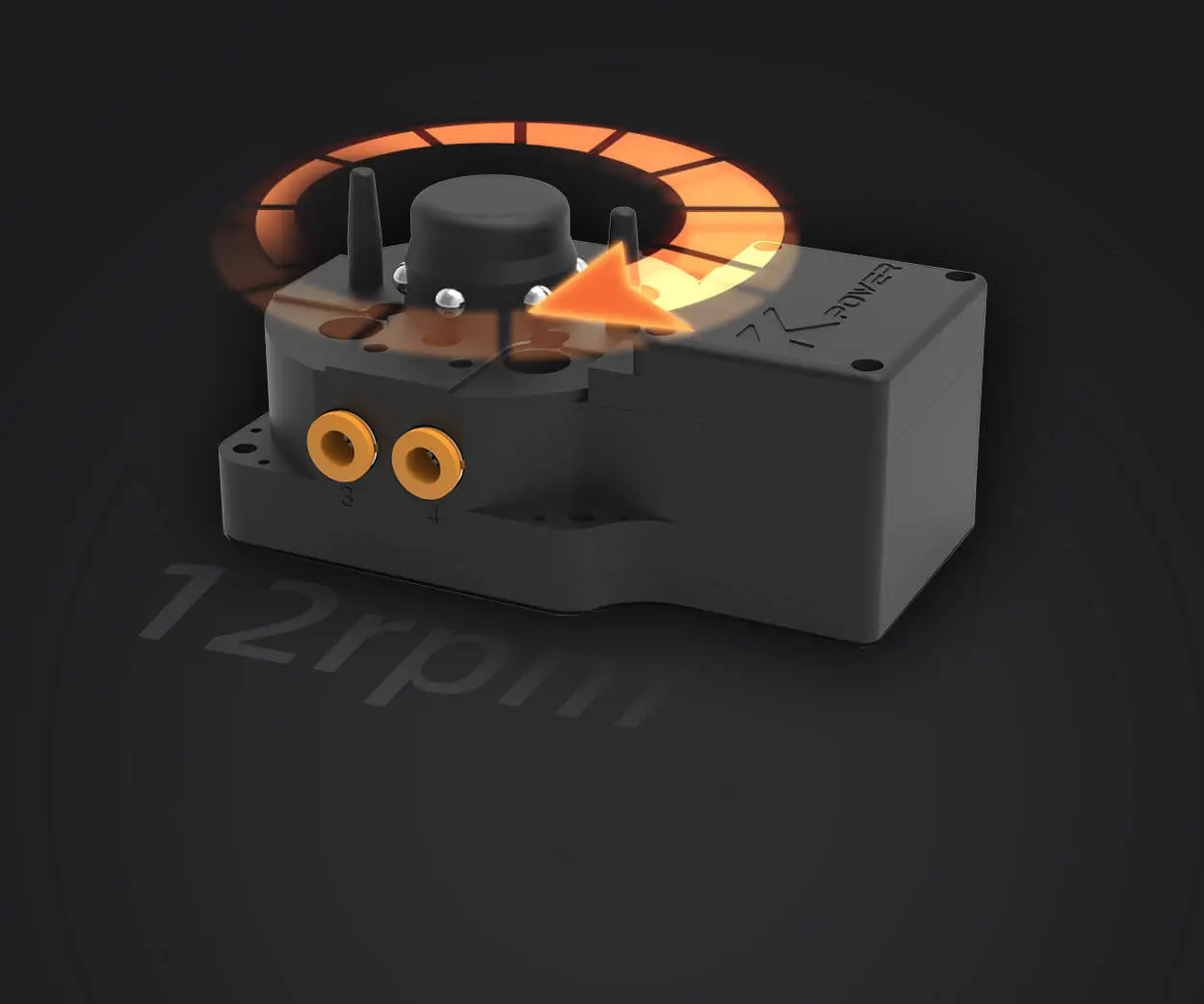
Die richtige Dimensionierung stellt sicher, dass diekpowerServoDas System arbeitet effizient innerhalb seiner thermischen und mechanischen Grenzen und verlängert so die Lebensdauer sowohl des Motors als auch der angetriebenen Maschine.
06Praktische Checkliste für Käufer
Überprüfen Sie vor dem Kaufabschluss die folgenden Aspekte, um Kompatibilität und langfristige Zuverlässigkeit sicherzustellen:
Kommunikationsprotokoll:Stellen Sie sicher, dass der Servo das gleiche Protokoll wie Ihre Steuerung unterstützt (z. B. EtherCAT, Profinet).
Spannungs- und Stromwerte:Passen Sie die Antriebsleistung an die Nennanforderungen des Motors an.
Encodertyp:Stellen Sie fest, ob Sie inkrementelle (preisgünstigere) oder absolute (Position bleibt nach Stromausfall beibehalten) Encoder benötigen.
Mechanische Montage:Überprüfen Sie, ob Wellentyp, Flanschabmessungen und Montagelochmuster zu Ihrem Design passen.
Umweltbewertung:Überprüfen Sie die IP-Schutzart auf Staub- und Wasserbeständigkeit, wenn Sie unter rauen Bedingungen arbeiten.
07Häufig gestellte Fragen
F: Was ist der Hauptunterschied zwischen einem Schrittmotor und einem Servomotor?
A: Schrittmotoren haben einen offenen Regelkreis und können unter Last Schritte verlieren. Servomotoren verwenden eine Rückkopplung im geschlossenen Regelkreis, um Fehler zu korrigieren und so eine höhere Präzision und ein höheres Drehmoment bei unterschiedlichen Geschwindigkeiten zu gewährleisten.
F: Wie wirkt sich die Encoderauflösung auf die Genauigkeit aus?
A: Eine höhere Encoderauflösung sorgt für mehr Feedbackimpulse pro Umdrehung. Dadurch kann die Steuerung kleinere Positionsfehler erkennen, was zu gleichmäßigeren Bewegungen und einer feineren Positionierungssteuerung führt.
F: Kann ich einen generischen Treiber mit jedem Servomotor verwenden?
A: Nein. Servotreiber sind aufgrund der Unterschiede im Wicklungswiderstand, der Induktivität und den Encodertypen normalerweise auf bestimmte Motormodelle abgestimmt. Nicht übereinstimmende Komponenten können zu Schäden oder schlechter Leistung führen.
F: Was ist der Zweck der Abstimmung eines Servosystems?
A: Beim Tuning werden die Proportional-, Integral- und Differentialverstärkungen (PID) angepasst. Durch die richtige Abstimmung wird ein Überschwingen minimiert, die Einschwingzeit verkürzt und die Stabilität verbessert, insbesondere beim Umgang mit wechselnden Lasten.
F: Warum ist das Trägheitsverhältnis wichtig?
A: Ein hohes Trägheitsverhältnis macht das System träge und anfällig für Schwingungen. Das niedrige Verhältnis gewährleistet eine reaktionsschnelle Beschleunigung und Verzögerung, was für Hochgeschwindigkeits-Roboterarme von entscheidender Bedeutung ist.
F: Müssen Servomotoren regelmäßig gewartet werden?
A: Bürstenlose Servomotoren haben nur wenige bewegliche Teile und erfordern wenig Wartung. Die regelmäßige Überprüfung von Kabeln, Anschlüssen und Kühlventilatoren trägt jedoch dazu bei, unerwartete Ausfälle zu vermeiden.
08Eine bessere langfristige Entscheidung treffen
Bei der Auswahl des richtigen Servosystems geht es nicht nur um den Kauf einer Komponente; es geht darum, in Prozesssicherheit zu investieren. Wenn Sie die Prinzipien der Regelung im geschlossenen Regelkreis verstehen, können Sie häufige Fallstricke im Zusammenhang mit Dimensionierung, Kompatibilität und Leistung vermeiden.
Eine gut gewählteRoboter-Servomotorreduziert Ausfallzeiten, verbessert die Produktqualität und senkt die Gesamtbetriebskosten. Wenn Sie Hilfe bei der Auswahl des Optimalen benötigenAuswahl des ServomotorsZiehen Sie für Ihre spezifische Anwendung die Beratung durch technische Experten in Betracht, um sicherzustellen, dass Ihr System auf Präzision und Haltbarkeit ausgelegt ist.
Kontaktieren Sie unser Engineering-Team, um Ihre Anforderungen zu besprechen und ein maßgeschneidertes Angebot für Ihre Automatisierungsanforderungen zu erhalten.
Aktualisierungszeit: 17.07.2026

Wenden Sie sich an den Produktspezialisten von Kpower, um einen geeigneten Motor oder ein geeignetes Getriebe für Ihr Produkt zu empfehlen.


