
























ASSISTANCE TECHNIQUE


Publié 2026-07-17
Robotservomoteurles moteurs fonctionnent en corrigeant continuellement leur position à l’aide d’un système de rétroaction en boucle fermée pour garantir la précision et la fiabilité des tâches automatisées. Contrairement aux moteurs standards qui tournent simplement,servomoteurUtilisez un encodeur interne pour surveiller la position exacte de l'arbre, permettant au contrôleur d'effectuer des ajustements en temps réel pour la précision du couple et de la vitesse.
Choisir le bonrobotservomoteurmoteurnécessite de comprendre comment ces composants interagissent pour minimiser les erreurs et maximiser la disponibilité. Ce guide décrit les mécanismes fondamentaux, la logique de contrôle et les paramètres clés qui définissent les performances des servos.
01Le problème : précision et coût dans l'automatisation
De nombreux ingénieurs sont confrontés à un dilemme critique lors de la conception de systèmes automatisés. Ils ont besoin d’un mouvement à grande vitesse mais également d’une précision de positionnement de l’ordre du micron. Les moteurs pas à pas standard perdent souvent des pas sous de lourdes charges, tandis que les moteurs à courant continu simples ne disposent pas du retour d'information nécessaire à un contrôle précis. Cet écart entraîne des défauts de production, un gaspillage de matériaux et une augmentation des coûts de maintenance.
La solution réside dans la compréhension de l’architecture interne d’un servo variateur. Il ne s’agit pas seulement de pouvoir ; il s'agit de flux d'informations. UNservomoteuragit comme le cerveau, interprétant les commandes et ajustant la puissance délivrée en fonction du retour en temps réel du moteur. Sans ce mécanisme en boucle fermée, les systèmes d’automatisation ne peuvent garantir la répétabilité requise dans la fabrication moderne.
02Comprendre le système de rétroaction en boucle fermée
Au cœur de chaque servo robot se trouve un système de contrôle en boucle fermée. Ce système compare constamment la position souhaitée avec la position réelle. S'il y a une divergence, appelée « signal d'erreur », le lecteur la corrige immédiatement.
Les trois composants principaux
1. Moteur:Convertit l'énergie électrique en mouvement mécanique. Dans les robots modernes, il s’agit généralement d’un moteur à courant continu sans balais pour une efficacité et une longévité supérieures.
2. Encodeur :Un capteur fixé à l'arbre du moteur qui mesure l'angle de rotation et la vitesse. Il renvoie ces données au contrôleur.
3. Contrôleur/pilote :Traite la commande d’entrée et le retour de l’encodeur. Il calcule le courant et la tension nécessaires pour déplacer le moteur vers la position cible exacte.
Cette triade garantit que même si une force externe fait dévier le bras, le servo détecte l'erreur et la corrige en quelques millisecondes. Cette capacité est essentielle pour les applications impliquantapplications de contrôle de mouvementoù la sécurité et la précision ne sont pas négociables.
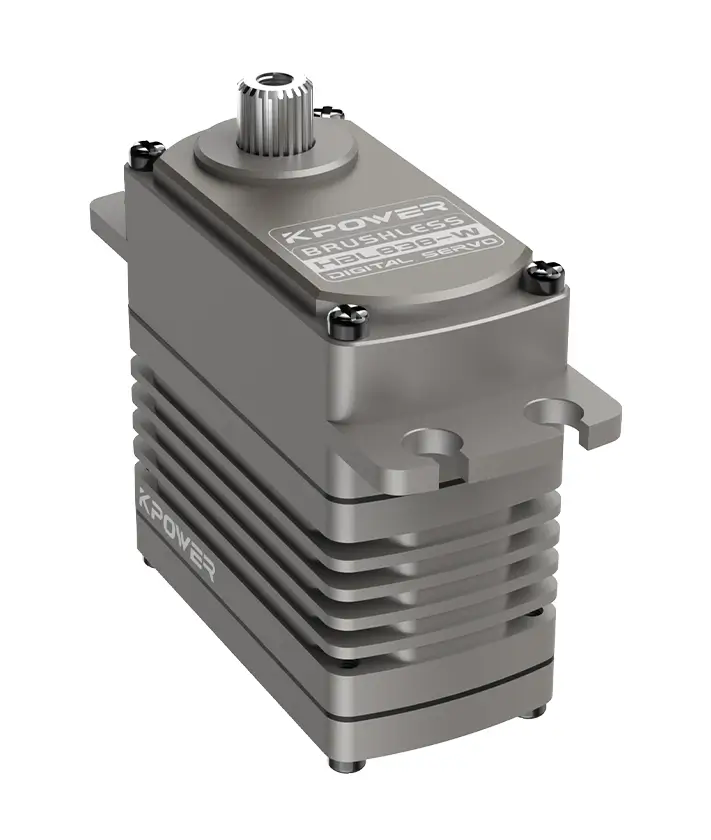
03Paramètres techniques clés qui définissent les performances
Lors de l'évaluationsélection du servomoteur, les spécifications techniques comptent plus que les allégations marketing. Voici les paramètres critiques qui ont un impact sur les performances du système :
Une inadéquation de ces paramètres peut entraîner une instabilité ou de mauvaises performances. Par exemple, un moteur avec un couple élevé mais une faible bande passante de réponse peut rencontrer des difficultés dans les applications nécessitant des arrêts et des démarrages rapides.
04Systèmes de servocommande analogiques ou numériques
L'évolution de la commande analogique vers la commande numérique a considérablement amélioré la fiabilité des servos. Les premiers systèmes analogiques reposaient sur des signaux de tension continue, sensibles aux interférences sonores sur de longs câbles.
Les systèmes d'asservissement numériques utilisent des protocoles de modulation de largeur d'impulsion (PWM) ou de communication série comme EtherCAT ou CANopen. Ces signaux numériques sont bien plus résistants aux interférences électromagnétiques (EMI), courantes dans les environnements industriels. De plus, les lecteurs numériques permettent des fonctionnalités de réglage avancées, telles que l'ajustement automatique du gain et les algorithmes de suppression des vibrations.
Choisir unservomoteur numériqueréduit le risque de perte de signal et simplifie le dépannage. Il permet également une meilleure intégration avec les automates et les systèmes SCADA, offrant une vue plus claire de l'état de la machine et des mesures de performances.
05Erreurs courantes dans le dimensionnement des servos
L’une des erreurs les plus fréquentes dans les projets robotiques est le dimensionnement incorrect du moteur. Les ingénieurs se concentrent souvent uniquement sur le couple maximal, ignorant les exigences de couple continu ou l'adaptation de l'inertie.
Ignorer les limites thermiques :Les moteurs chauffent pendant le fonctionnement. Si le couple nominal continu est dépassé, le moteur peut surchauffer et tomber en panne prématurément.
Négliger le décalage d'inertie :Si l'inertie de la charge est trop élevée par rapport à l'inertie du moteur, le système devient instable. Cela provoque des oscillations et des sonneries, réduisant la précision du positionnement.
Sans tenir compte des facteurs de sécurité :Incluez toujours une marge de sécurité (généralement 20 à 30 %) dans les calculs de couple pour tenir compte des forces de friction, d'accélération et des conditions de surcharge potentielles.
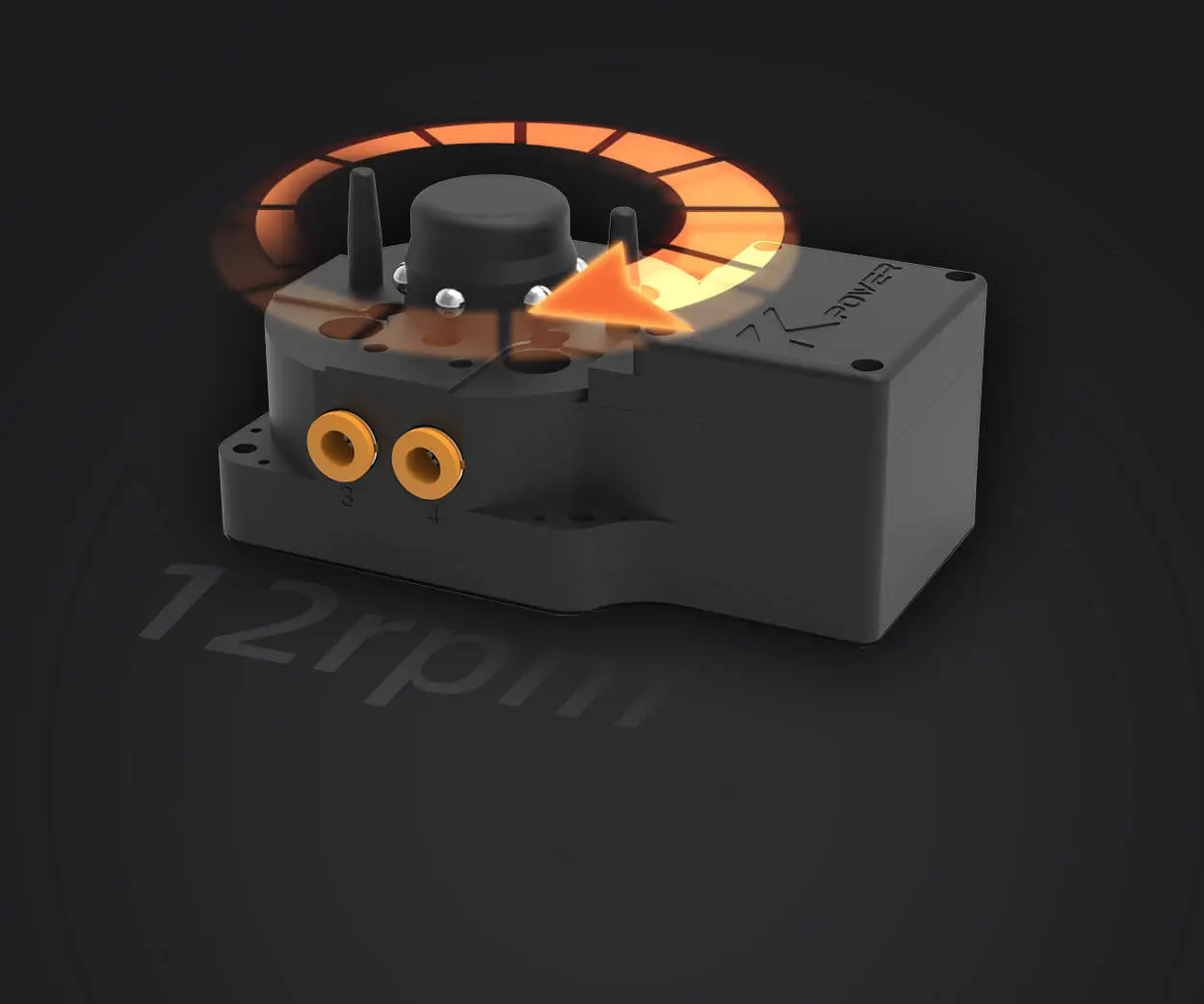
Un dimensionnement approprié garantit que lekpuissanceservomoteurLe système fonctionne efficacement dans ses limites thermiques et mécaniques, prolongeant ainsi la durée de vie du moteur et des machines entraînées.
06Liste de contrôle pratique pour les acheteurs
Avant de finaliser un achat, vérifiez les aspects suivants pour garantir la compatibilité et la fiabilité à long terme :
Protocole de communication :Assurez-vous que le servo prend en charge le même protocole que votre contrôleur (par exemple, EtherCAT, Profinet).
Valeurs nominales de tension et de courant :Adaptez la puissance du variateur aux exigences nominales du moteur.
Type d'encodeur :Déterminez si vous avez besoin d'encodeurs incrémentaux (moins chers) ou absolus (position conservée après une coupure de courant).
Montage mécanique :Vérifiez que le type d'arbre, les dimensions de la bride et les modèles de trous de montage correspondent à votre conception.
Évaluation environnementale :Vérifiez les indices IP pour la résistance à la poussière et à l’eau si vous travaillez dans des conditions difficiles.
07Foire aux questions
Q : Quelle est la principale différence entre un moteur pas à pas et un servomoteur ?
R : Les moteurs pas à pas sont en boucle ouverte et peuvent perdre des pas sous charge. Les servomoteurs utilisent un retour en boucle fermée pour corriger les erreurs, garantissant ainsi une précision et un couple plus élevés à différentes vitesses.
Q : Comment la résolution de l'encodeur affecte-t-elle la précision ?
R : Une résolution d'encodeur plus élevée fournit plus d'impulsions de retour par tour. Cela permet au contrôleur de détecter des erreurs de position plus petites, ce qui entraîne un mouvement plus fluide et un contrôle de positionnement plus précis.
Q : Puis-je utiliser un pilote générique avec n’importe quel servomoteur ?
R : Non. Les servomoteurs sont généralement adaptés à des modèles de moteurs spécifiques en raison des différences de résistance des enroulements, d'inductance et de types d'encodeurs. Des composants incompatibles peuvent provoquer des dommages ou de mauvaises performances.
Q : A quoi sert le réglage d’un système d’asservissement ?
R : Le réglage ajuste les gains proportionnels, intégraux et dérivés (PID). Un réglage approprié minimise les dépassements, réduit le temps de stabilisation et améliore la stabilité, en particulier lors de la manipulation de charges variables.
Q : Pourquoi le rapport d’inertie est-il important ?
R : Un taux d'inertie élevé rend le système lent et sujet aux oscillations. Le maintien d'un rapport faible garantit une accélération et une décélération réactives, ce qui est essentiel pour les bras robotiques à grande vitesse.
Q : Les servomoteurs nécessitent-ils un entretien régulier ?
R : Les servomoteurs sans balais comportent un minimum de pièces mobiles et nécessitent peu d’entretien. Cependant, la vérification périodique des câbles, des connecteurs et des ventilateurs de refroidissement permet d'éviter des pannes inattendues.
08Prendre une meilleure décision à long terme
Choisir le bon système d’asservissement ne consiste pas seulement à acheter un composant ; il s'agit d'investir dans la fiabilité des processus. En comprenant les principes du contrôle en boucle fermée, vous pouvez éviter les pièges courants liés au dimensionnement, à la compatibilité et aux performances.
Un bien choisiservomoteur de robotréduit les temps d'arrêt, améliore la qualité des produits et réduit le coût total de possession. Si vous avez besoin d'aide pour sélectionner la solution optimalesélection du servomoteurpour votre application spécifique, envisagez de consulter des experts techniques pour vous assurer que votre système est conçu pour la précision et la durabilité.
Contactez notre équipe d'ingénierie pour discuter de vos besoins et recevoir une proposition sur mesure pour vos besoins en automatisation.
Heure de mise à jour:2026-07-17

Contactez le spécialiste des produits Kpower pour recommander un moteur ou une boîte de vitesses adapté à votre produit.


